Jebel Barkal rises from the sands of northern Sudan, its jagged outline cutting against the horizon near Karima. The town is quiet. No souvenir stalls or glossy signs mark the way—just rock, wind, and the weight of centuries. This place does not announce itself. It waits for those willing to listen.
The ancient Nubians saw more than a hill here. Its shape curls like a cobra with its hood flared. They believed the god Amun resided in the mountain, a presence so powerful it drew kings and priests. Their actions shaped kingdoms.
For over two thousand years, Jebel Barkal stood at the heart of the Kushite civilization. It rivaled Egypt’s might and guarded its own legacy. Pharaohs like Thutmose III and Ramses II claimed this land. They carved temples into the rock and left inscriptions that still bear traces of their faded glory. When Kush broke free from Egyptian rule, its kings made Jebel Barkal their spiritual and political center. They built monuments here, borrowing Egyptian styles but giving them a Nubian character.
The Temple of Amun, hewn into the mountain’s flank, remains striking. Its columns, though weathered, still show hints of color that once adorned them. The craftsmanship turned stone into something sacred.
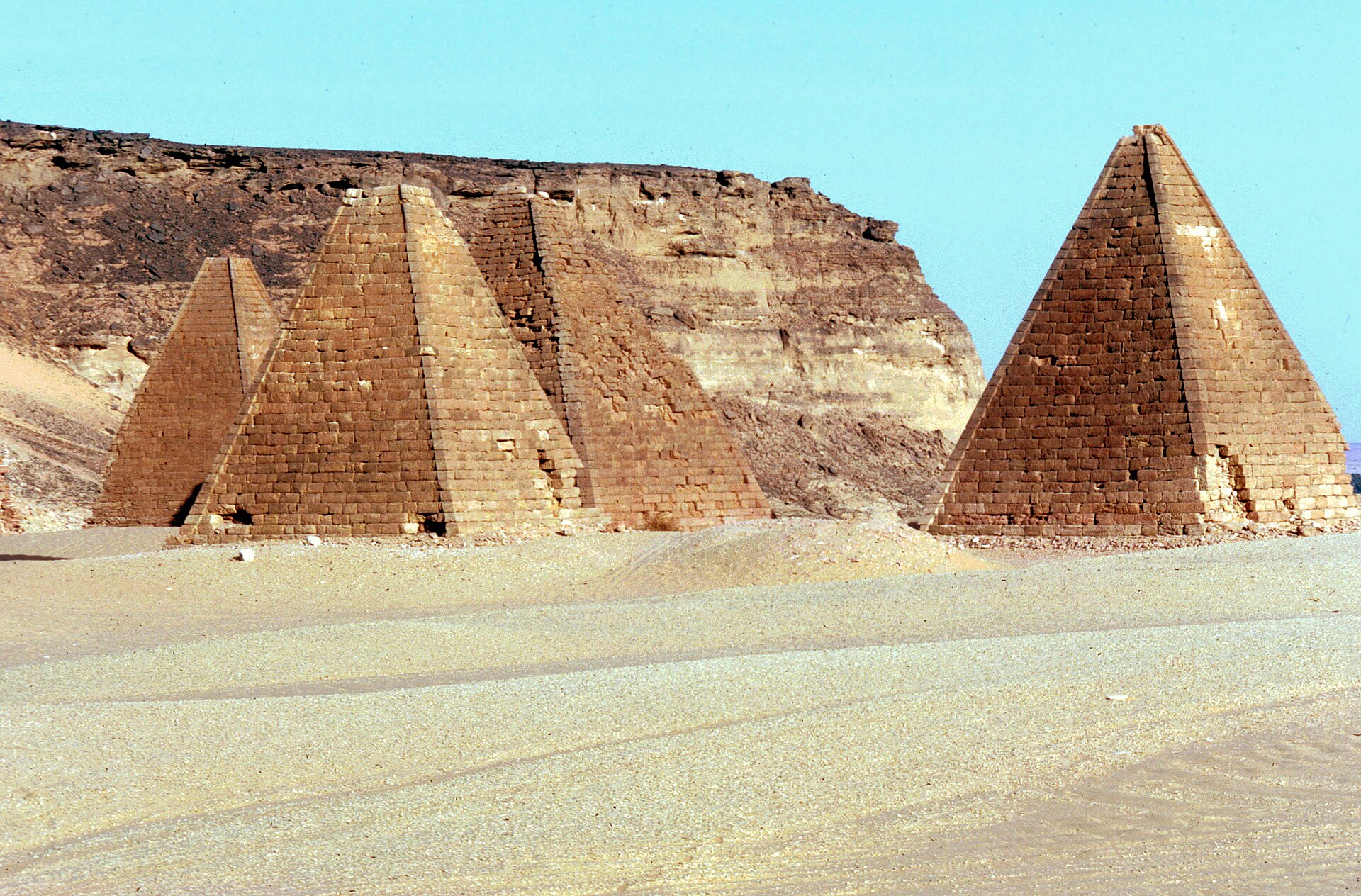
The pyramids at Jebel Barkal are smaller than Egypt’s but no less imposing. Their steep sides and sharp angles give them a stark presence. Unlike the tombs of Giza, these were not just resting places for kings. They symbolized a kingdom’s resilience. Many were looted long ago. A few have yielded treasures—gold jewelry, painted pottery, weapons—that offer glimpses into the lives of rulers.
Time moves differently at Jebel Barkal. No barriers tell you where to stand. You can touch the stones. Trace the grooves of ancient carvings with your fingers. The rough texture of walls that have stood for millennia is under your hands. The past feels close enough to hold.
At dawn, light spills over the rocks. Shadows stretch long and slow across the sand. In the evening, silence deepens. The wind carries whispers of a time when ceremony and power filled this place.
Karima, the nearest town, moves at its own pace. A handful of guesthouses offer rest. Simple cafes serve spiced tea and fresh bread. From here, the road leads to Jebel Barkal and the pyramids of Meroë, standing alone in the desert to the south. These sites form a landscape where history is written into the earth.
Visiting Jebel Barkal is not about ticking off a tourist attraction. It’s about stepping into a story that began long before the first cities rose along the Nile. There are no polished exhibits—just the raw presence of the past. For those who come, it offers a chance to see how fleeting human achievements can be. Yet their echoes endure.
In a world that moves faster each year, Jebel Barkal stands still.