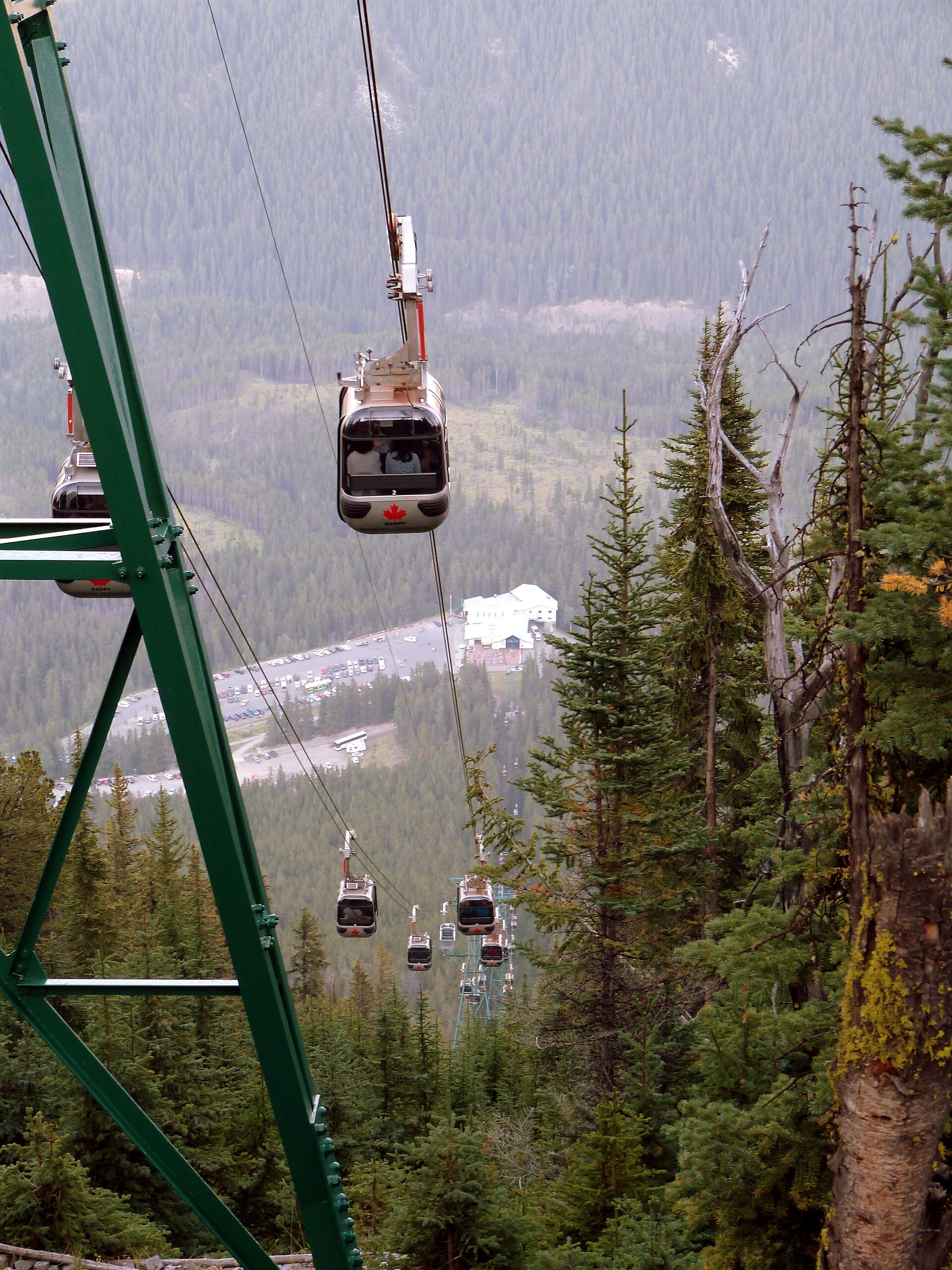
The Banff Gondola isn’t just a way to reach the top of Sulphur Mountain—it’s an experience that changes how you see the Rockies. The ride begins at the base, where the scent of pine gives way to crisper, thinner air as the cabins glide upward. With every meter, the landscape unfolds: the emerald waters of the Bow River winding through the valley, jagged peaks dusted with snow even in summer, and forests stretching endlessly toward the horizon. By the time you reach the summit, over two thousand meters above sea level, the view is so vast it feels like time itself has paused. This is why people come—because some sights have a way of making everything else fade into the background.
The gondola’s story began in the 1960s, when the idea of making a mountain accessible to the public still felt like a dream. Back then, the Rockies were a place for climbers and wilderness lovers, not crowds of visitors. But a few determined engineers and local visionaries believed the view from the top should belong to everyone, not just those willing to scale the cliffs. The first lift was modest compared to today’s sleek cabins, yet even then, it became a landmark for Banff. Over the decades, the gondola evolved, growing into one of the most recognizable features of the national park—a quiet testament to how even wild places can be shared without losing their magic.
At the summit, the space is designed to let you linger. There’s an observation deck with a glass floor, where the drop below makes your stomach flutter, and a small museum that tells the mountain’s story—from its ancient geological layers to the wildlife that still calls it home. A café serves hot drinks to thaw chilled hands, and in every season, the crowd shifts: skiers in winter, hikers in summer, and leaf-peepers in autumn, when the forests blaze with gold and crimson. On clear days, visibility stretches eighty kilometers, and the mountains seem to roll on forever, as if the earth has no edge.
Sulphur Mountain wasn’t chosen by accident. Its slopes hold traces of ancient forces that shaped the Rockies, and its name comes from the sulphur springs that bubble at its base. Long before the gondola, these waters drew Indigenous peoples and early settlers, who believed in their healing properties. Today, the springs still flow below, but the mountain itself remains a symbol of untouched wilderness. Riding the gondola isn’t just about convenience—it’s a nod to the people who lived in harmony with these lands for generations before the first lift was ever built.
For many, the gondola is just the beginning of a longer journey through Banff National Park. From the summit, trails branch out toward alpine lakes and high passes, like the path to Bow Lake, where the water is so clear it mirrors the sky. In winter, the mountain becomes part of a vast ski area, and the gondola is the first step toward fresh powder. But even if you don’t venture farther, the ride itself is enough—a reminder that some places don’t need grand adventures to leave a mark.
There’s something about the summit that feels different from other tourist spots. No crowds jostling for space, no noise beyond the wind and the occasional murmur of voices. Even in peak season, it’s easy to find a quiet corner where the mountains feel like your own. Maybe that’s why people keep coming back—not just for the views, but for the way the altitude seems to slow everything down, as if the air itself carries a kind of stillness.
The gondola runs year-round, and each season paints the mountain in new light. Winter turns the ascent into a journey through swirling snow, the cabins floating like lanterns in the clouds. Spring brings the first patches of thaw, the scent of damp earth and pine filling the air. Summer is the busiest time, yet even then, there are moments when the crowd thins and you can stand alone on the deck, breathing in the vastness. Autumn, though, might be the most striking, when the golden light makes the whole range glow, and time seems to stretch just a little longer.
This isn’t just a ride—it’s a reminder of how fragile and how grand the natural world can be. Up here, it’s easy to forget the rush of everyday life and remember that some moments are gifts. Maybe that’s what makes the gondola special. It doesn’t ask for anything except your attention, your openness to the quiet power of the mountains. And the mountains, as they have for centuries, stand unchanged, a silent promise that some things endure.