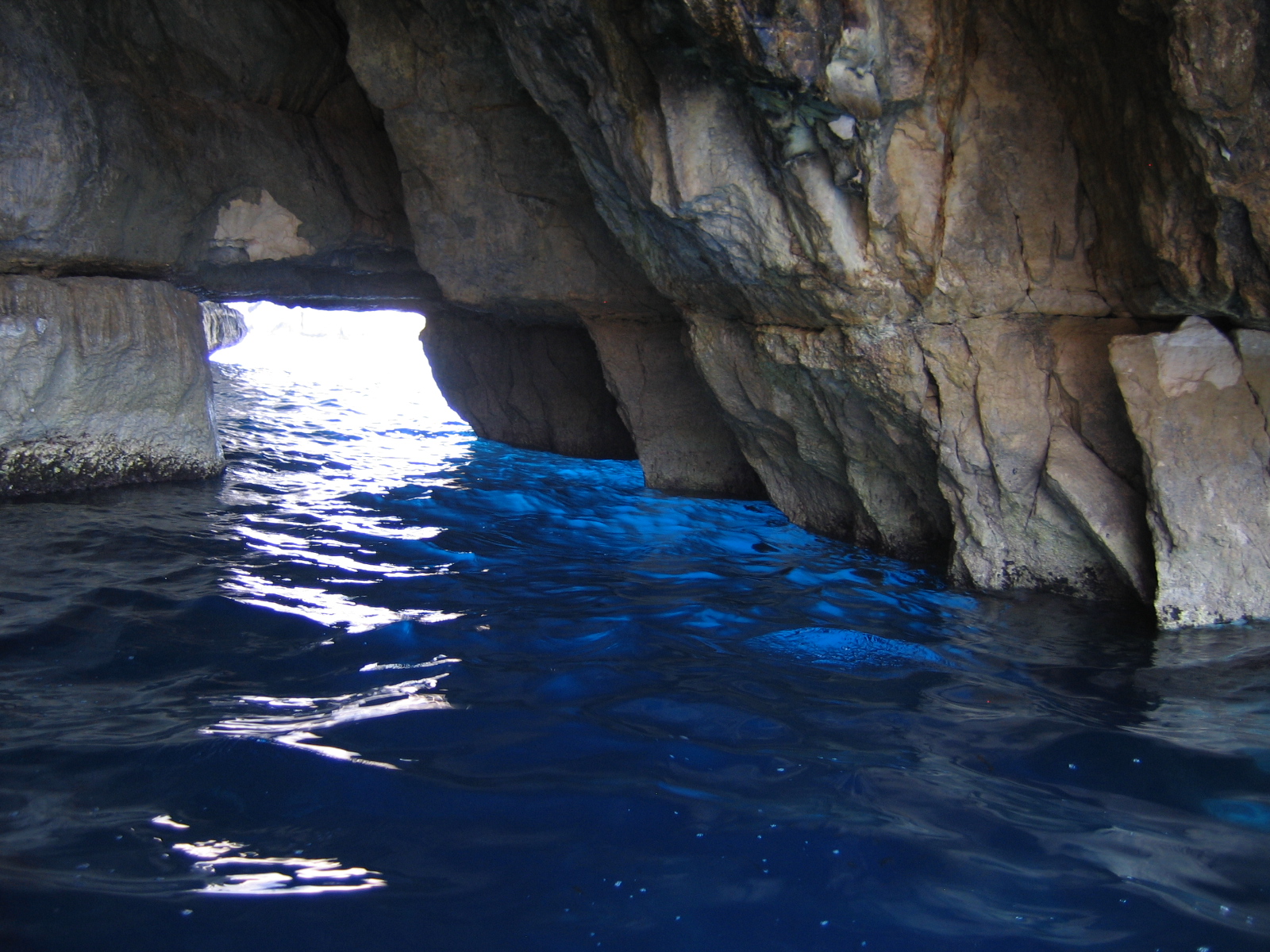
The Blue Grotto is one of those places that feels almost too perfect to be real. Tucked along Malta’s southern coast near the quiet village of Qrendi, it’s a natural wonder shaped by the sea over countless centuries. The site consists of six sea caves, but the main one—the one that gives the grotto its name—is the true star. To reach it, you have to glide through a narrow opening in a towering rock arch by boat, a journey that already sets the tone for something extraordinary. On sunny days, the water inside takes on an otherworldly glow, a deep, luminous blue that seems to radiate from within. The effect comes from sunlight refracting through the crystal-clear water and bouncing off the white sandy seabed, turning the cave into a living prism.
Long before tourists discovered it, the Blue Grotto was a familiar sight to locals. Fishermen used the caves as shelter from storms, and older generations passed down stories of pirates who once hid their loot in these waters. British soldiers stationed on Malta in the 19th century began visiting the grotto, bringing friends and family along, but it wasn’t until the mid-20th century, when tourism took off on the island, that the site gained wider fame. Today, it’s one of Malta’s most photographed spots, yet even with the steady stream of visitors, the grotto retains its untouched beauty.
The cave’s architecture is entirely the work of nature. The soft limestone cliffs have been carved by the sea over millennia, creating a labyrinth of arches, vaulted ceilings, and smaller grottos connected by narrow passages. The main cave soars about thirty meters high and stretches roughly sixty meters deep. Inside, the air is cool even on the hottest days, and the echo of dripping water or distant voices gives the space an almost cathedral-like quality. It’s easy to forget you’re in a natural formation—until you remember that no human hand had a part in shaping it.
Visiting the Blue Grotto is less about ticking off a sightseeing box and more about the experience itself. The only way to get there is by boat, and the short trip from Qrendi’s small harbor is part of the adventure. Depending on the weather, the sea can be glassy or slightly choppy, but the boatmen know these waters intimately. The best time to go is in the morning, when the sun is low and the water inside the cave shimmers in its most vivid shades. On overcast days, the magic fades—the grotto loses its luminous quality, so timing your visit with the forecast makes all the difference.
Once inside, the boat moves slowly along the cave walls, giving you time to take in the details. The water is so clear that the seabed is visible several meters down, and if you’re lucky, you might spot schools of fish darting between the rocks or even an octopus lurking in the shadows. The boatmen often share local legends—tales of hidden treasure or the mythical sirens said to sing in these waters at night. The stories might be just that, but they add a layer of mystery to the visit, making the grotto feel like a place where reality and folklore blur.
Beyond its natural beauty, the Blue Grotto is woven into Malta’s cultural fabric. It appears in 19th-century travel accounts and later became a symbol of the island, much like the Azure Window or Mdina. For Maltese people, the grotto is more than just a scenic spot; it’s a reminder of the island’s deep connection to the sea, which has sustained and protected its communities for generations. Many families in Qrendi and nearby villages still rely on fishing or tourism-related work, so the grotto isn’t just a postcard image—it’s part of their daily lives.
What makes the Blue Grotto so special is its lack of commercialization. There are no souvenir shops, no cafes, no crowds jostling for space. Just the raw beauty of the cliffs, the sea, and the quiet rhythm of the waves. After your boat ride, you can walk along the coast, where the views stretch across the Mediterranean. On clear days, you might spot the tiny island of Filfla in the distance, and at sunset, the sky erupts in shades of orange, pink, and violet, turning the water into a mirror of color.
The grotto changes with the seasons, offering something new each time you visit. In summer, it’s lively—boats come and go, and the water sparkles under the bright sun. In autumn and winter, the sea grows rougher, and the cave takes on a more dramatic, almost brooding atmosphere. Fewer visitors come during these months, so you might have the place nearly to yourself. Spring brings a different kind of magic: the surrounding cliffs burst with wildflowers, and the water in the grotto is at its clearest, making it feel like a hidden paradise.
If you find yourself in Malta, the Blue Grotto is a place you shouldn’t miss. It’s one of those rare spots that leaves a lasting impression, a reminder of how breathtaking nature can be when left to its own devices. There’s nothing staged or artificial about it—just the sea, the rocks, and the light playing together in a way that feels almost magical. Maybe that’s why people keep coming back. In a world where so much feels manufactured, the Blue Grotto offers something real—a sense of wonder that lingers long after you’ve left.