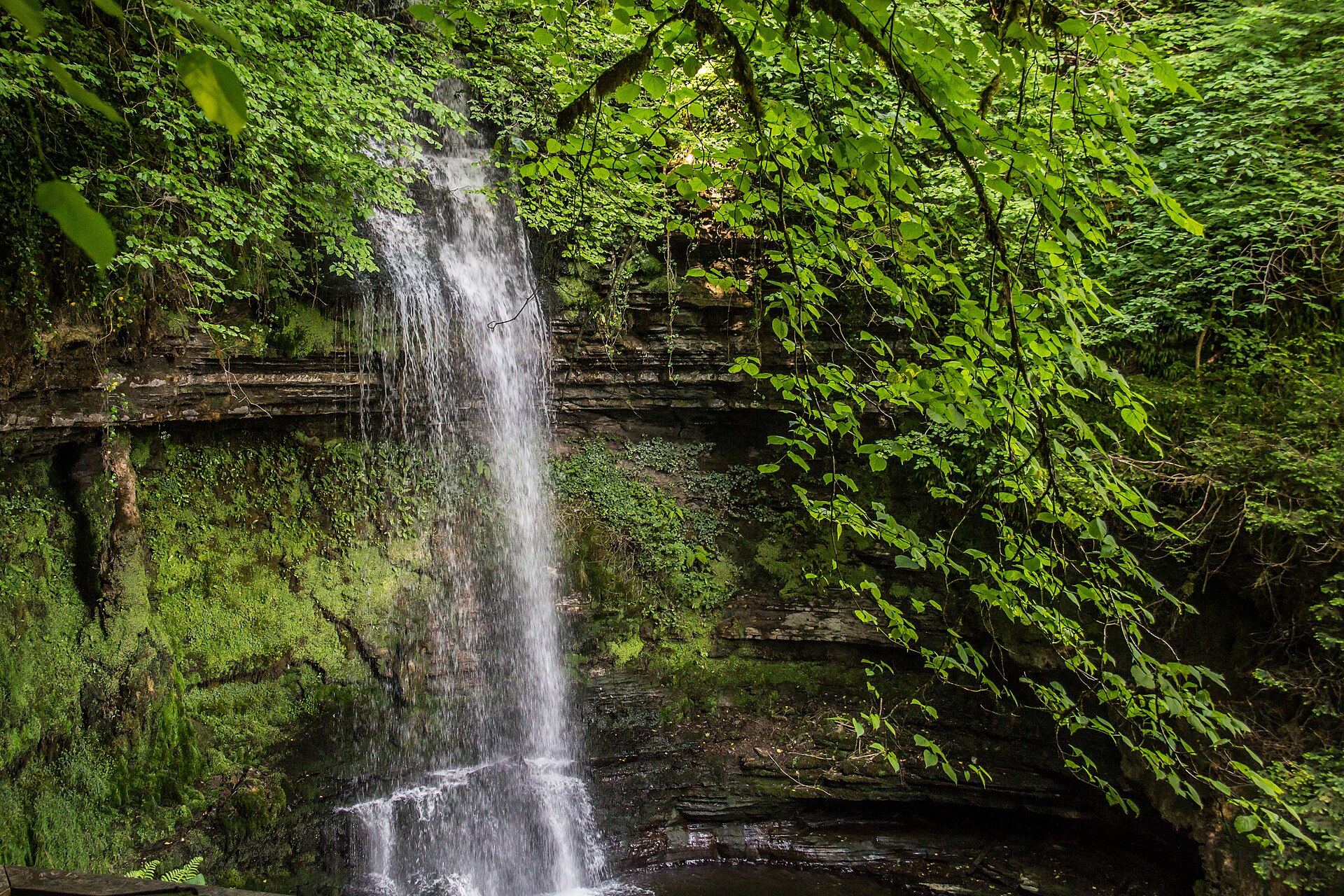
Glencar Waterfall is one of those quiet corners of Ireland where the landscape needs no introduction. Tucked away near the town of Ennis in County Clare, it feels like a place untouched by time, surrounded by gentle hills and dense woodland. The waterfall itself isn’t tall, but there’s something undeniably striking about the way the water spills over the rocky ledge into a small pool below. The sound of it carries through the trees long before you catch your first glimpse, a steady murmur that sets the rhythm for the walk ahead. Locals call it the gentle giant—not for its height, but for the way it commands attention without demanding it.
The path to the waterfall starts at a small car park, where most visitors leave their cars before stepping into the woods. The trail winds through native trees—oaks, ashes, and alders—with a soft carpet of moss and fallen leaves underfoot. On rainy days, the ground can be slick, but that only adds to the atmosphere. The air is thick with the scent of damp earth and decaying foliage, and the closer you get, the louder the water becomes. The walk takes about twenty minutes, just enough time to settle into the unhurried pace of the place, where the river dictates the mood.
This isn’t just a waterfall; it’s part of an ancient landscape shaped over millennia. The river feeding it rises in the Burren, a region known for its limestone pavements and rare wildflowers. The water here is clear, with a faint mineral tang from the rocks it passes through. On sunny days, a rainbow might arch over the falls, though more often than not, a light mist hangs in the air, giving the place an almost mystical feel. There are old stories about fairies dwelling in these parts, and some visitors still leave coins or ribbons at the base of the falls for luck.
Glencar has long been tied to the history of County Clare. Centuries ago, it served as a landmark for travelers and pilgrims, and in medieval times, a road nearby connected monasteries and settlements. There are traces of ancient human presence in the area, though they’re subtle—no grand ruins or standing stones, just the quiet sense that people have passed through here for generations. The waterfall itself has always been a constant, a natural feature that outlasts the comings and goings of those who live nearby.
For locals, the falls are more than just a scenic spot. In summer, children wade in the shallows while adults sit on the rocks, watching the water flow. Even in warm weather, the water stays cool, a reminder of the land’s wildness. Winter transforms the scene entirely—the river runs darker, the current stronger, and the place feels wilder, more remote. Few tourists visit in the colder months, leaving the falls to those who appreciate its quieter side.
Beyond the waterfall, there are footpaths leading deeper into the hills. One follows the line of old stone walls, remnants of abandoned farms; another traces the river, where herons and wild ducks are often spotted. These routes aren’t marked on maps or crowded with visitors, but they offer a glimpse of the real Ireland—the kind that exists beyond the well-trodden tourist trails. There’s no rush here, no need to hurry. The landscape unfolds at its own pace.
What makes Glencar special is how its beauty reveals itself slowly. There are no viewing platforms or gift shops, no signs pointing out the obvious. Instead, it’s a place that asks you to pay attention—to the sound of the water, the way light catches the wet stones, the smell of rain on the earth. It’s a reminder that some of the best experiences aren’t about spectacle, but about presence. In a world where people often move too quickly to notice, Glencar invites you to stop, listen, and look.