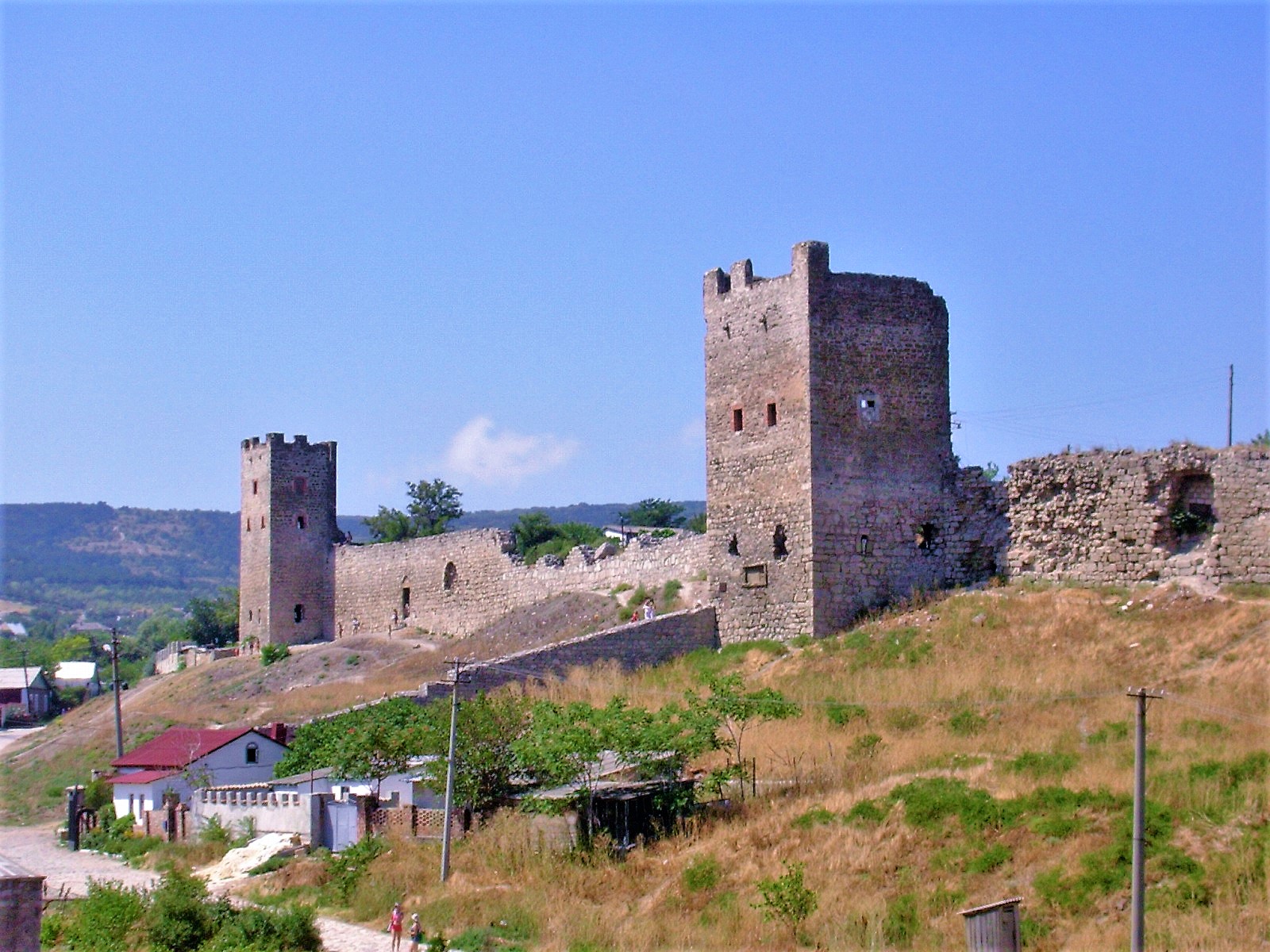
Perched on a gentle hill overlooking the Black Sea, the Genoese Fortress in Feodosia is one of those rare places where history doesn’t just linger in stone—it breathes. The ruins, scattered along the coastline, carry the weight of centuries, whispering of a time when this quiet Crimean port was a bustling hub of trade, connecting Europe and Asia. Unlike many restored medieval sites, the fortress hasn’t been polished into a flawless tourist attraction. Its crumbling walls and weathered towers feel alive, as if the past is still unfolding in the gaps between the stones.
The fortress was born in the 14th century, when the Republic of Genoa sought to expand its influence along the Black Sea coast. Feodosia, then known as Caffa, became one of the most important Genoese colonies, a vital stop on the Silk Road where goods from China, India, and Persia flowed into Europe. The Genoese weren’t just merchants—they were builders, engineers, and warriors. The fortress they erected wasn’t merely a military stronghold; it was the heart of a thriving city, a place where languages, cultures, and currencies mingled in the shadow of its walls. Over the centuries, it withstood sieges, changed hands between empires, and survived plagues, though today only fragments remain. Yet even in its ruined state, the fortress offers a glimpse of its former grandeur.
The architecture is a blend of medieval European design and local adaptations. The thick limestone walls, arranged in an irregular polygon, once formed an impenetrable barrier. The towers—now silent sentinels—were once lookout posts and defensive strongholds. The most striking among them is the Tower of Constantine, named after the Genoese consul who oversaw its construction. Its narrow arrow slits and massive walls speak of a time when survival, not aesthetics, dictated design. Inside the fortress, the remains of living quarters, storage rooms, and water cisterns hint at the daily life that once pulsed within these walls. The cisterns, in particular, were crucial during sieges, allowing the defenders to hold out for months.
From the fortress walls, the view stretches across Feodosia and the sea beyond. It’s easy to imagine the city as it once was—Caffa, a wealthy and cosmopolitan port where ships from distant lands docked daily. The Genoese didn’t just trade here; they built churches, warehouses, and entire neighborhoods. The fortress wasn’t just a military installation; it was the nucleus of a vibrant urban life. Today, walking through its ruins, you can almost hear the creak of carts laden with goods, the murmur of merchants haggling in different tongues, and the shouts of sailors preparing for their next voyage. Time has erased much, but the atmosphere of that era lingers, tangible in the salt-tinged air and the rustle of wild grasses underfoot.
After the fall of Genoa, the fortress passed into Ottoman hands, and later, under Russian rule, it was repurposed to suit new needs. The Turks reinforced its defenses, while the Russians adapted it for their own military strategies. By the 19th century, the fortress had lost its strategic importance, but its walls endured, a silent testament to its past. Soviet-era restoration efforts preserved what remained, though a full reconstruction was never completed. Today, the fortress exists somewhere between ruin and monument. It doesn’t feel like a museum exhibit; it feels raw, authentic, as if the stones themselves are still deciding whether to crumble or stand firm.
The fortress isn’t just a historical site—it’s a place where history and nature intertwine. The hill it sits on is overgrown with wild vegetation, and the sea in the distance reminds you that Feodosia has always been a city shaped by the rhythms of the waves. In summer, the ruins draw crowds of visitors who come to admire the views, snap photos against the ancient walls, or simply sit on a bench and watch the sunset. In winter, the fortress becomes a quiet retreat, where the only sounds are the wind and the cries of gulls. The changing seasons give the place a different character each time you visit, as if the fortress itself is shifting with the passage of time.
Though only fragments remain, the Genoese Fortress remains a vital part of Feodosia’s identity. It hosts festivals, historical reenactments, and open-air concerts, serving as a gathering place for locals and visitors alike. The people of Feodosia treat it with reverence, not just as a relic of the past, but as a living piece of their heritage. Tourists, too, are drawn here not just for the photos, but for the chance to step into a world that feels both distant and strangely familiar. The fortress doesn’t demand admiration—it simply exists, offering a quiet invitation to explore, to imagine, to connect with something larger than oneself.
For those who love history, architecture, or simply places with a soul, the Genoese Fortress is a hidden gem. It stands apart from other Crimean landmarks, where everything is meticulously restored and packaged for tourists. Here, there are no crowds, no loud announcements, no souvenir stalls—just the walls, the sea, and the wind carrying stories from the past. You can visit in the early morning, when the first light touches the towers, or in the evening, when the shadows stretch long and the air cools. Either way, the fortress leaves you with a sense of having touched something timeless, something that transcends the mere stones beneath your feet. It’s not a place you simply see—it’s a place you feel.