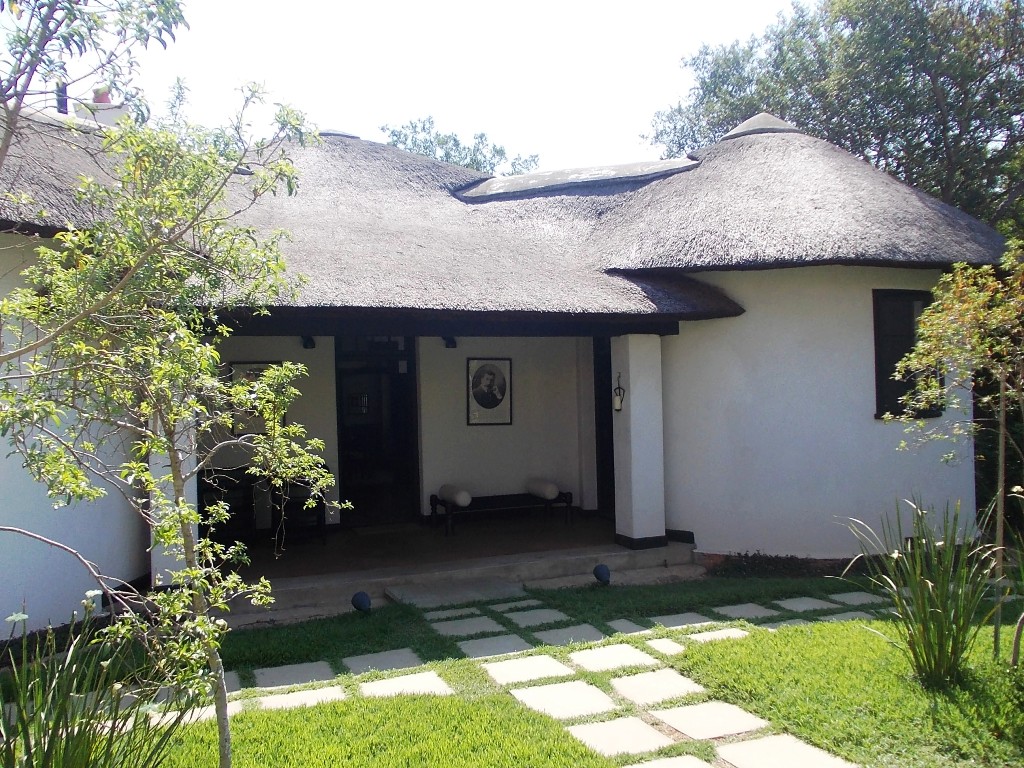
This red-brick building has a small veranda and a garden that looks much as it did in the early 1900s. Mohandas Gandhi lived here while working as a lawyer. The house stands in Tolstoy, once the heart of Johannesburg’s Indian community. Narrow streets and old-fashioned streetlamps remain.
Inside, the rooms are arranged as they were when Gandhi lived here. The furniture is simple, from the early 20th century. Photographs, letters, and documents cover the walls. His study, where he met clients and wrote, is the most striking space. It was here that ideas shaping global movements began.
Gandhi arrived in Johannesburg in 1893 to represent Indian traders in a legal dispute. South Africa’s laws were discriminatory against non-white communities. Indians faced restrictions on movement, forced registration, and humiliation by authorities. Gandhi was thrown off a train for refusing to leave a first-class compartment reserved for white passengers. That moment changed him. He began organizing protests and legal challenges, developing his philosophy of nonviolent resistance.
Between 1904 and 1906, this house was his home. Here, he shaped *satyagraha*—civil disobedience rooted in truth. He also launched *Indian Opinion*, a newspaper for the Indian community’s struggles. Gandhi later wrote that South Africa taught him the power of uniting people across race and religion in the fight for justice.
The house is now a museum. There are no grand exhibits, just rooms filled with personal belongings and documents. Visitors see how a lawyer in a foreign land shaped history. The neighborhood is quiet now, with few passersby.
For those interested in civil rights, Gandhi House offers a rare connection to the past. It’s not a monument or statue. The simplicity of the house reflects Gandhi’s principles—no excess, just the weight of his experiences.
South Africa has other sites tied to Gandhi’s life. Durban has the house where he lived before Johannesburg. Pretoria has a memorial marking his early activism. But this house in Tolstoy is where his most formative years unfolded. Here, he shifted from defending individual cases to advocating for systemic change.
The museum is small. A visit doesn’t take long, but its impact lingers. History here isn’t a series of dates—it’s a lived experience. For anyone tracing Gandhi’s legacy, this place offers a moment to stand where he stood and consider how ordinary spaces shape extraordinary ideas.