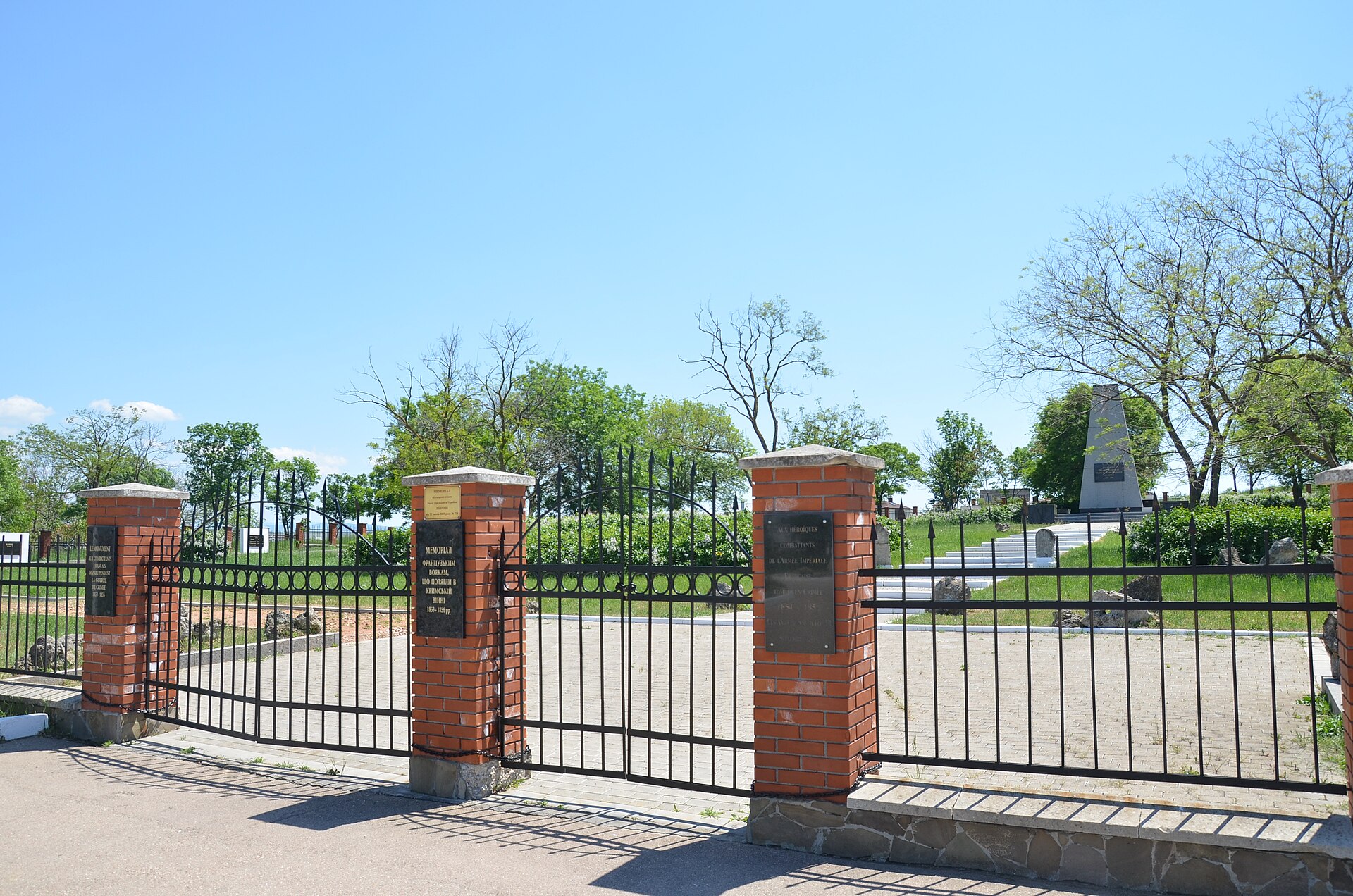
The French Military Cemetery in Sevastopol is a quiet corner of the city where history lingers in the air, untouched by grandeur or ceremony. Nestled on the northern side of Sevastopol, near the infamous Malakhov Kurgan, this place holds the remains of soldiers who fought and died during the Crimean War. The cemetery is not a monument to victory, but a somber reminder of the human cost of conflict, where rows of modest headstones stand as silent witnesses to a war that shaped the region.
During the siege of Sevastopol, this area was home to French field hospitals and encampments. After the war, the French government purchased the land in 1856 to create a proper burial ground for their fallen. Over time, graves from other conflicts were added, but the majority still belong to those who perished in the Crimean campaign. The central obelisk, carved from white marble and erected in the late 19th century, bears the names of officers and generals, while the surrounding limestone headstones, many worn by time, mark the resting places of ordinary soldiers. Some inscriptions in French remain legible, but most graves are unmarked, their stories lost to history.
The cemetery’s atmosphere is one of quiet reflection. There are no grand memorials here, no stirring speeches—just the rustle of pine trees planted in the 19th century and the occasional visitor leaving flowers. It’s a place where the past feels close, where the weight of history is not in the monuments but in the stillness between them. For Sevastopol, a city that has seen countless battles, this cemetery is a small but significant part of its layered past. It serves as a reminder that war leaves scars not just on the land, but on the people who fought, regardless of which side they were on.
The relationship between Sevastopol and France has been complicated, shifting between alliance and estrangement over the decades. After the Crimean War, the cemetery was maintained by French diplomats and local authorities, but it fell into neglect following the Russian Revolution. It wasn’t until the 1990s, when cultural ties between Russia and France began to revive, that efforts were made to restore the site. Today, it is well-kept, though it remains off the beaten path, visited more by locals and those seeking a deeper understanding of history than by casual tourists.
Walking among the graves, it’s impossible not to wonder about the lives cut short here. The cemetery doesn’t offer answers, but it does invite contemplation. How many young men were buried in this soil, far from their homes? How fragile is the peace we often take for granted? These are the questions that linger as you move between the rows of headstones, each one a small testament to a life that ended too soon.
This is not a place for guided tours or grand narratives. There are no plaques explaining every detail, no audio guides filling the silence. Instead, the cemetery speaks in its own way—through the weathered stones, the whispering pines, and the occasional bouquet left by a visitor. It’s a space for personal reflection, where the past feels immediate, not distant. For those who take the time to visit, it offers a different kind of history lesson, one that doesn’t rely on textbooks or lectures but on the quiet power of memory.
Sevastopol itself is a city where history is never far from the surface. From its role in the Crimean War to its significance in World War II, the city has been a crossroads of conflict and resilience. The French Military Cemetery is just one piece of that story, but it’s an important one. It doesn’t glorify war or take sides; it simply honors the individuals who found themselves here, caught in forces far beyond their control. In that sense, it’s a universal place, one that transcends national boundaries and speaks to the shared human experience of loss.
If you find yourself in Sevastopol, this cemetery is worth seeking out—not for the sights, but for the sense of connection it offers. It’s a place where the past isn’t just remembered; it’s felt. And in a world that often moves too quickly, that kind of stillness is rare. The French Military Cemetery doesn’t demand attention, but for those who listen, it has much to say.