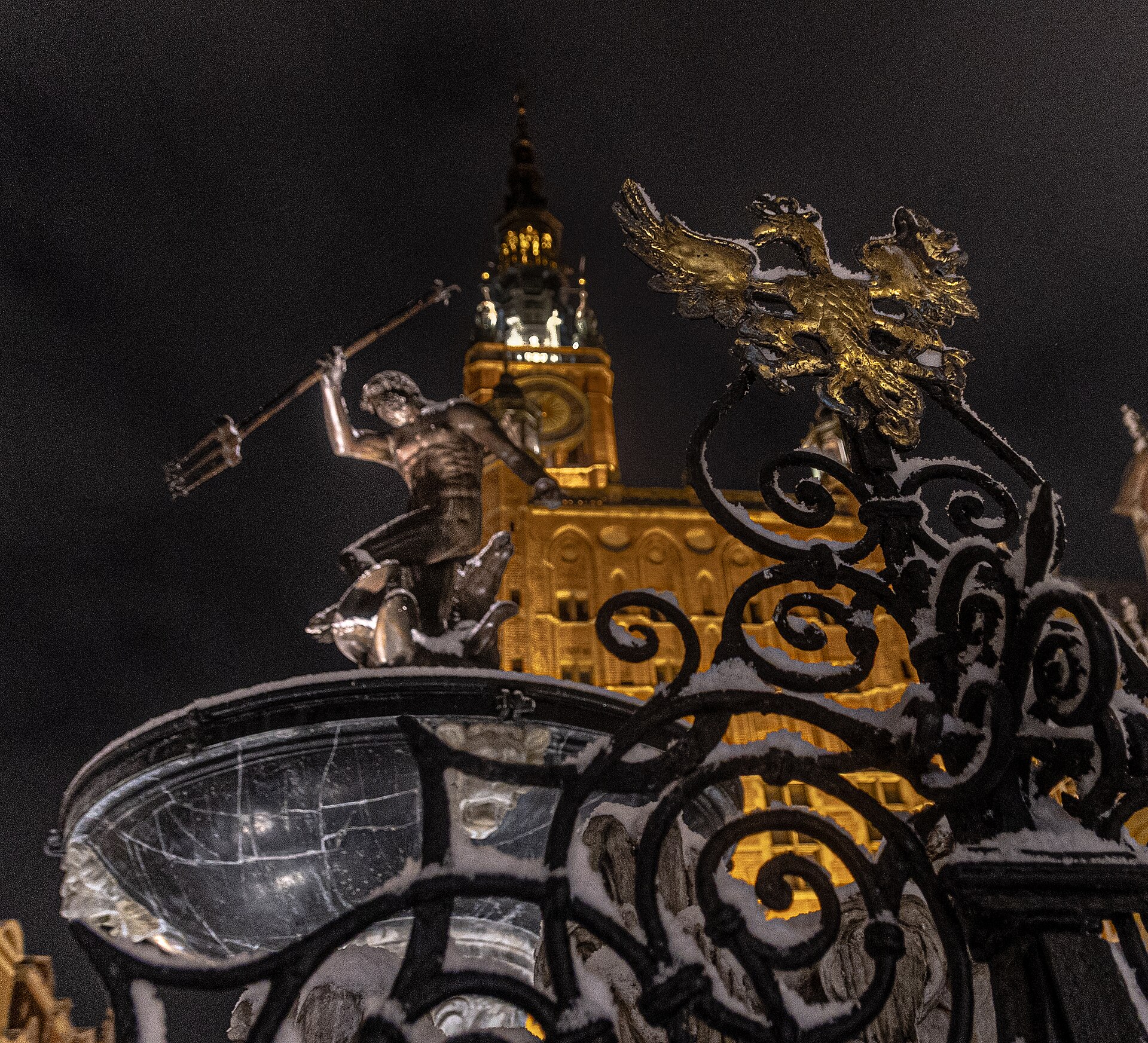
Neptune’s Fountain in Gdańsk is one of those landmarks that doesn’t just stand in a city—it becomes part of its identity. The bronze figure of the sea god, rising above Long Market, seems to guard the memory of a time when Gdańsk was one of Europe’s wealthiest ports. Neptune, trident in hand, gazes toward the Baltic Sea, a quiet reminder of the city’s deep connection to water and trade. Built in the early 17th century, when Gdańsk flourished as a maritime hub, the fountain has since become inseparable from the city’s character.
The fountain’s story begins in 1615, when the city council decided to install it in the heart of Gdańsk. The idea came from Mayor Bartholomew Schachmann, who wanted to honor the city’s naval power. The sculpture was commissioned from the renowned Flemish artist Abraham van den Blocke, while the casting was done by local foundryman Peter Husen. Interestingly, the fountain didn’t function at first—water was only piped in nearly two decades later, in 1634, when engineer Adam Wybe completed the intricate supply system. Since then, Neptune hasn’t just adorned the square but brought it to life, especially in warmer months when the cascading water creates a cool mist around the statue.
The fountain’s design reflects the Baroque era, when sculpture and water became essential elements of urban spaces. The octagonal basin, made of black marble, is surrounded by a low decorative railing. Neptune stands on a pedestal, flanked by four sea creatures—tritons and dolphins—symbolizing his dominion over the waves. Water spouts from the trident and the mouths of these mythical figures, adding movement to the composition. In the evening, the fountain is illuminated, casting soft shadows across the square and lending the scene a peaceful glow.
Neptune’s Fountain has witnessed many pivotal moments in Gdańsk’s history. During World War II, it suffered significant damage—the statue was broken, and the basin destroyed. Yet by 1954, it had been restored to its original appearance. Today, it remains one of the city’s most photographed spots, especially for visitors exploring Gdańsk’s old town. Locals and tourists often meet here, sitting on the edge of the basin to watch the water play and the square come alive.
Long Market, where the fountain stands, is the historical heart of Gdańsk. The surrounding area is packed with the city’s most important landmarks—the Artus Court, the Golden House, and the towering town hall. Neptune’s Fountain acts as a focal point, drawing people in as they wander through the old town. In summer, the square buzzes with street musicians, artists, and vendors, creating a festive atmosphere. Winter transforms the space—Christmas trees appear, and the fountain sometimes becomes part of the holiday decorations.
Neptune isn’t just a statue in Gdańsk; he’s part of the city’s folklore. There’s a local legend that tossing a coin into the fountain ensures a return to Gdańsk. Residents smile as they share the tale, saying the sea god watches over the city and its visitors, and that the water holds a special power. It’s just a story, of course, but it adds to the fountain’s charm. Every city has its traditions, and Gdańsk is no exception.
Beyond being a tourist attraction, Neptune’s Fountain holds meaning for the people of Gdańsk. It’s a gathering place for city celebrations, concerts, and even wedding photos. On warm days, children dart around the basin, trying to catch the water’s spray. For many locals, the fountain symbolizes home—a reminder that Gdańsk is more than just a port and shipyards; it’s a place with a rich history and culture.
Today, Neptune’s Fountain is one of those landmarks that needs no introduction. It simply exists, woven into the fabric of the city. Despite the crowds of tourists, it hasn’t lost its authenticity. Perhaps that’s because it blends the grandeur of Baroque art with the simplicity of everyday life, embodying the spirit that makes Gdańsk so appealing to travelers.