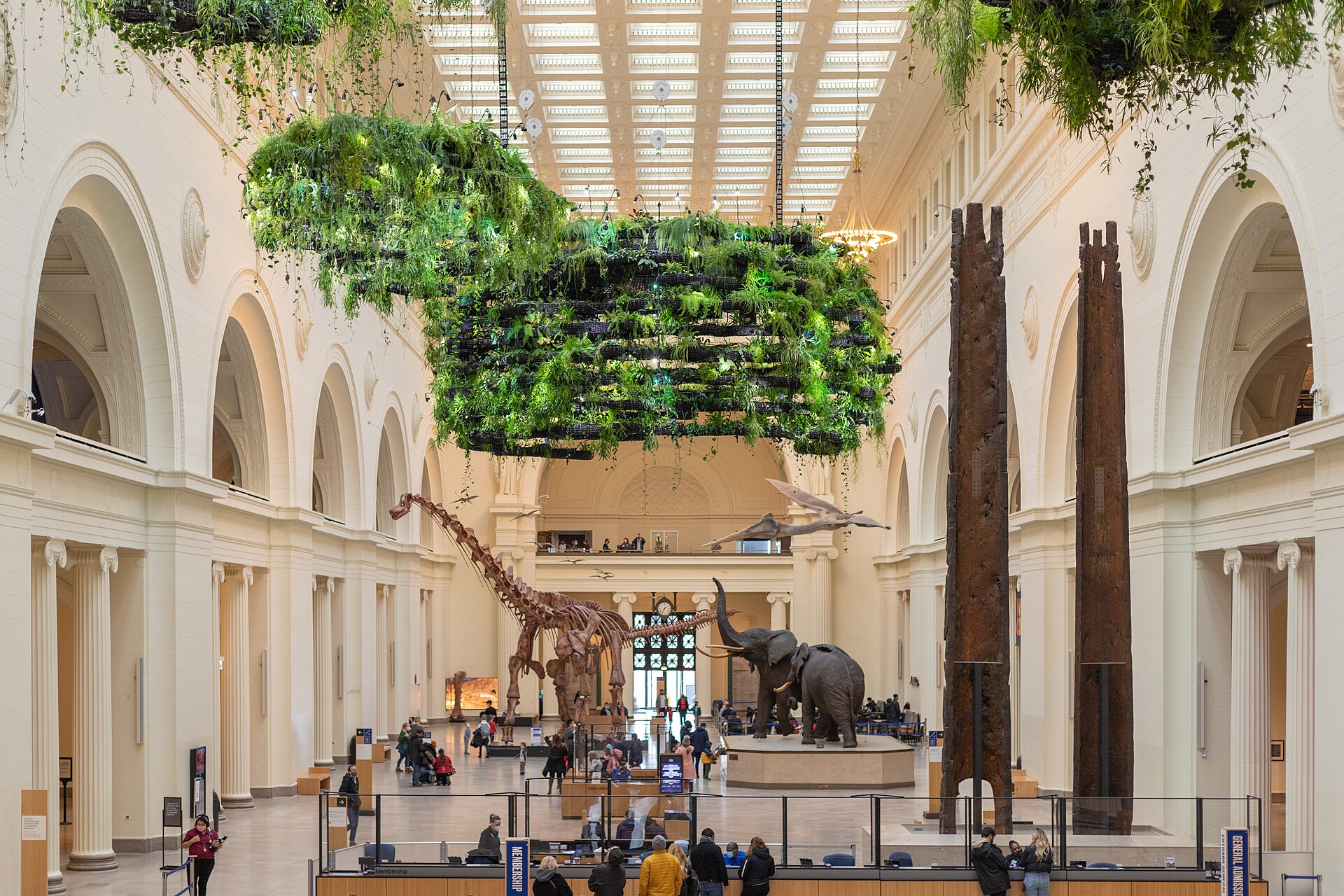
The Field Museum stands by Lake Michigan in Chicago. Here, the past isn’t just remembered—it’s felt. The museum holds fossils, artifacts, and specimens that span billions of years, from the earliest life forms to human civilizations. You’ll walk past a dinosaur skeleton one moment and an Egyptian mummy the next. There’s no set path; you move at your own pace, stopping where curiosity pulls you.
The building was completed in 1921, part of Chicago’s effort to build cultural landmarks. Its design mixes classical architecture with the needs of a modern museum. The columns outside resemble ancient temples, while the inside is built for large exhibits and crowds. Expansions over the years haven’t erased its original character—it still feels like a place where learning happens naturally.
Sue, the most complete T. rex skeleton ever found, anchors the main hall. Her bones stretch across the space, a reminder of a world that existed long before humans. Beyond Sue, the paleontology exhibits include fossils of giant sloths, armored fish, and marine reptiles. Each display shows how these creatures lived, how they died, and what their ecosystems were like.
The anthropology collections take you across continents. You’ll see Egyptian mummies, Pacific Islander masks, Chinese bronzes, and Native American totems. One section focuses on the indigenous cultures of the Americas. Here, artifacts are shown alongside stories of traditions, beliefs, and daily life. The museum doesn’t shy away from hard histories—it presents them as part of the larger human story.
The astronomy exhibits explore what lies beyond Earth. The Adler Planetarium, nearby, lets you see the night sky through the eyes of ancient civilizations or take a virtual tour of the solar system. The meteorite collection includes rocks older than the planet. The exhibits explain complex ideas in ways that make sense, whether you’re a beginner or already know the basics.
The Field Museum isn’t just for experts. Families, tourists, and locals all find something here. Interactive exhibits let you touch, build, and experiment. Temporary displays cover topics like climate change and biodiversity. Lectures and workshops go deeper into subjects that interest you. The museum encourages questions, not just answers—there’s no single way to engage with what you see.
Beyond the exhibits, the museum hosts events. Concerts, film screenings, and weddings take place in its halls. The rooftop garden offers a quiet spot to sit after walking through the galleries. The café has views of Lake Michigan, and the gift shop sells books, jewelry, and oddities that reflect the museum’s collections.
Chicago is a city where different worlds meet. The Field Museum reflects that. It’s not just a place to store knowledge—it’s a place that grows with the city and its visitors. You might spend an hour here or a full day. Either way, you’ll leave with more questions than when you arrived.