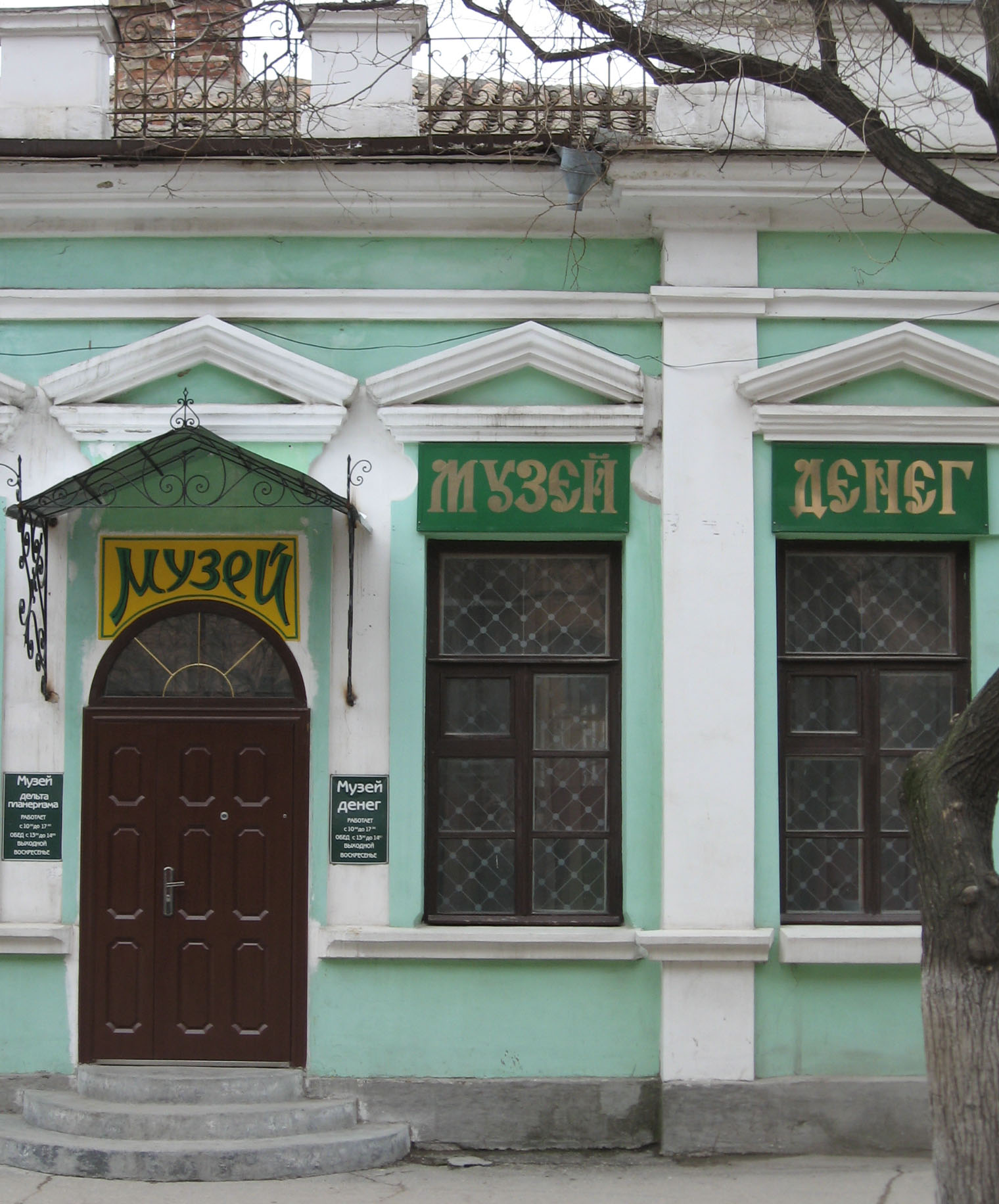
The Feodosia Money Museum is one of those places you stumble upon almost by accident, only to leave with the feeling that you’ve glimpsed something far more intriguing than you expected. Housed in a historic mansion along the city’s waterfront, the building itself is part of the story. Constructed in the late 19th century, it once belonged to Afanasy Krymtaev, a merchant whose life was woven into the fabric of trade, banking, and, naturally, money. Today, the museum doesn’t just display coins and banknotes—it traces the evolution of economies, power, and even human values across centuries.
The exhibition begins with antiquity, and for good reason. Feodosia, an ancient colony of the Bosporan Kingdom, was one of the most important trading hubs of the northern Black Sea region. It minted its own coins, and caravans laden with goods from Greece, Rome, and Byzantium passed through its streets. The museum’s collection includes silver staters adorned with lions and griffins—symbols of authority and wealth that once circulated among merchants and warriors. These coins are more than metal; they’re reminders that money has always been a tool of influence, a cause of conflict, and a reflection of the societies that created it.
A significant portion of the collection is dedicated to the coins of the Golden Horde and the Crimean Khanate. After the fall of the Bosporan Kingdom, Feodosia endured multiple conquests, each bringing its own currency. Mongol dirhams minted in Crimea feature intricate Arabic calligraphy and ornate designs, showcasing the craftsmanship of local artisans. Later, under Ottoman rule, the city saw the introduction of akçe—small silver coins used in everyday trade. These artifacts transport visitors to an era when Feodosia was a cultural crossroads, where Turkic, Slavic, and European traditions intertwined.
The Russian Empire’s monetary history is equally compelling. After Crimea’s annexation by Russia, Feodosia became a key Black Sea port, and its trade and financial activities flourished. The museum displays rare rubles and kopecks from different periods, including coins minted during the reigns of Catherine II, Paul I, and Nicholas I. Some of the most fascinating pieces are trial coins that never entered mass production, revealing the empire’s economic experiments and attempts to stabilize the ruble. Among them are flawed specimens, which today are as prized by collectors as their flawless counterparts.
A separate hall is devoted to the Soviet era, where the exhibition takes on a distinct character. Soviet coins and banknotes weren’t just currency—they were ideological statements. They depicted workers, farmers, and heroes of labor, symbolizing industrialization and victory. The museum features rare banknotes from the 1920s, a time when the country was recovering from civil war, as well as coins from World War II, when metal was scarce and minting was limited. There are also children’s savings books and coins issued for schoolchildren, reflecting the state’s efforts to instill financial literacy and trust in the system.
The museum also delves into the darker side of monetary history: counterfeiting. One display showcases fake coins and banknotes from different eras, along with the tools used by forgers. Some counterfeits are so skillfully made that only specialized equipment can detect them. This part of the exhibition serves as a reminder that money has always been a target for both legitimate trade and criminal schemes, with authorities fighting counterfeiting throughout history.
The modern section of the collection focuses on post-Soviet Russian rubles and commemorative coins. Visitors can see coins issued to mark city anniversaries, historical events, and notable figures, as well as banknotes featuring Crimean landmarks introduced after 2014. These pieces reflect how currency design evolves alongside political and cultural shifts. For instance, one banknote depicts the Kerch Strait Bridge, a symbol of Crimea’s connection to mainland Russia. Such details make the collection more than just a gathering of artifacts—they turn it into a living history that continues to unfold.
The Feodosia Money Museum isn’t just for numismatics enthusiasts. It offers something for anyone curious about how finance shapes the world, how money influences the rise and fall of cities and nations, and how it becomes intertwined with culture and art. The exhibition is designed to go beyond dry facts, weaving stories about merchants who rose and fell, wars that altered the value of coins, and people who tried to outsmart—or uphold—the system. The result is an atmosphere where money stops being mere paper or metal and instead becomes a thread in the vast tapestry of human history.
After visiting, you might find yourself looking at the coins in your pocket with newfound curiosity. Each one is a tiny fragment of the past, passed through countless hands, surviving wars, crises, and upheavals. The Feodosia Money Museum reminds us that financial history isn’t just about numbers and charts—it’s about the lives, hopes, and struggles of the people who used it. That’s why this place is worth a visit, not just for its rare exhibits, but for the chance to feel the unbroken thread of time running through something as ordinary as money.