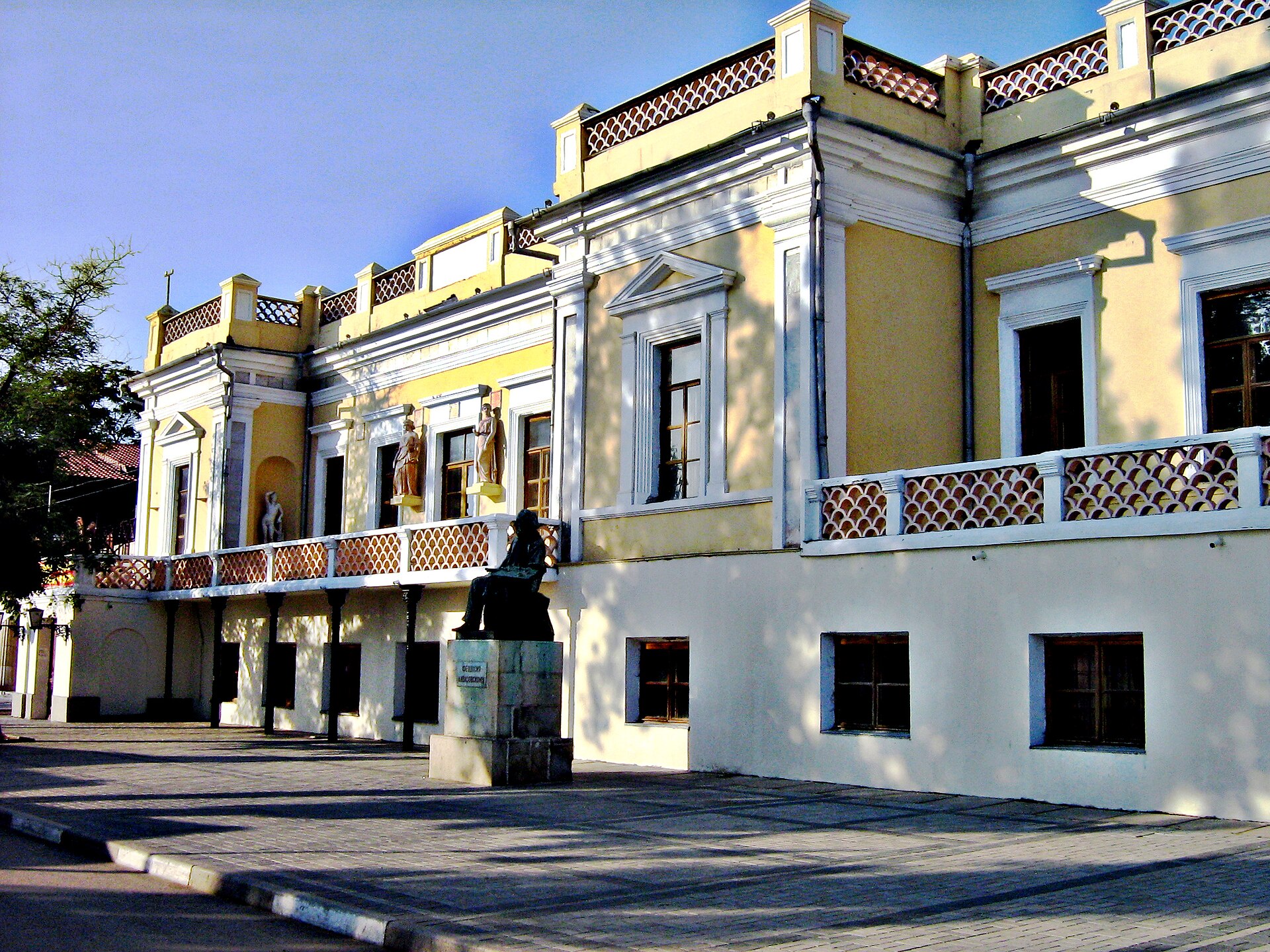
The Aivazovsky Picture Gallery in Feodosia is one of those rare places where art doesn’t just hang on the walls—it breathes, evolves, and becomes part of the city’s very soul. Nestled in the heart of this coastal town, the gallery holds the world’s largest collection of works by Ivan Aivazovsky, a painter whose name is inseparable from Feodosia itself. Visitors don’t stumble upon this place by accident; they come seeking answers—how the sea, the defining theme of Aivazovsky’s art, shaped his vision, and why this particular town became more than just a home for him. It was the wellspring of his inspiration, the place where his imagination took flight.
The building itself is as much a part of the experience as the paintings inside. Designed by architect Alexander Bernardazzi in the late 19th century, it was originally built as a private residence for Aivazovsky and his family. The façade, with its graceful arches and balconies overlooking the waterfront, seems to echo the rhythm of the waves. Inside, the high ceilings and large windows create a sense of openness, as if the space itself is designed to let the art breathe. After Aivazovsky’s death in 1900, the house was gifted to the city, and in 1922, it opened as a gallery, preserving not just his paintings but the atmosphere of his era.
The collection spans around four hundred canvases, and it’s far more than a mere assemblage of art—it’s a chronicle of the sea, captured through the eyes of one man. Aivazovsky painted the ocean in all its moods: the glassy calm of a windless day, the terrifying fury of a storm, the ethereal glow of moonlight on waves. Some of his most striking works depict Feodosia’s bay from different vantage points, with familiar landmarks like Mount Mithridat or the old Genoese fortress appearing in the background. These paintings aren’t just artistic masterpieces; they’re historical documents, offering a glimpse into the town as it once was. Among the most celebrated pieces are *The Ninth Wave*, *Stormy Sea at Night*, and *Rainbow*, where Aivazovsky’s skill reaches its peak, transforming water and light into something almost alive.
While Aivazovsky’s works dominate the gallery, the collection extends beyond his own brushstrokes. Other artists, connected to Crimea and the sea in various ways, are also represented here. You’ll find paintings by his contemporaries, his students, and 20th-century artists who drew inspiration from the Crimean landscape. Names like Lev Lagorio, Konstantin Bogaevsky, and Maximilian Voloshin appear among the exhibits, their works offering a counterpoint to Aivazovsky’s vision. Together, they trace how perceptions of the sea and the Crimean coast have shifted over time. Walking through the halls, it’s easy to imagine the sound of waves crashing against the shore, the cry of gulls overhead, the creak of ships’ masts in the wind—all of it lingering in the air like an unspoken presence.
One of the most moving parts of the gallery is the collection of Aivazovsky’s personal belongings. The furniture, household items, letters, and photographs offer a rare glimpse into his daily life. His study still holds the easel where he worked until his final days, and the living room features a portrait of his wife, painted by his own hand. These details make the past feel tangible, as if Aivazovsky has just stepped out of the room and might return at any moment. For many visitors, these exhibits are the most memorable—they turn art from something distant and abstract into a living, breathing part of history.
Feodosia wasn’t just a place where Aivazovsky lived; it was his creative laboratory. Born here in 1817 to a modest Armenian merchant family, he developed a lifelong fascination with the sea from childhood. After studying at the St. Petersburg Academy of Arts, he traveled extensively, but he always returned to Feodosia. Here, he built his home, founded an art school, and even established the town’s first public library. The city reciprocated his devotion: Aivazovsky became an honorary citizen, and his name was given to streets and ships. Today, his grave lies near the Armenian Church of St. Sergius, just a short walk from the gallery. Many visitors end their journey there, standing quietly before the simple monument that marks the resting place of a man who captured the sea like no other.
The gallery is more than a museum; it’s a cultural hub for Feodosia. Throughout the year, it hosts exhibitions of contemporary art, classical music concerts, and lectures on artistic themes. In the summer, outdoor film screenings take place on its grounds, while winter brings festive markets and holiday events. For locals, it’s a familiar gathering spot, a place to meet friends or spend a quiet afternoon. For tourists, it’s a must-visit, though it never feels like a crowded attraction. There’s no rush here, no pressure to follow a set path. Visitors can wander at their own pace, lingering over the paintings that speak to them and moving past those that don’t.
What makes the Aivazovsky Gallery truly special is the way it blurs the line between art and life. The paintings don’t just depict the sea—they seem to carry its essence, its movement, its moods. The house itself feels alive with the memory of its former owner, as if his spirit still lingers in the rooms where he once worked and entertained. For some, this is just a museum. For others, it’s a chance to connect with history, to step into the world of a man who saw the sea as few ever have. And for a few, it’s a reminder of how a single place can shape a person’s destiny. When you leave, it’s clear that Feodosia without Aivazovsky would be a different town, and Aivazovsky without Feodosia would be a different artist. That’s the quiet magic of this place—it doesn’t just display art; it tells a story.