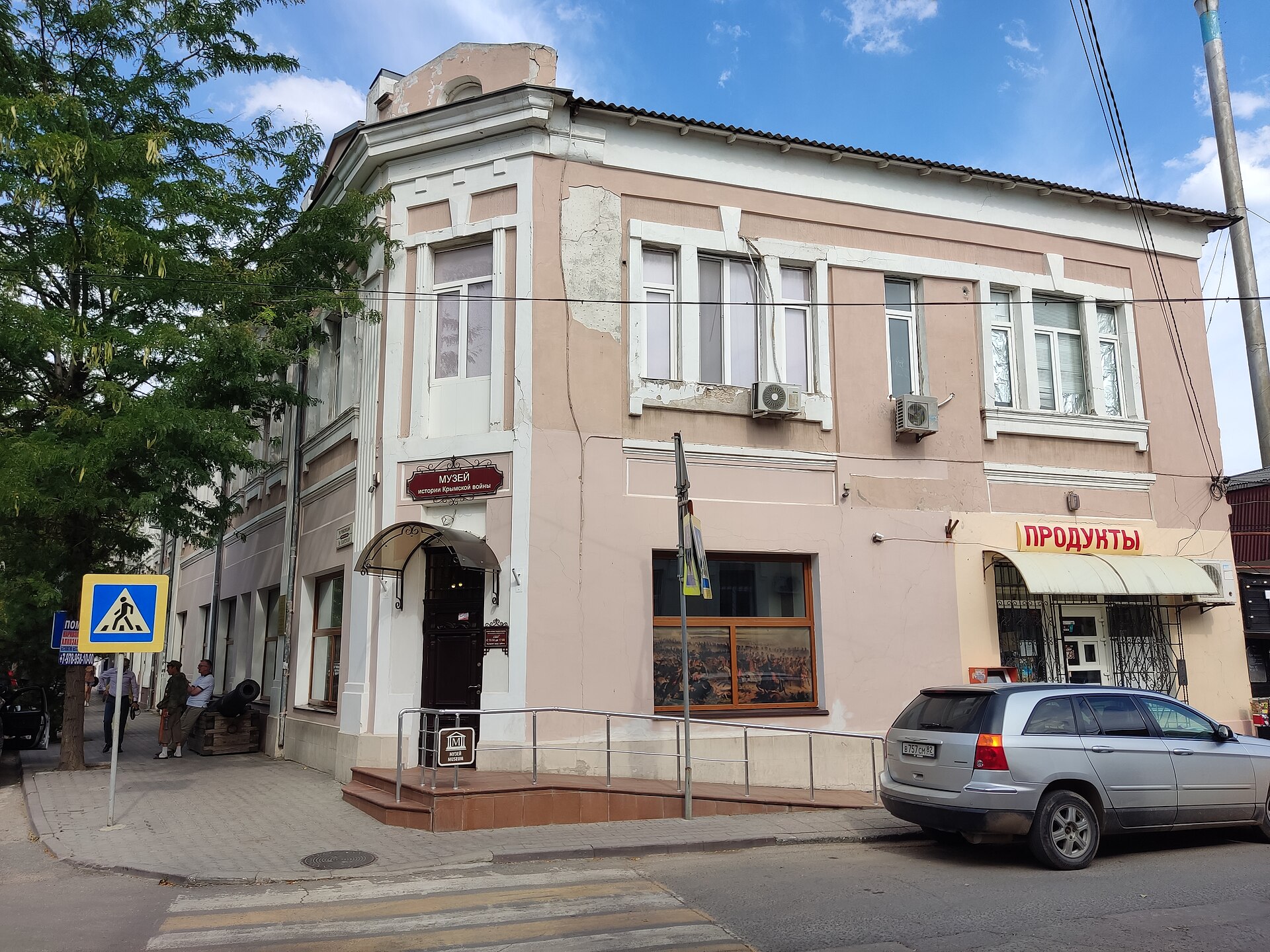
The Evpatoria Museum of the Crimean War occupies a building where the past doesn’t just linger—it feels alive. Housed in a mid-nineteenth-century structure, the museum itself is part of the story it tells. Thick stone walls, arched windows, and high ceilings hint at its origins, likely as a barracks or administrative building, though its exact early purpose remains unclear. The architecture carries the weight of its military past, a reminder that Evpatoria was more than a seaside town; it was a strategic point on the map of the Russian Empire. Inside, the preserved details—ornate moldings, worn parquet floors, heavy wooden doors—create an atmosphere that transports visitors to an era when the halls echoed with the footsteps of soldiers and the murmur of officers’ voices.
The museum opened relatively recently, but its collection quickly found an audience. Rather than presenting the Crimean War as a series of dry dates and battles, the exhibits focus on the human experience of those who lived through it. Weapons, uniforms, and medals share space with personal items: letters from soldiers, officers’ diaries, and photographs of the men who fought and died on these lands. One of the most moving sections is dedicated to medical care during the war, featuring surgical tools, medicine kits, and accounts from doctors and nurses. These artifacts don’t just document the conflict—they reveal the physical and emotional toll it took on those caught in its midst.
A significant portion of the museum is devoted to the defense of Evpatoria in 1855, one of the war’s most dramatic episodes. That year, Allied forces—Britain, France, and the Ottoman Empire—launched a major amphibious assault on the city, hoping to break Russian resistance. The battle became a defining moment, showcasing the determination of Russian troops and local militias. Maps of the engagement, diagrams of fortifications, and personal belongings of participants, from rank-and-file soldiers to high-ranking officers, bring the events to life. The exhibits don’t glorify the fighting but instead highlight the resilience of those who defended the city under impossible odds.
Beyond the military narrative, the museum offers a glimpse into daily life in Evpatoria during the mid-1800s. The city was small but vibrant, a crossroads of cultures where trade and craftsmanship thrived. Photographs of streets, household items, and documents about local commerce paint a picture of a community trying to maintain normalcy amid chaos. The war disrupted everything—economies collapsed, families were displaced, and the fabric of society frayed. Yet the exhibits also show how people adapted, how they clung to routines and traditions even as the world around them unraveled.
The building’s history adds another layer to the experience. While its exact origins are debated, its design—narrow windows, sturdy walls, a no-nonsense facade—suggests a practical purpose, likely tied to the military. Over time, the structure has witnessed the ebb and flow of Evpatoria’s fortunes, from its role in the war to its later development as a resort town. Walking through the museum, visitors can almost hear the echoes of the past: the clatter of boots in the corridors, the low voices of men discussing strategy, the quiet rustle of paper as orders were written and read.
What sets this museum apart is its refusal to reduce history to a simple narrative of heroes and villains. Instead, it presents the Crimean War as a complex, often brutal chapter in which ordinary people were swept up in events beyond their control. The exhibits don’t shy away from the harsh realities—hunger, disease, the sheer exhaustion of prolonged conflict—but they also highlight moments of humanity: acts of kindness, letters home, the small comforts that kept people going. The quiet of the galleries allows space for reflection, a chance to consider not just the tactics of war but the lives it upended.
For those exploring Crimea’s history, the museum is a quiet but essential stop. Unlike the more famous sites in Sevastopol or Bakhchisarai, it doesn’t draw large crowds, which makes it all the more rewarding. Visitors can take their time, examining each artifact, reading every caption, and absorbing the stories behind them. There’s no rush, no pressure to move along—just the opportunity to sit with the past, to see it not as a distant event but as something deeply human.
The museum doesn’t offer easy answers or grand conclusions. Instead, it invites visitors to step into the shoes of those who lived through the war, to see the conflict through their eyes. The letters, the photographs, the everyday objects—all of them serve as reminders that history isn’t just about the powerful or the victorious. It’s about the people who endured, who hoped, who fought, and who, in their own ways, shaped the world that came after. In Evpatoria, the Crimean War isn’t just remembered; it’s felt.