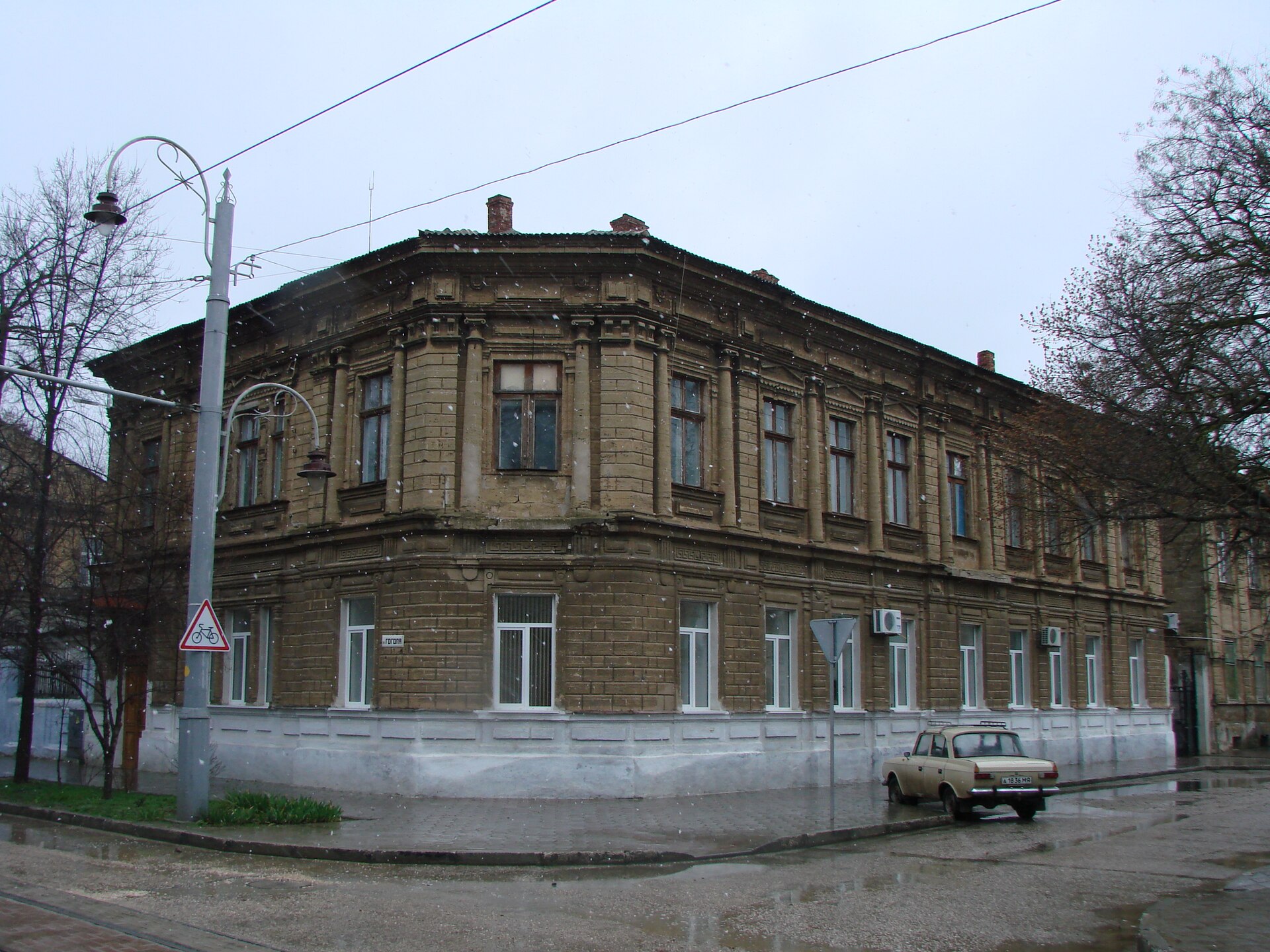
The Ruchinskaya Women’s Gymnasium in Yevpatoria is one of those rare buildings that seem frozen in time, a quiet witness to an era long past. Built at the turn of the 20th century, it wasn’t just a school—it was a symbol of progress, a place where the ideals of education and culture took physical form in a provincial town. The architecture reflects the period’s practical elegance: clean lines, soaring ceilings, and large windows that flood the rooms with light, creating an atmosphere of quiet dignity. In an age when women’s education was still finding its footing, institutions like this one played a crucial role in shaping a new generation of educated women, offering them opportunities that had once been out of reach.
The gymnasium stands in Yevpatoria’s historic center, where the past lingers in every cobblestone and weathered facade. The streets here are narrow, lined with low-slung houses topped with terracotta roofs, and the building’s solid presence feels like an anchor amid the gentle chaos of the old town. Its facade is understated yet refined, adorned with delicate stucco, cornices, and pilasters that soften its imposing structure. The entrance is framed by a portico with columns, a nod to the classical influences of the time. It’s clear that the architects didn’t just design a functional space—they crafted a statement about the importance of learning in the life of the city.
The school opened in 1903 and was named after Maria Ruchinskaya, a local philanthropist and public figure who championed education in Yevpatoria. By then, the town was already gaining fame as a resort destination, but its leaders understood that progress wasn’t just about leisure—it was about knowledge. The gymnasium became one of the first institutions in the region to offer girls not just primary education but a full secondary curriculum. Alongside traditional subjects like literature and mathematics, students studied foreign languages, music, and needlework, all considered essential for cultivating the "ideal" woman of the era.
Life within the gymnasium’s walls was structured and disciplined. Students wore uniforms, adhered to strict schedules, and spent long days in classrooms that hummed with activity. But it wasn’t all rote learning—there was music, poetry recitals, and theatrical performances, all meant to nurture creativity alongside intellect. Many graduates went on to become teachers, doctors, and community leaders, leaving their mark on the town and beyond. The building itself became a microcosm of the changing times, a place where young women were prepared not just for marriage and motherhood, but for roles in a rapidly evolving society.
After the 1917 Revolution, the gymnasium underwent a series of transformations. In the Soviet era, it housed various schools and technical colleges, its interiors adapted to new educational philosophies. The old desks were replaced, imperial portraits gave way to revolutionary slogans, and gymnasium uniforms were swapped for Pioneer scarves. Yet the exterior remained largely unchanged, a stubborn relic of pre-revolutionary architecture. The building’s resilience is a testament to its original craftsmanship, surviving decades of upheaval while retaining its character.
Today, the building still serves as a school, its halls filled with the energy of modern students who may never know the stories embedded in its walls. Occasionally, it opens its doors to visitors, hosting exhibitions and tours that explore the history of education in Crimea. For those curious about Yevpatoria’s past, the gymnasium offers a tangible connection to an era when education was both a privilege and a dream. It’s a place where you can almost hear the echoes of young voices, the scratch of pens on paper, the faint strains of a piano drifting from the assembly hall.
Walking through Yevpatoria’s center, it’s worth pausing to consider this building not just as an architectural landmark, but as a living record of change. It stands as a reminder of how perceptions of women’s roles shifted, how education evolved, and how a small town on the Black Sea coast grew into something more. In the quiet hours after school lets out, when the streets empty and the light softens, it’s easy to imagine the gymnasium as it once was—a place of ambition, discipline, and quiet revolution. More than just bricks and mortar, it’s a piece of history that refuses to fade.