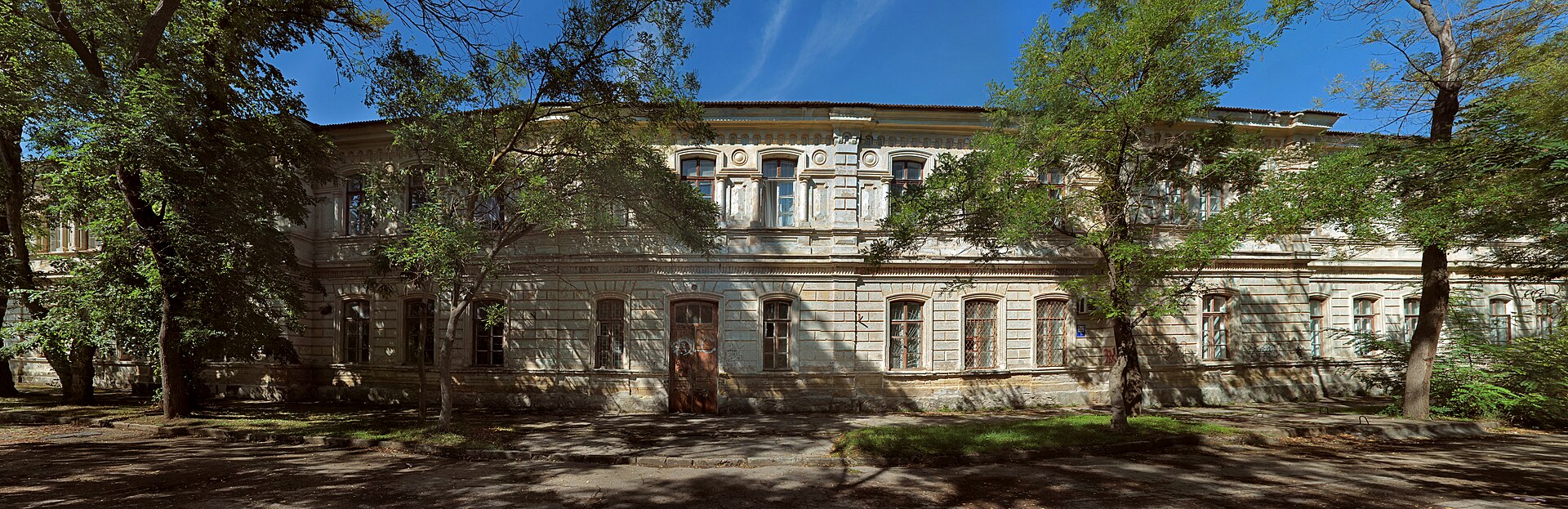
The Yevpatoria Men’s Gymnasium stands on a quiet street, its brick walls holding stories of a city that was once a provincial hub, not just a resort. Built in the late 19th century, it reflects the changes Crimea underwent after joining the Russian Empire. Yevpatoria was growing then, a place where merchants, officials, and intellectuals shaped its future. The gymnasium was part of that transformation.
The building’s design is familiar: symmetrical facades, high ceilings, and large windows to flood classrooms with light. It looks like other gymnasiums of the era, but here, it feels different. The modest decorative elements on the brickwork hint at a time when education was still a privilege, though doors were slowly opening wider. Inside, you can almost see the wooden staircases, the long corridors, and students hurrying with books in hand.
The gymnasium opened in 1899. By then, Yevpatoria was already known as a resort, but the local intelligentsia wanted more—they pushed for education. The school taught the children of merchants, doctors, and teachers, the people who kept the city running. The curriculum included classical languages, mathematics, history, and literature. But more than lessons, it offered status. A diploma here could mean university or a respected place in society.
The early 20th century was unkind to the gymnasium. Revolution, civil war, and shifting power changed its name and purpose. During the Soviet era, it housed different organizations but stayed tied to education. Now, it’s a school again. The interior has likely changed, but the exterior still whispers of the past. Walk by, and you’ll see how its sturdy, weathered walls stand out against the modern buildings around it.
For Yevpatoria, this building is a thread connecting eras. It sits where life once buzzed: traders from the market, sailors heading to the docks, and townspeople gathering in the evenings. The streets are quieter now, but if you listen, you might still hear echoes of that time. Maybe somewhere, in dusty archives, there are lists of graduates—some who brought fame to the city, others who left for the capitals. Even if their names are forgotten, the building remembers.
The gymnasium’s location wasn’t random. Yevpatoria has always been a mix of cultures—Crimean Tatars, Greeks, Armenians, Karaites, and Russians. In such a place, education wasn’t just about climbing the social ladder; it was a way to connect. Though the gymnasium was a Russian institution, it admitted children from different backgrounds. That, too, is part of its story.
Tourists flock to Yevpatoria’s ancient mosques and Karaite kenassas, but the gymnasium doesn’t demand attention. It’s plain, unassuming—no bright colors or grand designs. That’s its quiet charm. It’s for those who want to see beyond the resort, to imagine the sound of school bells, the debates in classrooms, or the games of gorodki in the courtyard during breaks. These buildings don’t shout; they endure.
Yevpatoria has started to care more about its old buildings, trying to save what’s left. The gymnasium is one of them. It doesn’t need a grand restoration—just recognition. History isn’t only in museums; it’s in these ordinary places that were once someone’s everyday life.