The National Palace of Culture in Sofia is one of those places that quietly anchors the city, blending into its daily rhythm while standing as a testament to Bulgaria’s modern history. Built in the early 1980s, it was conceived as a grand venue to mark the 1300th anniversary of the Bulgarian state, a project that reflected the ambitions of the time. The palace was designed by a team led by architect Alexander Barov, who envisioned a space that would serve both as a cultural hub and a symbol of national pride. Its construction was a massive undertaking, involving thousands of workers and engineers, and it quickly became one of the largest congress centers in Southeastern Europe.
The building itself is a striking example of late socialist modernism, a style that sought to combine monumental scale with functional design. From the outside, it appears as a series of interconnected pavilions, arranged in a way that creates a sense of openness despite its size. The central hall, with its vast glass façade, dominates the structure, while the surrounding wings house smaller auditoriums, exhibition spaces, and conference rooms. The architecture is unapologetically bold, with clean lines and geometric forms that contrast with the more ornate buildings found elsewhere in Sofia. Over the years, the palace has aged gracefully, its concrete and glass surfaces weathering into a patina that feels almost intentional, as if the building has always been part of the city’s fabric.
Inside, the National Palace of Culture is a labyrinth of halls and corridors, each designed for a specific purpose. The largest of these is the Congress Hall, capable of seating over 3,000 people, where major events, concerts, and conferences take place. The acoustics are carefully engineered, making it a favored venue for classical performances and international gatherings. Smaller halls, like the Sofia Hall and the Exhibition Hall, host everything from film festivals to trade shows, their flexible layouts adapting to the needs of different events. The interiors are functional rather than lavish, with an emphasis on practicality—wide staircases, ample seating, and unobtrusive lighting that keeps the focus on the activities within.
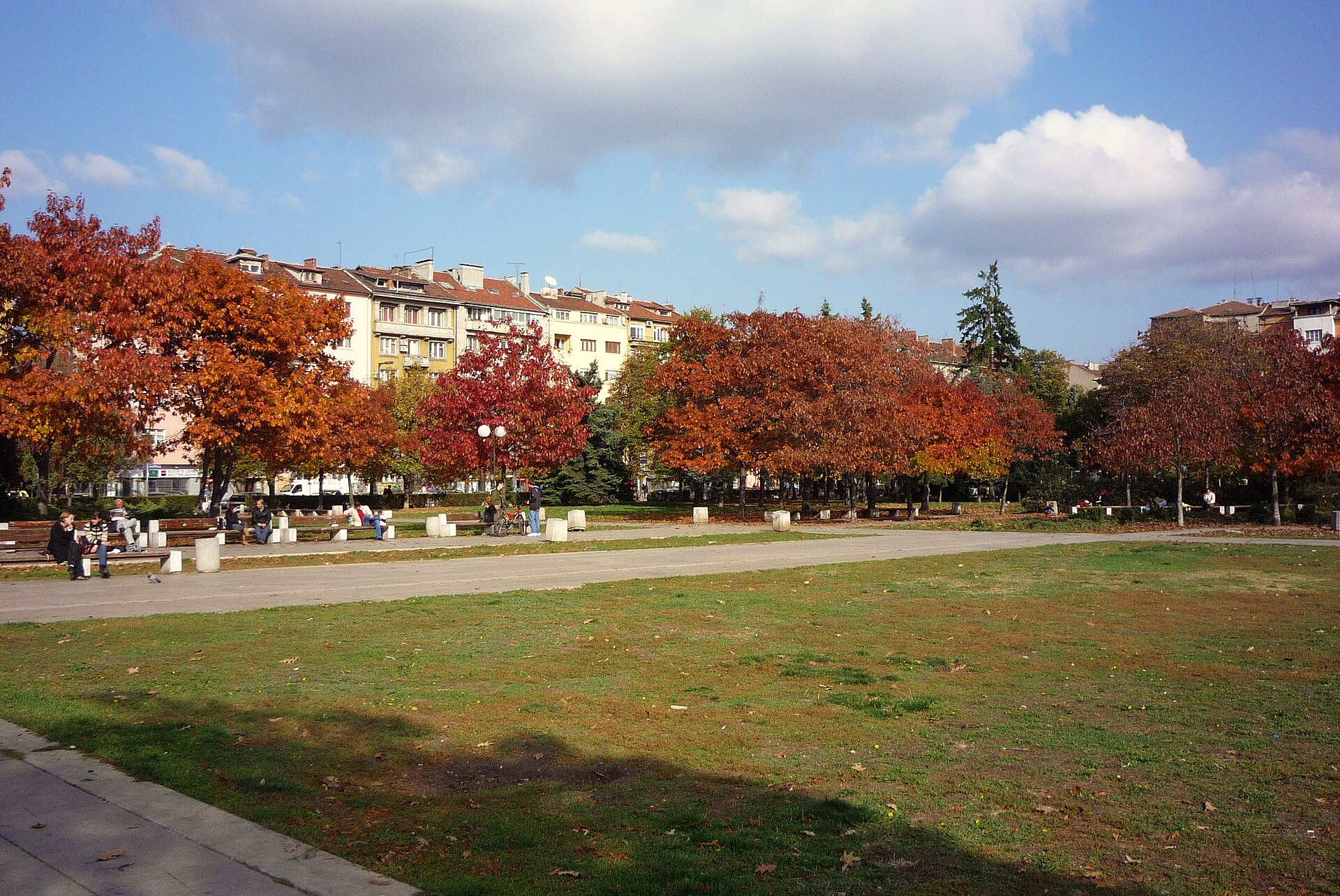
Beyond its role as an event space, the palace has become a part of Sofia’s social life in unexpected ways. The surrounding park, known simply as the NDK Park, is one of the few green spaces in the city center where locals gather year-round. In the summer, the open-air terraces fill with people enjoying coffee or a quick meal, while in the winter, the park transforms into a festive scene with ice skating and holiday markets. The palace itself is a backdrop to countless memories—graduation ceremonies, first dates, political rallies, and impromptu meetups. For many Bulgarians, it’s a place that exists in the background of their lives, a constant presence that only occasionally demands attention but is always there.
The National Palace of Culture has also played a role in Bulgaria’s political and cultural transitions. During the late 1980s and early 1990s, it was a site of significant gatherings, including protests and public debates that shaped the country’s path after the fall of communism. In the decades since, it has hosted international summits, cultural exchanges, and even fashion shows, reflecting Bulgaria’s evolving identity. The palace has managed to remain relevant not by chasing trends but by adapting to the needs of the moment, whether that means serving as a venue for a high-profile conference or a quiet space for a local art exhibition.
One of the most interesting aspects of the palace is how it straddles the line between public and institutional. It’s a government-owned building, yet it feels accessible in a way that many official spaces do not. There’s no grand security checkpoint at the entrance, no sense of exclusivity—just a steady flow of people coming and going for reasons both mundane and extraordinary. The palace’s design reinforces this openness, with its wide plazas and transparent facades inviting rather than intimidating. Even the name, National Palace of Culture, carries a certain weight, suggesting a space that belongs to everyone rather than a select few.
For visitors to Sofia, the National Palace of Culture offers a glimpse into the city’s modern identity. It’s not a historic landmark in the traditional sense, but it’s a place where history has been made in smaller, more subtle ways. Walking through its halls, you might catch a rehearsal for a symphony, a press conference for a new tech startup, or a group of students practicing a dance routine in one of the foyers. The palace doesn’t impose itself on the city; instead, it absorbs the energy around it, reflecting the diversity of Sofia’s cultural life. Whether you’re there for a specific event or just passing through, it’s worth taking a moment to appreciate the quiet ambition of the place—the way it balances grandeur with simplicity, and how it has become, almost by accident, one of the city’s most enduring symbols.