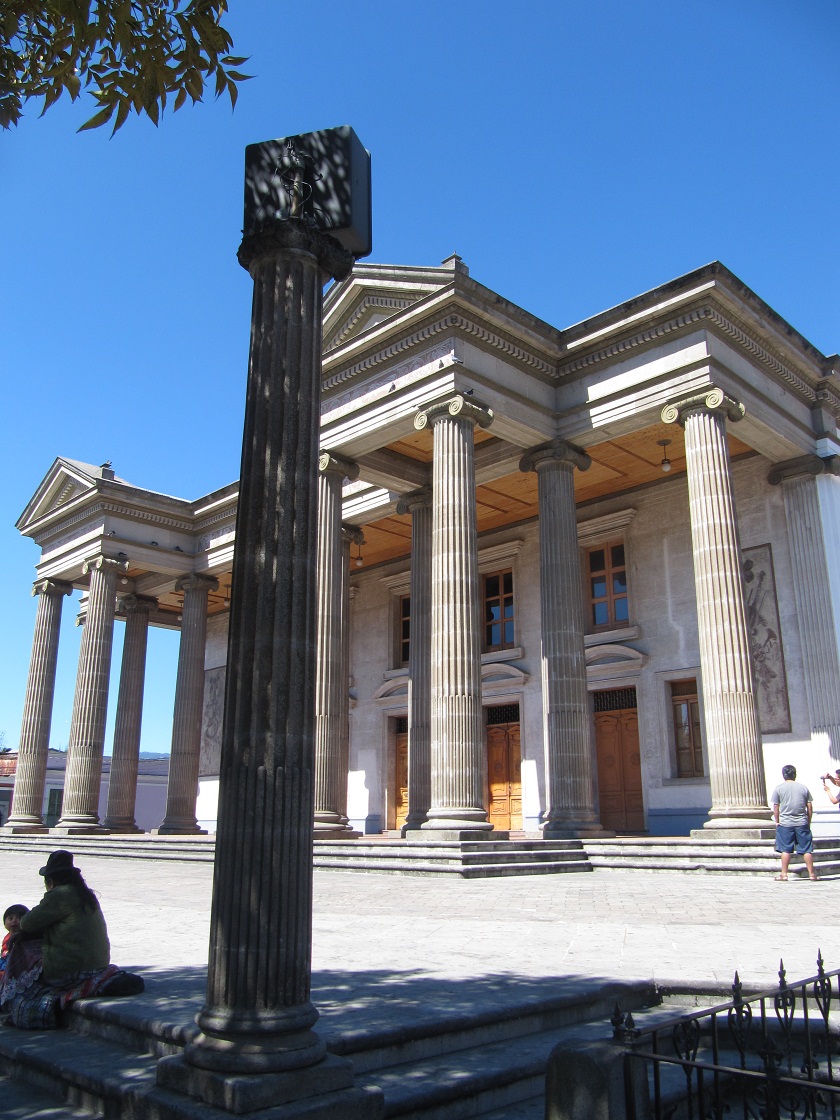
The Cultural Palace in Quetzaltenango is one of those places where the city’s past feels almost tangible. Built in the early 20th century, it stands as a quiet monument to a time when Guatemala was reshaping itself, and Quetzaltenango was emerging as the cultural and administrative heart of the western highlands. The building rose from the ruins of an old monastery destroyed by an earthquake, its construction coinciding with a period when the city was asserting its identity beyond just a regional hub. The architecture blends neoclassical elements with local influences, creating something that feels both grand and grounded—a structure that doesn’t just occupy space but tells a story.
From the outside, the palace is unassuming yet striking. Tall columns frame the entrance, and the heavy wooden doors open into spacious halls that carry a sense of dignity without being overly ornate. The facade is adorned with subtle stucco work, while inside, the use of wood and marble reflects the tastes of the era—materials chosen for their durability and quiet elegance. There’s no gilded opulence here, no attempt to mimic European palaces. Instead, the building embodies the character of Quetzaltenango itself: practical, unpretentious, and proud in its own way.
Today, the palace serves as a hub for the city’s cultural and educational life. Its halls host exhibitions of local artists, concerts ranging from classical to traditional folk music, and lectures that draw curious minds. The library holds rare books and archival documents tied to the region’s history, offering a glimpse into the past for those who take the time to explore. For residents, the palace isn’t just a landmark; it’s a living space where people gather for events, study, or simply enjoy a moment of quiet. The atmosphere is one of warmth and familiarity, as if the building itself is part of the community’s daily rhythm.
Quetzaltenango has long been known as Guatemala’s intellectual capital, and the Cultural Palace plays a key role in that reputation. The city has a history of education and learning, home to one of the country’s first universities. The palace continues that tradition, offering a place where art and knowledge are accessible to everyone. Over the years, it has welcomed writers, musicians, and scholars, their presence lingering in the air like an unspoken conversation. Even now, stepping into its halls feels like entering a space where ideas are shared and creativity is nurtured.
The square in front of the palace is just as much a part of the experience. It’s a natural extension of the building, a place where people gather in the evenings to sit on benches, listen to street musicians, or enjoy the cool mountain breeze. The surrounding buildings, with their brightly painted facades, give the square a cozy, almost village-like feel. On weekends, small markets pop up, selling handmade crafts and local food, turning the area into a lively but unhurried social space. It’s the kind of place where you might strike up a conversation with a stranger or simply watch the world go by.
The palace is more than just an architectural relic; it’s a witness to history. Its walls have seen the ebb and flow of Guatemala’s past century—political gatherings, cultural shifts, and moments of quiet resilience. During times of upheaval, it became a meeting place for debate and dissent; in calmer periods, it served as a center for the arts. Today, it remains as relevant as ever, though its role has evolved. It’s no longer just an administrative building but a space where the city’s past and present intersect.
For visitors, the Cultural Palace might not be the most obvious attraction. There are no flashy exhibits or grand spectacles, and that’s precisely what makes it special. It’s a place where you can sense the pulse of Quetzaltenango, where the city’s history and everyday life unfold without fanfare. If you’re lucky, you might catch an event—a concert, an exhibition, or a lecture—and see how the community comes together. The palace doesn’t demand attention; it invites you to slow down and engage with the city on its own terms.
Quetzaltenango is a city of contrasts, where modernity and tradition coexist against a backdrop of misty highlands. The Cultural Palace embodies that duality. It doesn’t try to be anything other than what it is: a quiet, enduring presence in the life of the city. There are no crowds of tourists here, no rush to snap photos and move on. Instead, there’s time to linger, to notice the details, and to appreciate the way the building fits into the fabric of the city. Sometimes, the most meaningful places are the ones that don’t shout for attention but simply exist, offering a chance to connect with something real.