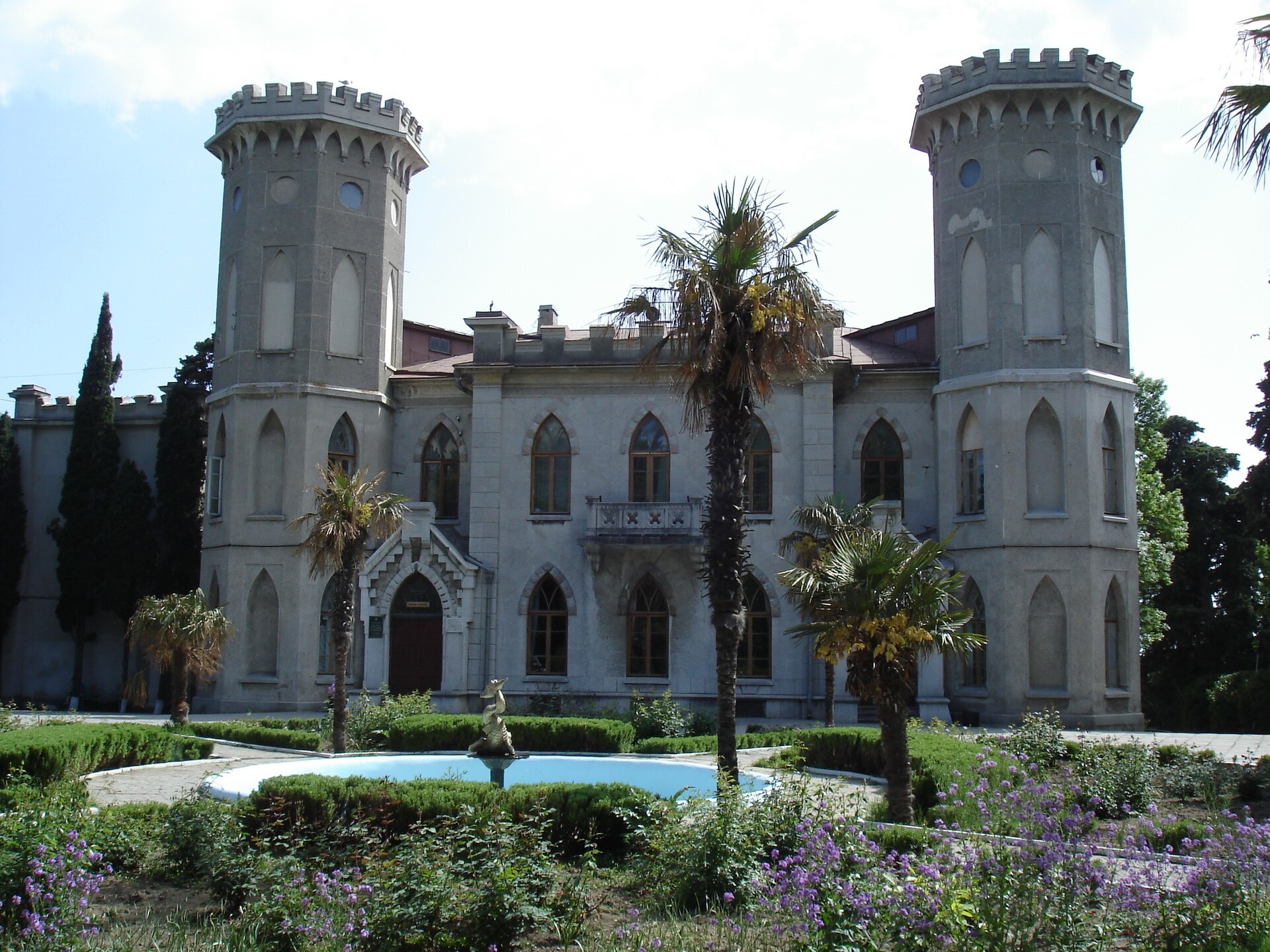
Perched on a gentle rise above the Crimean coastline, the Gaspra Palace feels like a fragment of another era, untouched by the rush of modern life. Built in the late 19th century as a summer retreat for Prince Alexander Golitsyn, a scion of one of Russia’s most prominent noble families, the palace blends architectural styles in a way that feels both deliberate and whimsical. Its pointed towers, arched windows, and intricate balconies evoke a fairy-tale castle, though the design leans more toward neo-Gothic and Moorish influences than any traditional Russian aesthetic. The effect is striking—a structure that seems to have grown organically from the landscape rather than been imposed upon it.
The choice of location was no accident. Gaspra had long been favored by the Russian aristocracy for its mild climate, lush vegetation, and sweeping views of the Black Sea. The palace sits on a hillside, offering vistas that stretch from the rugged slopes of Ai-Petri to the endless expanse of water below. The surrounding gardens were laid out with meticulous care, following the principles of 19th-century landscape design. Terraces, fountains, and carefully selected plants created a setting that was both grand and intimate, a place where nature and architecture existed in harmony.
Inside, the palace was a study in understated luxury. The interiors reflected the eclectic tastes of the time, mixing elements from different periods and cultures without overwhelming the space. Grand halls featured antique tapestries, carved furniture, and porcelain collections, while the library held rare books and manuscripts. Large windows flooded the rooms with light, and fireplaces provided warmth on cooler evenings. The palace was a social hub, hosting not just nobility but also artists, scholars, and musicians, who gathered here for conversations, performances, and quiet reflection.
The 20th century brought dramatic changes. After the revolution, the palace served various purposes—a sanatorium, a rest home, and later a medical facility. Despite these shifts, much of the original layout and decor survived. During the Soviet era, it even acquired the nickname "Lenin’s Palace," a nod to the Bolshevik leader’s brief stay in Gaspra in 1920. The details of his visit remain murky, with little concrete evidence to confirm whether he actually resided in the palace itself. Still, the association added another layer to the building’s already rich history.
Today, the palace stands as a quiet monument to a vanished world. It isn’t a museum in the traditional sense, nor is it abandoned. The surrounding park, with its ancient trees and winding paths, remains open to visitors, offering glimpses of the same views that once captivated the Golitsyns and their guests. Occasionally, guided tours allow a peek inside, where the faded grandeur of the interiors hints at the lives once lived within these walls.
Time has not been kind to the palace. Some sections show signs of wear, and the interiors no longer gleam with the opulence of their heyday. Yet even in its current state, the building retains a powerful presence. Its walls seem to hold echoes of the past—of conversations in the drawing rooms, of footsteps on the marble floors, of the distant murmur of the sea. For those drawn to Crimean history or the legacy of Russia’s aristocratic estates, the palace offers a rare glimpse into a way of life that has all but disappeared.
Gaspra itself remains a tranquil corner of the Crimean coast, where the pace of life slows to a crawl. The palace, with its overgrown gardens and weathered stone, feels like a silent witness to the passage of time. Walking its paths, it’s easy to imagine the comings and goings of its former inhabitants—the clatter of carriages, the laughter of guests, the rustle of evening gowns in the candlelit halls. This isn’t a place for crowds or selfie sticks; it’s for those who appreciate the weight of history and the quiet beauty of a bygone era.
If you find yourself in Gaspra, the palace is worth a detour. It doesn’t announce itself with fanfare but reveals itself slowly, like a story unfolding. The architecture, the history, the surrounding landscape—all combine to create an atmosphere that’s difficult to put into words. Perhaps that’s why it still draws visitors, not as a mere attraction, but as a place with a soul.