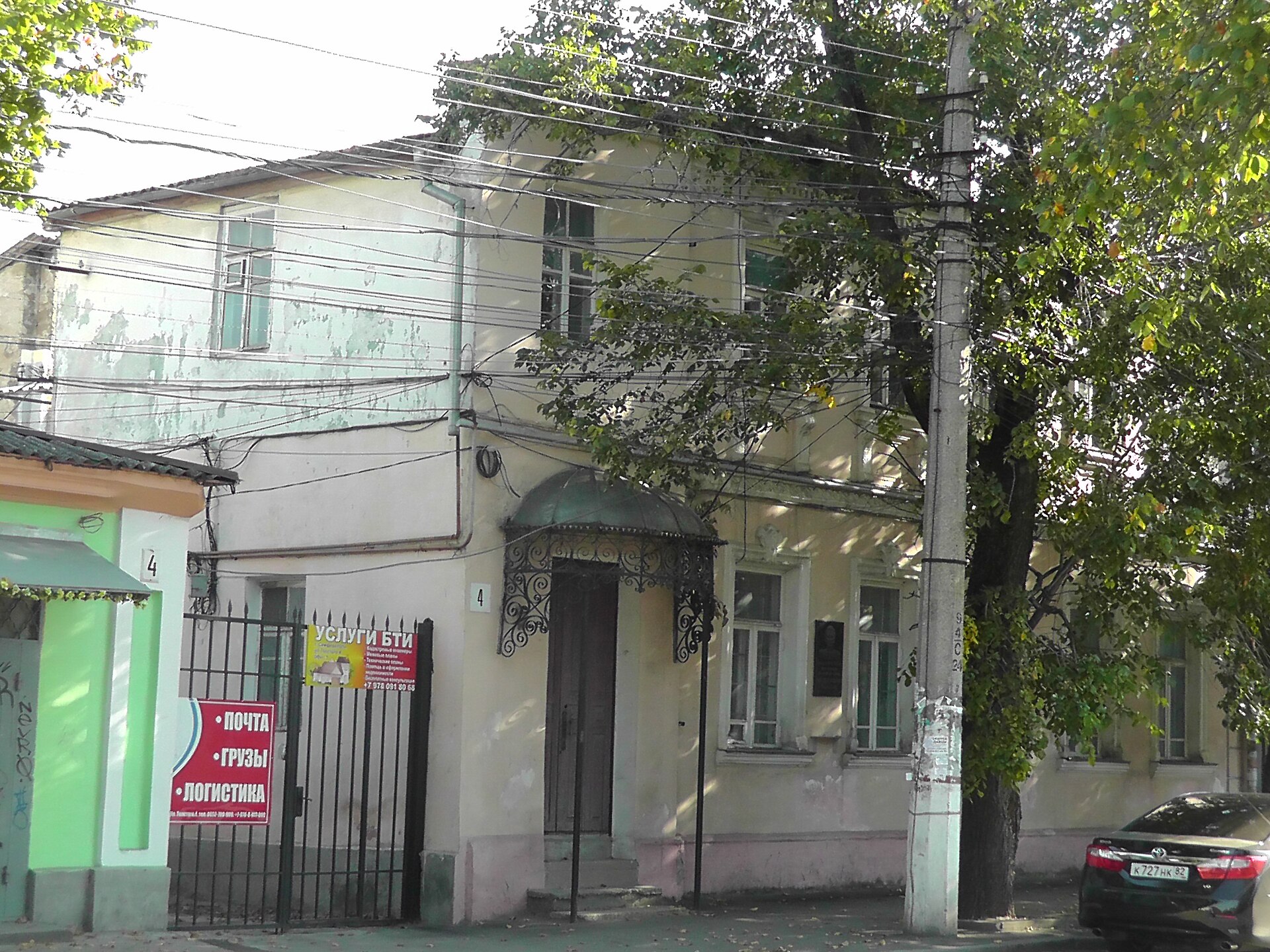
In the quiet heart of Simferopol, along one of the old city’s unassuming streets, stands a two-story house with a modest facade. It’s the kind of building that might easily go unnoticed, blending into the urban landscape like so many others. Yet this house carries a quiet significance—it’s where Leo Tolstoy once stayed during the winter of 1854–1855, a time when Crimea was still a warzone rather than the resort it would later become. There’s no grand museum here, no polished exhibits or crowds of visitors. Instead, the house remains a private residence, its unremarkable appearance making it all the more intriguing. It wasn’t a palace or a literary salon, just a place where a man who had already written *Childhood* and *Boyhood* could pause, catch his breath, and gather his thoughts.
Tolstoy arrived in Crimea during the Crimean War, serving in an artillery battery near Sevastopol. At the time, Simferopol was a rear-city, a hub for the wounded, refugees, and officials, its streets filled with the urgency and unease of wartime. The writer passed through the city more than once, but this particular house, owned by acquaintances, became one of his longer stops. In letters from that period, he mentioned Simferopol as a place where he could briefly escape the war, meet friends, and even attempt to work. Yet the war weighed heavily on his mind, and the Crimean winter, though milder than St. Petersburg’s, still felt foreign to someone accustomed to the open landscapes of Yasnaya Polyana. It’s unlikely he wrote much here—his thoughts were elsewhere, consumed by the conflict unfolding just miles away.
Built in the mid-19th century, the house reflects the architectural style of Simferopol’s transformation from a provincial town into a regional center. Its high ceilings, large windows, and understated facade are typical of the era, with an interior that likely retains much of its original layout—enfilade rooms, wood-burning stoves, and creaking wooden staircases. Today, the house is still a home, not a museum, though it occasionally appears on literary tours of the city. For Tolstoy’s admirers, it’s less a monument and more a quiet invitation to imagine how the writer lived and worked far from his usual surroundings, in a place where history was unfolding around him.
What makes this house unusual is how little Tolstoy himself wrote about his time here. His diaries and letters from that period focus more on the war, Sevastopol, and his interactions with fellow officers and locals. The absence of detailed accounts gives the house a different kind of significance—it’s not tied to a specific event or work, but simply holds the memory of a man who once walked through its rooms. Perhaps he pondered the early drafts of *Sevastopol Sketches* within these walls, or maybe he just rested after months on the front lines. Either way, the house is a subtle thread connecting Crimea to Russian literature, a place where the past lingers without fanfare.
Simferopol today is a city where different eras coexist. Ottoman mosques stand near Orthodox churches, Soviet apartment blocks rise beside pre-revolutionary mansions, and bustling markets spill into quiet courtyards. The house where Tolstoy stayed is one of those corners where the past hasn’t vanished but has instead settled into the rhythm of everyday life. Walking down the street, it’s hard to picture the man who wrote some of the world’s greatest novels once pacing these same sidewalks. Yet if you look closely, traces of the 19th century remain—in the old poplar trees, the cobblestone streets, the unhurried pace of the city.
For those interested in Russian literary history, Simferopol might seem an unexpected place of pilgrimage. There’s no Tolstoy museum here, no grand estate like Yasnaya Polyana or the writer’s Moscow home. Instead, there’s an atmosphere, a sense of place that offers a glimpse into how he lived and worked far from his familiar surroundings. The house on this quiet street is just one point on that map, but it’s often these unassuming places that feel the most genuine. They don’t try to impress; they simply exist, reminding us that even great figures were once ordinary travelers, stopping for a night’s rest or a cup of tea at a simple table.
Crimea has always been a crossroads of destinies—a place where people fought, created, loved, and died across centuries. Tolstoy’s house is a small fragment of that larger story. It doesn’t seek fame or strive to become a tourist attraction. It stands as it has for over a century and a half, just as it did when a weary officer with a notebook in hand first stepped through its door. If you ever find yourself in Simferopol, take a moment to walk past it slowly. In its quiet way, the house still holds the breath of a time that refuses to fade, even amid the rush of modern life.