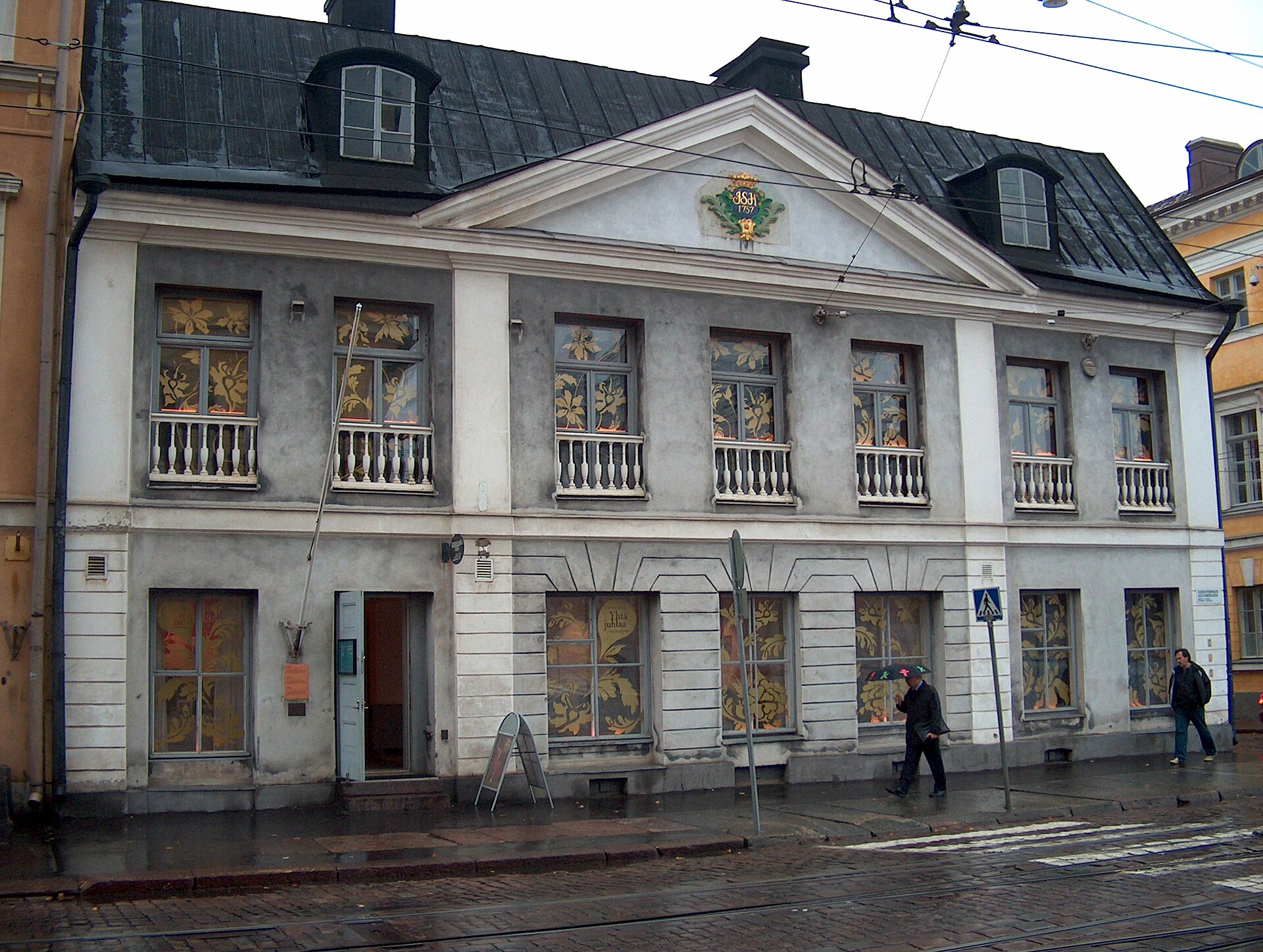
Standing on the corner of Aleksanterinkatu and Kruununhaka, the Sederholm House is one of those quiet survivors that still carry the spirit of old Helsinki. Built in the late 18th century, it holds the distinction of being the oldest stone residential building in the city. While it now houses a museum, the real charm lies in the building itself—a modest yet striking structure that offers a glimpse into the Helsinki of centuries past. Its thick walls, narrow windows, and unassuming facade stand in contrast to the modern city that has grown around it, almost as if time had paused just long enough to let this small piece of history remain.
The house owes its existence to Johan Sederholm, a Swedish-born merchant who settled in Helsinki in the mid-1700s. At the time, the city was little more than a trading outpost, its center clustered near the water where Senate Square now lies. Sederholm made his fortune dealing in salt and other goods, and his home became a symbol of the young city’s growing prosperity. After his death, the building passed through several owners but remained a private residence until the 20th century, when it was turned into a museum. Its walls have witnessed the transformation of Helsinki from a modest settlement into a bustling capital, yet the house itself has changed remarkably little.
Architecturally, the Sederholm House is a fine example of its era. The two-story building, clad in gray granite, features a steep roof and small, evenly spaced windows—characteristics typical of 18th-century urban design in this part of Europe. Inside, the layout has been preserved almost intact, with narrow hallways, low ceilings, and creaking wooden staircases that lead to rooms heated by old brick stoves. The interiors have been carefully restored to reflect the lifestyle of a well-to-do 18th-century merchant. The kitchen, with its massive iron stove and collection of antique cookware, feels particularly authentic, while the sitting room, where Sederholm once entertained guests, retains an air of quiet elegance.
The museum inside the house does more than just tell the story of its original owner. It offers a broader look at Helsinki’s development, from its early days as a small port town to its rise as a key center of trade and governance. The exhibits include everyday objects, historical documents, maps, and photographs that paint a vivid picture of life in the city over the centuries. Trade and craftsmanship take center stage, reflecting how these industries shaped Helsinki’s growth. Occasionally, the museum hosts temporary exhibitions that delve deeper into specific aspects of the city’s past, from maritime history to the evolution of urban living.
What makes the Sederholm House special is its unassuming presence in the heart of Helsinki. Tucked between grander landmarks like the Senate Square and the Lutheran Cathedral, it doesn’t demand attention the way its neighbors do. Instead, it invites those who notice it to step closer and listen to its story. The building’s location makes it an easy stop on a walking tour of the city center, yet it’s often overlooked by visitors rushing between more famous sights. That’s part of its appeal—it feels like a secret, a quiet corner where the past lingers just a little longer.
Inside, the museum has an intimate, almost homely atmosphere. There are no crowds here, no hurried footsteps or flashing cameras. Visitors can take their time wandering through the rooms, sitting in the old armchairs, or simply gazing out the windows at the modern city beyond. In the summer, the courtyard occasionally comes alive with small events—concerts of period music, lectures on local history, or workshops on traditional crafts. In winter, the house feels even cozier, with warm light spilling from its windows and the faint scent of woodsmoke in the air.
For anyone curious about Finland’s history, the Sederholm House is more than just a museum. It’s a tangible connection to a time when Helsinki was a small, slow-moving town where life revolved around trade and the rhythms of the sea. Today, surrounded by glass-and-steel buildings and busy streets, it’s hard to imagine that world. Yet here it is, preserved in stone and wood, a reminder that even the most modern cities have roots that run deep.
A visit to the Sederholm House doesn’t take long, but it leaves a lasting impression. It’s the kind of place that rewards those who appreciate the quiet, unpolished corners of history rather than the grand, obvious ones. There are no dramatic displays or flashy exhibits here—just the quiet authenticity of a building that has stood the test of time. In a city that’s constantly evolving, the Sederholm House offers a moment of stillness, a chance to step back and listen to the stories of the people who shaped Helsinki long before it became the city it is today.