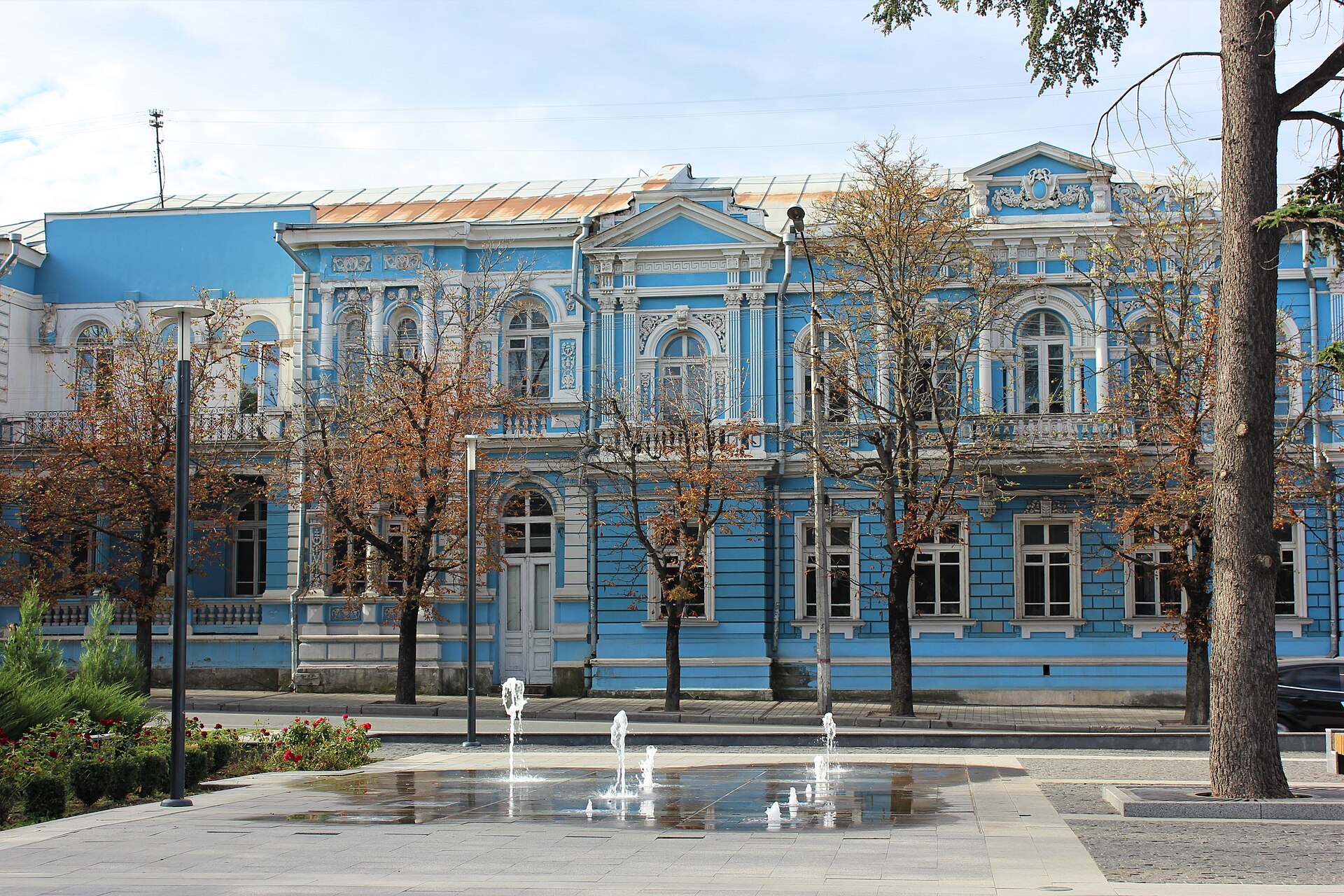
The house of Shabetai Duvan in Simferopol is one of those buildings that quietly blend into the cityscape, yet carry within them a story deeply intertwined with the city’s own development. Built in the late 19th century, it belonged to Shabetai Duvan, a prominent public figure and entrepreneur whose name became synonymous with the economic and cultural rise of Crimea during that era. Duvan was more than just a wealthy merchant—he was a patron of the arts and a civic leader, and his home reflected not only his personal prosperity but also the spirit of the times.
The architecture of the building is characteristic of the late eclectic period, when structures often combined elements of different styles. The facade is adorned with stucco details, asymmetrical bay windows, and decorative balconies, giving it a sense of lightness while maintaining a certain grandeur. Inside, the layout was designed for the comfort of a well-to-do family, with high ceilings, spacious rooms, and large windows that flooded the interiors with natural light. In those days, such houses were not just residences but also social hubs where business was discussed, deals were struck, and decisions shaping the city’s future were made.
Today, the Duvan House looks somewhat different from its heyday. Time and the turbulent history of Crimea have left their mark—parts of the facade are weathered, and some decorative elements have been lost. Yet the building still stands out amid the surrounding architecture, a reminder of an era when Simferopol was rapidly developing into one of the peninsula’s key cities. Located in the historic center, where every block seems to breathe the past, the house exists alongside modern life while evoking memories of merchants, officials, and revolutionaries whose names once filled the air.
Shabetai Duvan himself was an extraordinary figure. Born in Karasubazar (now Belogorsk) into a merchant family, he built his career in Simferopol, becoming one of the region’s largest landowners and businessmen. Beyond trade and banking, he played an active role in public life, serving as a city council member, supporting charitable organizations, and funding the construction of schools and hospitals. His home, therefore, was more than just a mansion—it was a gathering place for the local elite, a space where ideas were exchanged and influence was wielded.
After the 1917 Revolution, the building, like many others belonging to the wealthy, was nationalized. Its interiors were repurposed to serve the needs of the new authorities, housing everything from Soviet offices to educational institutions. Each era left its imprint on the interior, making it difficult to imagine what the house looked like in its original state. Still, the exterior retains enough of its original character to convey its architectural significance.
Today, the Duvan House is neither a museum nor a typical tourist attraction. It doesn’t draw crowds, nor is it marked with plaques detailing its history. Many passersby might not even know who once lived there. Yet this very unobtrusiveness is part of its charm. The building exists as a quiet witness to the changes Simferopol has undergone over the past century and a half. It doesn’t demand attention, but if you look closely, you can spot details that whisper of its past—old window frames, fragments of stucco, and massive doors that once welcomed Duvan’s guests.
For those interested in Crimea’s history, the Duvan House offers a glimpse into how the city and its people have evolved. In the late 19th and early 20th centuries, Simferopol was a melting pot of cultures, home to Russians, Crimean Tatars, Karaims, Armenians, and Greeks. The house, like many others from that era, reflects this diversity. Shabetai Duvan himself was a Karaim, and his work contributed not only to the Russian community but also to the broader cultural fabric of Crimea.
The building still serves a purpose today, though not in the way it was originally intended. It isn’t abandoned, but neither does it stand out as a landmark. Perhaps one day it will undergo restoration, regaining some of its former beauty, or perhaps it will remain a subtle part of the cityscape, a silent reminder of those who built and shaped Simferopol. Either way, the Duvan House is more than just an architectural relic—it’s a living page of history, waiting to be read by those who know where to look.