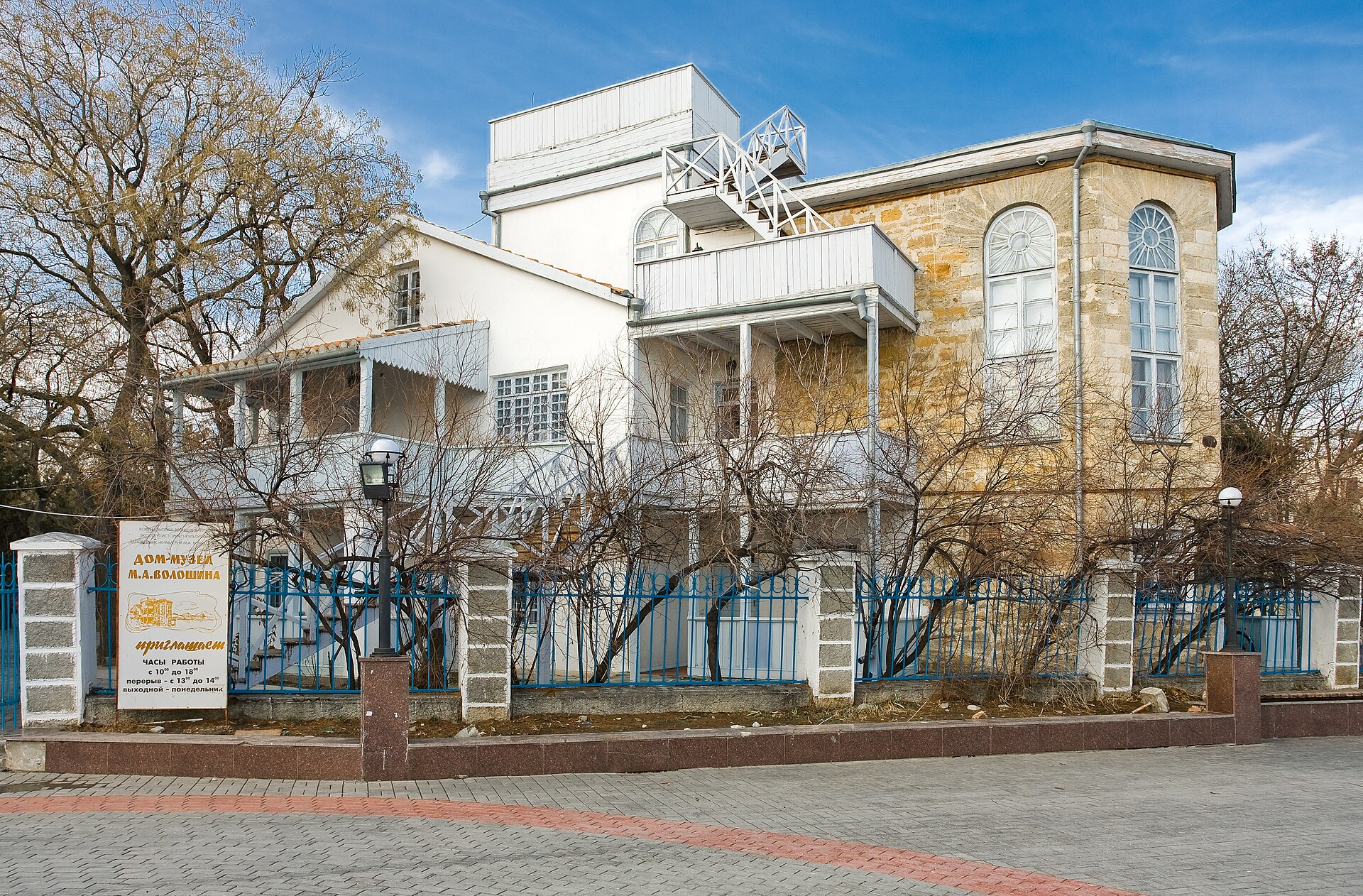
The Voloshin House-Museum in Koktebel is one of those rare places where time seems to slow down, almost as if the air itself carries the weight of memory. This unassuming house on the Crimean coast was more than just a home—it was a sanctuary for artists, writers, and thinkers in the early 20th century, a place where creativity and conversation flowed as naturally as the sea breeze. Built in the late 1800s, the house originally belonged to the poet’s mother, Elena Ottobaldovna Voloshina. After her death in 1923, Maximilian Voloshin made it his own, transforming it into a cultural hub where the boundaries between life and art blurred.
The house itself is simple, almost modest in its design, yet there’s a quiet charm to its stone walls and vine-covered veranda. The two-story structure feels lived-in, as if Voloshin might step through the door at any moment. Inside, the rooms remain much as they were during his lifetime—furniture worn by time, shelves lined with books, paintings by friends and fellow artists. The poet’s studio, a bright, airy space with large windows, offers a sweeping view of the sea and mountains, the same landscape that inspired so much of his work. It’s easy to imagine him here, pen in hand, or hosting lively discussions with guests who came from all corners of Russia.
The museum opened in 1984, decades after Voloshin’s death, but the spirit of the place hasn’t faded. The exhibits go beyond personal artifacts, showcasing works by artists who once gathered here—Konstantin Bogaevsky, Nikolai Krymov, and others who formed Voloshin’s circle. Manuscripts, photographs, and letters tell the story of how Koktebel became a magnet for creative minds, a place where ideas were born over tea and long walks along the shore. For many visitors, this isn’t just a museum; it’s a pilgrimage. Writers, poets, and admirers of Voloshin’s work come to walk the same floors, to sit in the same chairs, and to feel the presence of those who once filled these rooms with their voices—Marina Tsvetaeva, Osip Mandelstam, Andrei Bely.
Koktebel has always been a place apart. The narrow strip of beach, the quiet sea shifting colors with the light, the mountains standing guard in the distance—it’s a landscape that feels both wild and intimate. Voloshin loved this corner of Crimea deeply, calling it his true home despite being born far away in Kyiv. He found peace here, inspiration in the changing seasons, and a sense of belonging that he captured in his poetry. His grave lies on a hill overlooking the bay, a quiet reminder of the life he lived and the legacy he left behind.
Today, the house-museum is more than a tribute to Voloshin; it’s a living space where creativity still thrives. Literary evenings, art exhibitions, and concerts keep the spirit of the place alive, inviting new generations to engage with the past. The museum’s curators have worked to preserve the atmosphere of openness and warmth that Voloshin cultivated, ensuring that visitors don’t just observe history but feel a part of it. For many, a visit here changes how they see Koktebel—not just as a seaside resort, but as a place woven into the fabric of Russian culture.
Walking through the museum is like stepping into another era. The rooms are filled with small details—a worn armchair, a stack of yellowed letters, a painting of the Crimean coastline—that make the past feel tangible. Voloshin believed that art wasn’t confined to studios or pages; it was in conversation, in nature, in the quiet moments between. His home reflects that philosophy, stripped of pretension, focused on what truly matters. There’s a sense that this place was never meant to be a museum in the traditional sense, but rather a home that continues to welcome those who seek something deeper than a holiday.
Koktebel, with its Voloshin House-Museum, has a way of leaving a mark on those who visit. It’s not a place for those who want only sun and sand; it’s for those who crave stillness, who are drawn to stories, who find beauty in the overlooked. The history here isn’t static—it lives in the creak of the floorboards, in the view from the studio window, in the way the light falls on the pages of an old book. That’s why people return, year after year, to sit on the veranda or wander the rooms, as if hoping to catch a whisper of the conversations that once filled this house.
Voloshin’s legacy isn’t just in his poetry or the art he collected; it’s in the way he shaped this place, turning a simple house by the sea into a refuge for the restless and the creative. His belief in the power of art, of community, of the natural world, still lingers here. And perhaps that’s the real draw—not just the chance to see where a great poet lived, but the opportunity to feel, even for a moment, what it was like to be part of something larger than oneself.