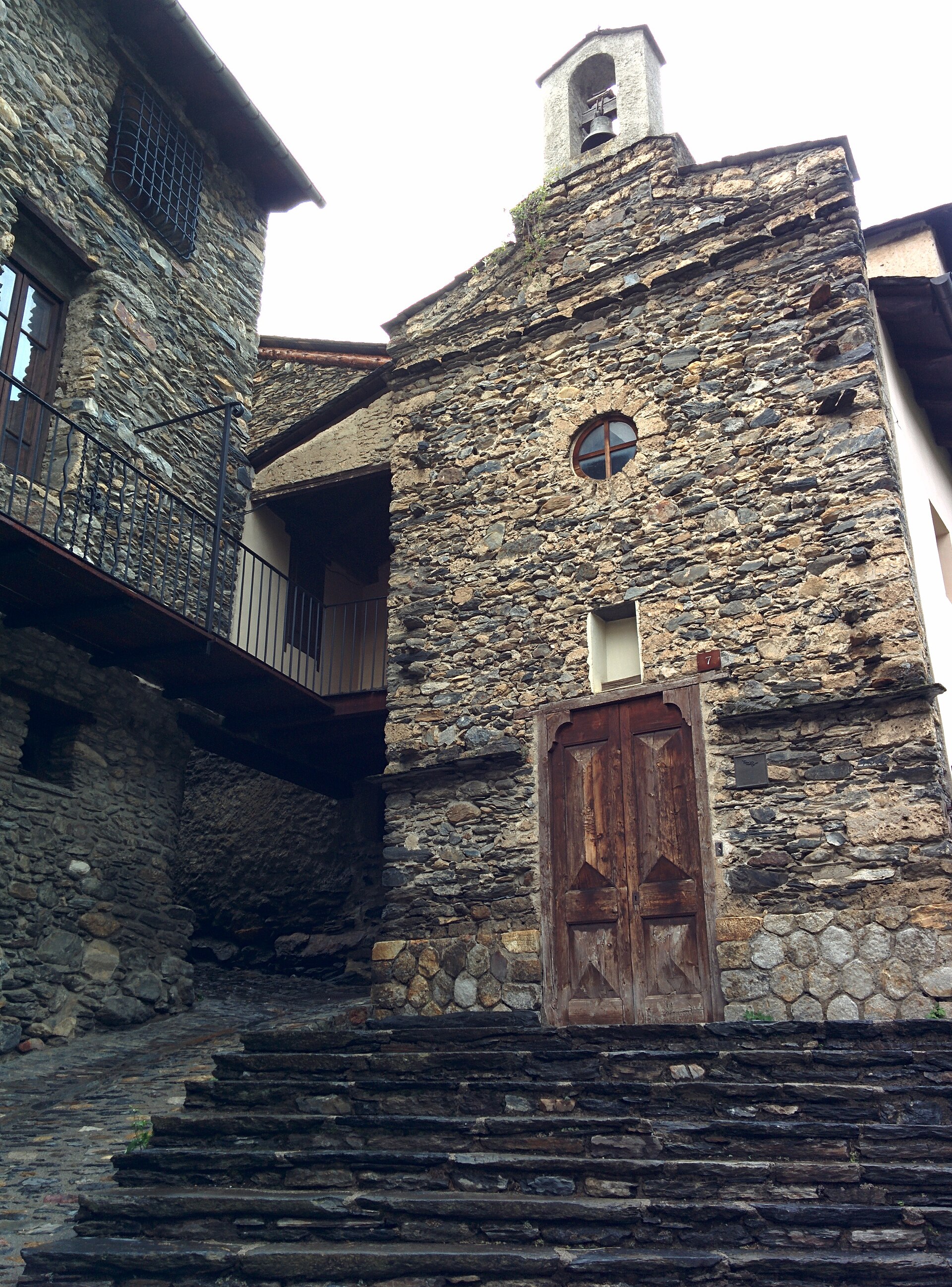
Nestled in the quiet village of La Cortinada, Casa Rull is one of those places where time seems to have settled into the stones. This 17th-century manor house stands as a quiet witness to Andorra’s rural past, a rare surviving example of the traditional architecture that once defined the Pyrenees. Unlike the grand estates of other European regions, Casa Rull was never a palace or a fortress—it was simply a home, built by and for the people who worked the land, raised livestock, and shaped the valley’s way of life over centuries.
The house itself is a sturdy, unassuming structure, its thick stone walls and heavy wooden beams designed to withstand the mountain winters. The façade is modest, with small windows that let in just enough light to warm the interior without inviting the cold. Inside, the rooms are arranged around a central courtyard, a common feature in Andorran farmhouses, where daily life once revolved around the rhythms of agriculture. The kitchen, with its massive fireplace, was the heart of the home, where meals were cooked, stories were shared, and the family gathered during long evenings. The furniture, tools, and household items on display aren’t museum pieces in the usual sense—they’re the real things, left behind by the generations who lived here, as if the last residents had just stepped out for a moment.
What makes Casa Rull particularly interesting is how it reflects the social structure of Andorra in the past. The house was owned by a *fogat*, a term that roughly translates to "hearth" but carried deeper meaning—it referred to a household unit, often extended family, that functioned as both a domestic and economic entity. The *fogat* system was central to Andorran society, where land, labor, and resources were shared among family members, and decisions were made collectively. Casa Rull wasn’t just a home; it was a microcosm of this way of life, where every room, every piece of furniture, and even the layout of the building served a practical purpose tied to survival in a harsh environment.
The architecture of Casa Rull also tells a story of adaptation. The Pyrenees have always been a place of extremes—bitter winters, short growing seasons, and isolation from the outside world. The house’s design responds to these challenges: the thick walls provide insulation, the small windows reduce heat loss, and the sturdy roof is built to handle heavy snowfall. The barn and stables, attached to the main structure, were essential for housing livestock, which provided not just food but also manure for the fields and wool for clothing. Even the placement of the house, slightly elevated on a gentle slope, was no accident—it allowed for better drainage and protection from flooding during the spring thaw.
Today, Casa Rull operates as a museum, but it doesn’t feel like one. There are no glass cases or roped-off areas; instead, visitors are invited to walk through the rooms as if they were guests in the home. The sense of intimacy is striking—you can almost hear the crackling of the fire in the kitchen, the murmur of conversation in the living room, or the clatter of tools in the workshop. The museum’s approach is understated, letting the house speak for itself. There are no grand narratives or dramatic reconstructions, just the quiet accumulation of details that paint a picture of life as it was lived.
One of the most compelling aspects of Casa Rull is how it contrasts with modern Andorra. The country today is known for its ski resorts, tax-free shopping, and sleek infrastructure, but this house is a reminder of a time when life here was far simpler—and far harder. The Pyrenees were not always a playground for tourists; they were a place where people scratched out a living from the land, where every resource had to be used carefully, and where community was not just a word but a necessity. Casa Rull doesn’t romanticize this past, but it doesn’t shy away from it either. It presents life as it was, with all its struggles and small joys.
The village of La Cortinada itself adds to the experience. Unlike Andorra’s more tourist-heavy areas, La Cortinada feels untouched by time. The narrow streets are lined with stone houses, many of them still inhabited, and the surrounding landscape is a patchwork of meadows and forests. There’s no hustle here, no sense of being on display. It’s the kind of place where you might stop for a moment to watch the light change over the mountains or listen to the sound of a distant stream. Casa Rull fits seamlessly into this setting, not as a relic but as a living part of the village’s history.
For those who visit, Casa Rull offers more than just a glimpse into the past—it offers a sense of connection. It’s easy to walk through a museum and feel like an outsider, observing a way of life that has nothing to do with your own. But Casa Rull is different. The simplicity of the house, the absence of pretension, and the tangible presence of the people who lived here make it feel strangely familiar. You don’t need to be Andorran to understand the rhythms of life here—the need for warmth, the importance of family, the quiet satisfaction of a day’s work well done.
In the end, Casa Rull is not just a house; it’s a story. A story of resilience, of adaptation, and of the quiet dignity of ordinary lives. It’s a reminder that history isn’t just about kings and battles and grand events—it’s also about the people who built their homes stone by stone, who tended their fields, and who passed down their traditions from one generation to the next. And in a world that often feels disconnected from the past, that’s a story worth hearing.