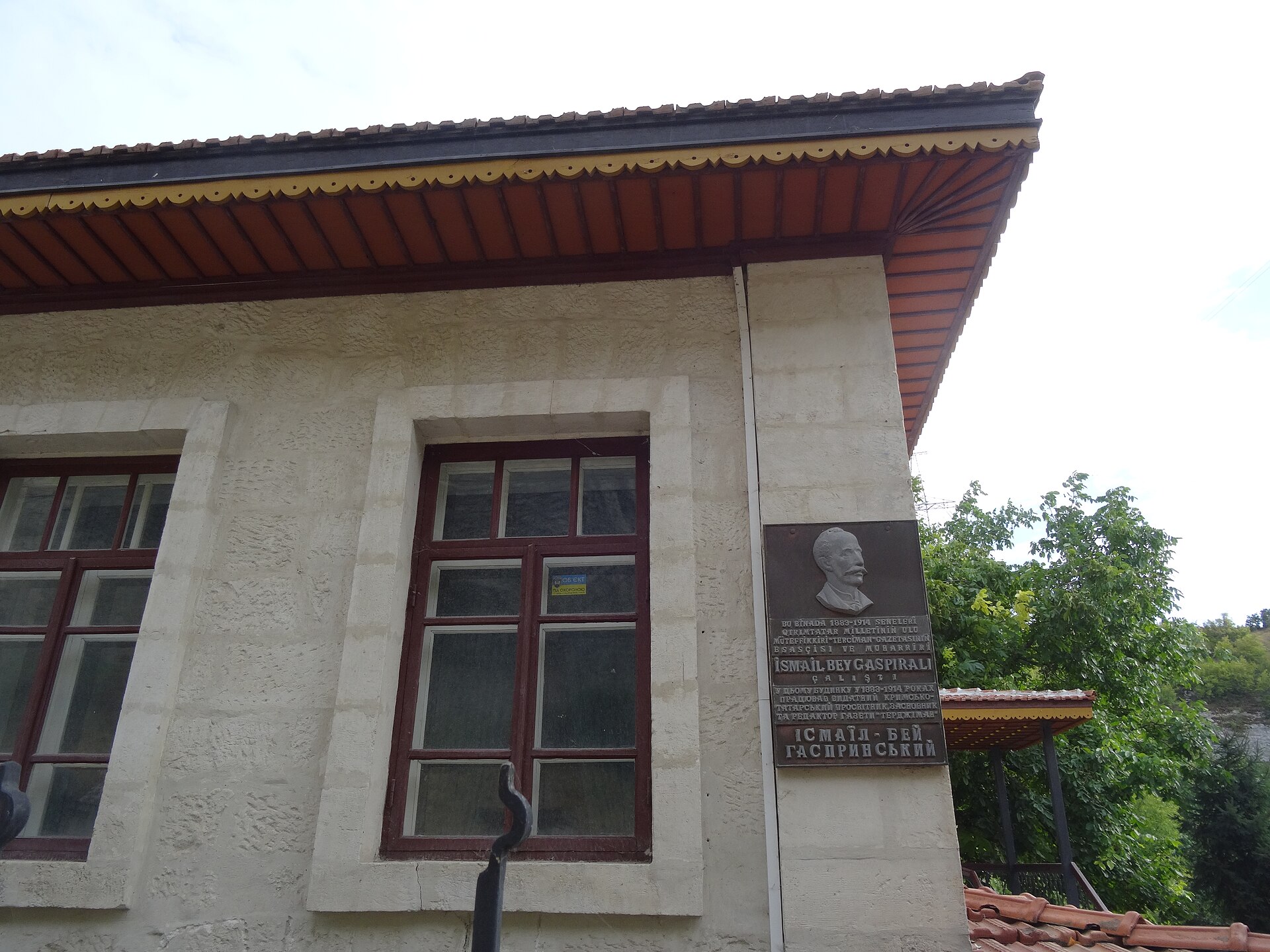
The house where Ismail Gasprinsky once lived stands quietly on a narrow street in Bakhchisaray, its wooden shutters and arched windows hinting at the stories held within. This is not just a museum, but a place where the late 19th and early 20th centuries still breathe—where the air carries the faint scent of old paper, ink, and the quiet determination of a man who shaped the cultural awakening of the Crimean Tatar people. The building itself is a testament to the era, its carved wooden trim and high ceilings preserving the atmosphere of a time when Gasprinsky wrote his articles, debated ideas with visitors, and looked out over the streets of a city that was both his home and his inspiration.
Ismail Gasprinsky was a man ahead of his time. Born in 1851 into a military family, he received his education in Moscow and Istanbul before dedicating his life to the enlightenment of his people. His most enduring legacy was *Terdjiman*, the first newspaper published in the Crimean Tatar language, which became a platform for discussing education, women’s rights, and national identity. Gasprinsky believed that progress could only come through knowledge, and his ideas on modernizing schools, promoting literacy, and fostering cultural pride were revolutionary. This house was where those ideas took shape—where he wrote, planned, and dreamed of a future where his people could stand as equals among nations.
The house itself is a blend of Crimean Tatar and European architectural influences, a reflection of Bakhchisaray’s layered history. Built in the late 1800s, it features the wooden balconies and inner courtyards typical of the region, yet its layout and details also reveal the tastes of a man who had traveled widely and absorbed the styles of different cultures. Inside, the rooms have been preserved to resemble how they might have looked during Gasprinsky’s lifetime. The furniture, photographs, and personal belongings are not just exhibits but fragments of a life lived with purpose. A desk still holds papers as if he had just stepped away, while the walls are lined with books that once fueled his intellectual pursuits.
Beyond Gasprinsky’s personal story, the museum offers a broader look at the cultural and social life of Crimean Tatars during a pivotal period. Exhibits explore the rise of education, the role of the press, and the early days of theater—all areas Gasprinsky championed. *Terdjiman* takes center stage, its pages yellowed with age but its impact undiminished. For 35 years, the newspaper connected communities, challenged outdated traditions, and gave a voice to those who had long been silenced. The museum doesn’t just tell this history; it shows how Gasprinsky’s ideas rippled outward, changing lives in ways both small and profound.
Bakhchisaray is a city where history is etched into every stone. Its labyrinthine streets lead past ancient mosques, caravanserais, and madrasas, each a reminder of the cultures that have shaped this place. The Gasprinsky House Museum fits seamlessly into this tapestry, offering a glimpse into a time when the city was a hub of intellectual and cultural activity. Walking through Bakhchisaray after visiting the museum feels different—no longer just a stroll through a picturesque town, but a journey through layers of history, where Gasprinsky’s legacy lingers in the very air.
Today, the museum is more than a memorial. It’s a living space where history meets the present. Lectures, exhibitions, and discussions bring together scholars, descendants of Gasprinsky’s contemporaries, and curious visitors. The conversations that once filled these rooms continue, now framed by modern questions about identity, heritage, and the future of Crimean Tatar culture. For many, a visit here is not just about learning facts but about feeling a connection—to the past, to the ideas that shaped a people, and to the enduring relevance of Gasprinsky’s vision.
Stepping into this house is like stepping into another era. The concerns of the time—education, progress, national identity—feel both distant and familiar. The museum doesn’t just display artifacts; it invites visitors to imagine the debates that once took place in these rooms, the hopes that were nurtured here, and the challenges that were faced. Gasprinsky’s work was about more than words on a page; it was about changing lives. And in this house, that change is still palpable, a quiet but powerful reminder of how one person’s ideas can shape the course of history.