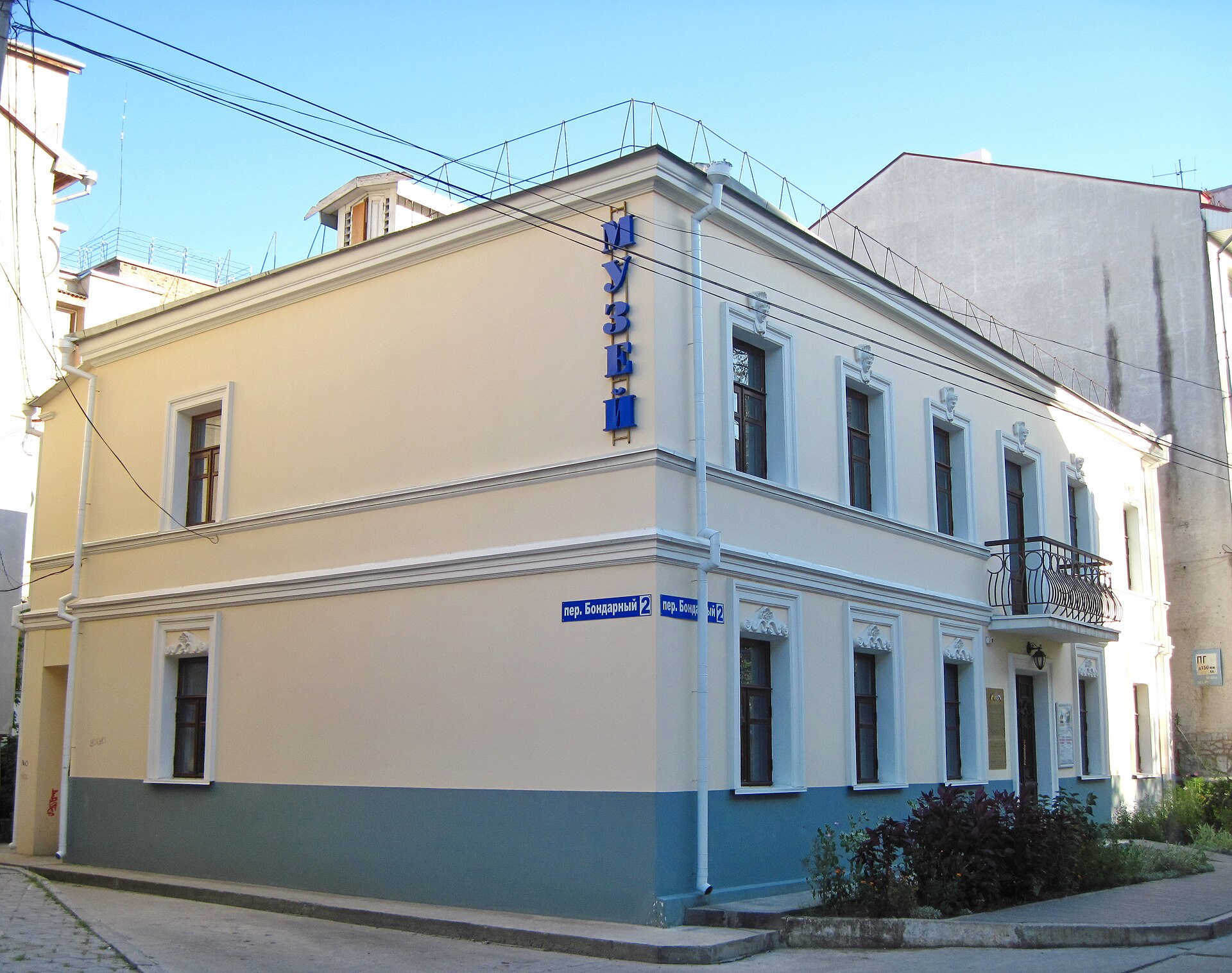
The house where Ilya Selvinsky once lived stands quietly on Nekrasova Street in Simferopol, its unassuming facade hiding the stories of a man whose life and work left a mark on Russian literature. This isn’t a grand memorial or a polished tourist attraction—it’s a place where the past feels tangible, where the air still carries the weight of early 20th-century creativity. Selvinsky, a poet and playwright, spent his final years here, and the museum preserves not just his belongings but the atmosphere of an era when literature was both a refuge and a battleground for ideas.
Born in Simferopol in 1899, Selvinsky was shaped by the city’s layered history. Though he later moved to Moscow and traveled widely, Crimea remained a constant in his life. The house itself, built in the early 1900s, reflects the architectural simplicity of the time—high ceilings, wooden staircases, and large windows that let in the same light that once fell across his desk. The rooms are arranged to evoke the world he inhabited: furniture, books, and personal items that suggest a life lived between the page and the tumult of history.
Selvinsky was more than a poet; he was a literary innovator. As one of the founders of constructivism, he sought to merge poetry with modernist forms, pushing against the boundaries of traditional verse. His works, like *Poem of the Revolution* and the play *Downpour*, captured the chaos and energy of the early Soviet period. The museum holds rare editions of his books, manuscripts with his handwritten notes, and posters from productions of his plays. There are also letters and photographs that reveal his place in the literary debates of the time—arguments that often spilled into public view, making him a polarizing figure.
The museum doesn’t just dwell on the past. It’s a living space where literature is still celebrated. Literary evenings, readings, and discussions take place in the same room where Selvinsky once gathered with friends. Simferopol has long been a crossroads of cultures, and this house continues that tradition, offering a quiet corner for conversation and reflection. Visitors can sit where the poet once sat, flipping through books or simply soaking in the atmosphere of a place where words mattered.
One of the most compelling aspects of the museum is its focus on Selvinsky’s connection to Crimea. The exhibits include materials from his time working for local newspapers, his involvement in the peninsula’s cultural life, and his relationships with other Crimean writers. His study has been recreated with meticulous care—a desk cluttered with papers, shelves lined with well-worn books, and photographs of Simferopol as it looked in his youth. It’s a reminder of how deeply the region influenced his work, even when he was far away.
For those who love literature, this museum offers more than just a glimpse into Selvinsky’s life. It’s a window into the literary world of 20th-century Crimea, a place where poetry and drama evolved alongside political upheaval. The exhibits trace the broader currents of the time, showing how writers navigated censorship, war, and shifting ideologies. It’s also a chance to see Simferopol through a different lens—not just as a city with a rich history, but as a place that nurtured creativity.
The house itself is small, which makes the experience feel intimate. There are no crowds here, no rush to move from one exhibit to the next. Instead, visitors can take their time, lingering over the details—a faded manuscript, a yellowed photograph, the way the light falls across a wooden floor. It’s the kind of place where history doesn’t feel distant; it feels like something you could reach out and touch.
In the end, the Selvinsky House Museum is more than a tribute to one man. It’s a piece of Crimea’s cultural fabric, a place where the personal and the historical intertwine. For locals, it’s a reminder of the city’s literary legacy. For visitors, it’s an invitation to step into a world where poetry wasn’t just written—it was lived. The past here isn’t preserved in glass cases; it’s alive in the quiet corners of a house that still breathes with the echoes of Selvinsky’s words.