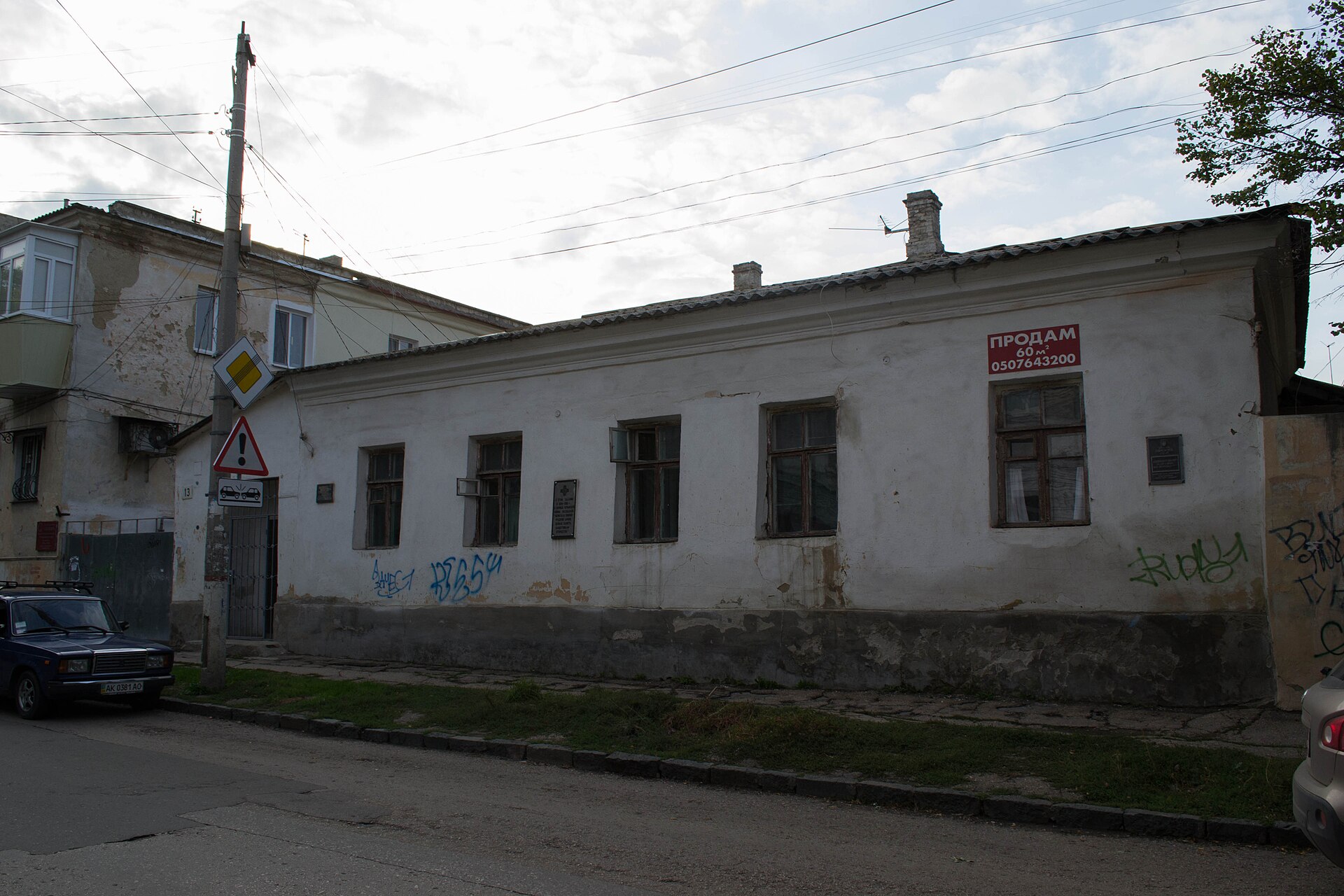
The house at 15 Zhukovsky Street in Simferopol is one of those quiet places most people pass without noticing. Nearly two centuries ago, it briefly sheltered Vasily Zhukovsky, a poet whose name remains familiar in Russian literature. The building looks like any other old residential home in the city—its facade worn by time, its past still visible in the details. In 1837, when Zhukovsky stayed here, Crimea was a distant outpost, reachable only after weeks of travel, and Simferopol was just beginning to grow from a small town into the peninsula’s administrative center.
Why he chose this house isn’t entirely clear—only fragments of his letters and diaries mention his time in Simferopol. But the fact that he stopped here at all says something about the city’s role then. Simferopol wasn’t a tourist destination but a practical stop for officials, military officers, and travelers heading further south to Yalta, Sevastopol, or Bakhchisarai. Like many others, Zhukovsky likely picked this house for its comfort and proximity to the postal station, where carriages and horses could be arranged for the next leg of the journey.
The building’s architecture is typical of the early 19th century: simple, functional, with high ceilings and large windows. Inside, the layout would have followed the conventions of the time—formal rooms on the ground floor, living quarters above. The wooden shutters, the worn steps, and the courtyard where children now play hint at the life that once unfolded here.
Zhukovsky didn’t leave detailed accounts of his time in Simferopol. But his broader impressions of Crimea appeared in his work. For him, the journey wasn’t just about rest—it was a chance to reflect on Russia’s history and culture. In the 1830s, Crimea was a land of contrasts: ancient Greek ruins near Tatar villages, Russian fortresses beside untamed landscapes. To a poet shaped by Romanticism, it was a place of mystery, where every valley and cliff could spark inspiration.
The house isn’t a museum today. Little, if anything, remains from Zhukovsky’s brief stay. But the building stands as a silent witness to an era when Simferopol was just one stop on a long journey. The sounds of everyday life—passersby, neighbors chatting, a dog barking—create a sense of normalcy that contrasts with its historical weight. It’s easy to imagine Zhukovsky stepping onto the street, taking in sights and sounds that haven’t changed much over the decades.
For those who care about literary history, this house offers a moment of reflection. In the 19th century, Crimea was a remote edge of the empire, a place of exile, convalescence, or quiet retreat. Writers, officials, and artists came here seeking solitude or new experiences. Their presence left a mark on the region. Today, Simferopol is a city of layers—modern life alongside older rhythms, Soviet-era buildings beside pre-revolutionary homes. But places like this house remind us of a time when Crimea was still a frontier.
Standing outside, it’s hard not to wonder: Did Zhukovsky discuss poetry with fellow travelers here? Did he jot down notes for future works? We’ll never know. What we do know is that this unremarkable building was once part of a larger story—one that connects Simferopol to Russian culture. History isn’t just made in grand palaces or battlefields. It’s made in quiet places where people pause, reflect, and move on.