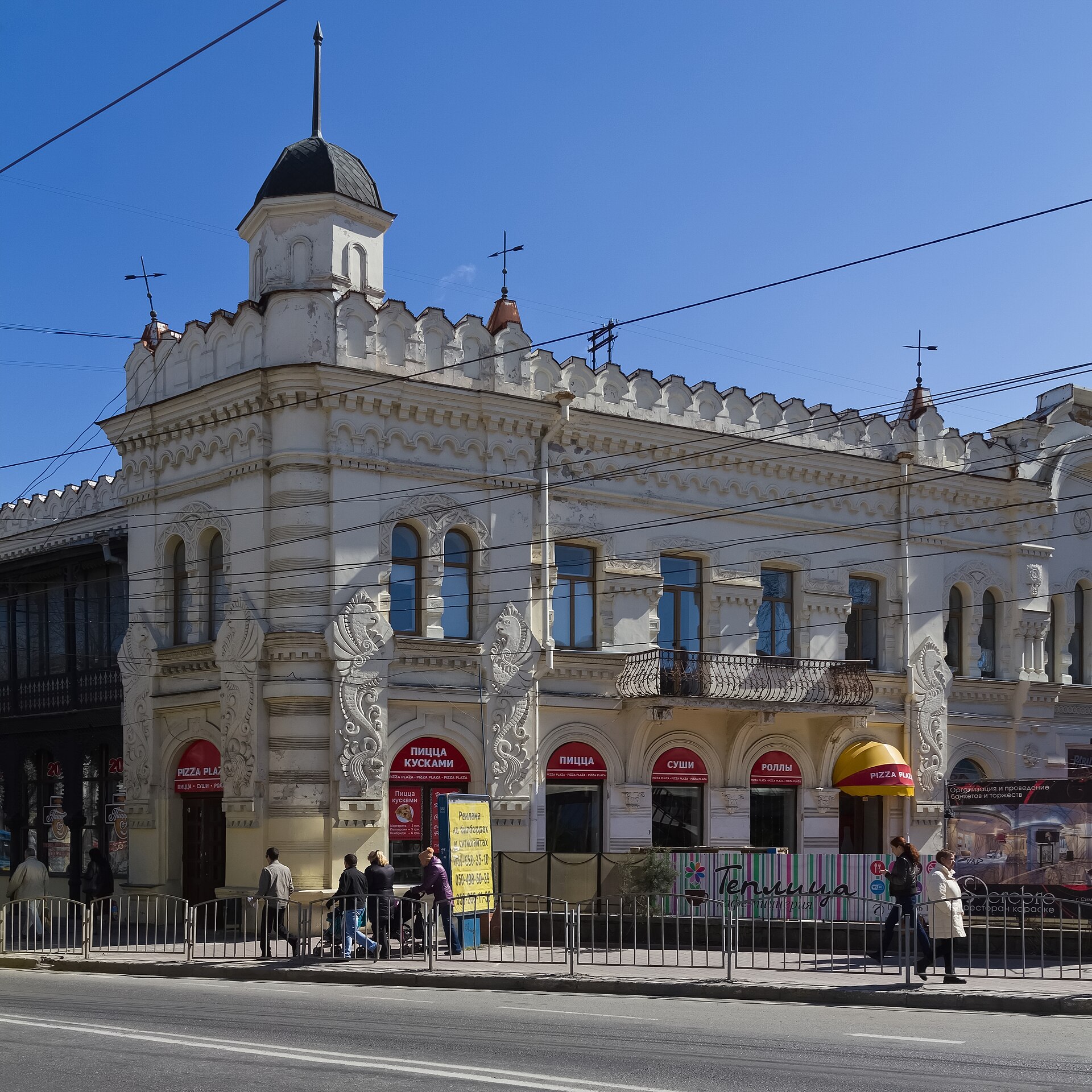
The Chirakhov House in Simferopol is one of those rare places where time seems to have paused, preserving the spirit of a bygone era. Built in the late 19th century, it stands at the intersection of Pushkin and Gorky streets, right in the heart of the old city. The architecture is a fine example of the period—tall ceilings, intricate stucco facades, and large windows framed by delicate wrought-iron grilles. These details evoke an age when Simferopol was more than just a provincial administrative center; it was a vibrant cultural and commercial hub of Crimea.
The house is tied to the Chirakhov family, Armenian merchants who left a lasting mark on the peninsula. They were involved in trade, philanthropy, and even local governance, making their home not just a residence but a social and business hub. In its heyday, the house hosted gatherings, receptions, and small salons, drawing intellectuals, merchants, and travelers passing through Simferopol on their way to Yalta or Sevastopol. Such buildings were the beating heart of the city’s social life, where deals were struck and ideas exchanged over tea or a glass of wine.
Today, the Chirakhov House bears the marks of time, its facade weathered but still striking. The stucco decorations, cornices, and wrought-iron balconies retain a quiet elegance, hinting at the grandeur of its past. Inside, some original features remain—marble staircases, tall doors with carved moldings, and antique chandeliers—though access is limited. Even from the outside, it’s easy to imagine the house in its prime, filled with the murmur of conversations and the clinking of glasses.
Simferopol is a city layered with history, and the Chirakhov House is just one of its many stories. Around it, modern life rushes by—people hurrying to work, cars humming on the streets, cafes and shops bustling with activity. Yet when you pause in front of this building, it’s clear that the city hasn’t forgotten its past. It exists in multiple eras at once, and places like this serve as reminders that history isn’t confined to museums; it’s woven into the fabric of everyday life.
Over the decades, the house has served many purposes. In Soviet times, it housed various institutions and later became an apartment building. Time has worn away some of its details, but its overall character remains intact. Now privately owned, its future depends on whether someone will invest in its preservation. For now, it stands as a silent witness to the changes Simferopol has undergone over more than a century.
For those interested in Crimea’s history, the Chirakhov House offers a glimpse into the everyday life of the past. It may not have the fame of the Livadia Palace or the Khan’s Palace in Bakhchisaray, but that’s part of its charm. There are no grand halls or curated exhibits here—just the authentic atmosphere of an old city, its rhythms, and its character. Walking through Simferopol, it’s worth paying attention to buildings like this; they tell stories that often go unrecorded in guidebooks.
The house is more than just an architectural landmark; it’s a piece of Crimea’s cultural heritage. It reminds us that history isn’t just about grand events and famous names but also about ordinary lives, family stories, and the small moments that shape a place. That’s what makes it special. Whether it one day becomes a museum or remains a private residence, the Chirakhov House will always be a quiet but important part of Simferopol’s story.