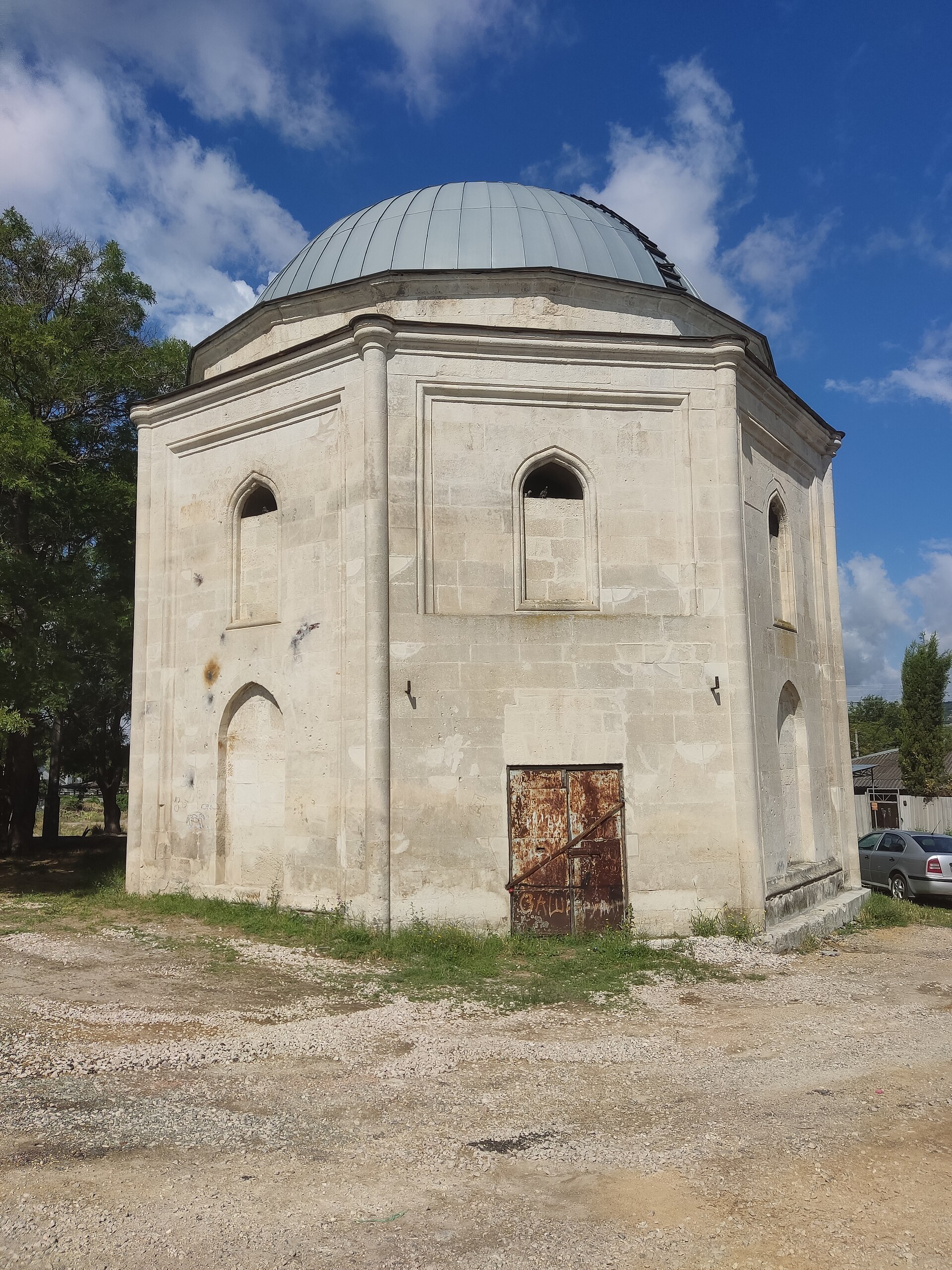
Bakhchisaray is a town where history lingers in the quiet corners, where the past isn’t just remembered but still felt. Among its many echoes of bygone eras, the türbe of Mehmed II Giray stands as a subtle yet powerful reminder of the Crimean Khanate’s golden age. This small mausoleum, built in the 16th century, holds the remains of one of the khanate’s most influential rulers—a man whose legacy shaped the fate of the peninsula. Mehmed II Giray, often called Mehmed Sultan, was more than a military leader; he was a reformer who navigated the complexities of power in a time of shifting alliances and constant conflict. His türbe is not merely a tomb but a quiet testament to an era when Bakhchisaray was the heart of Crimean politics, culture, and ambition.
The structure itself is a fine example of Crimean Tatar architecture, blending Ottoman and Persian influences into something distinctly its own. The building is modest in size—an octagonal chamber topped with a dome, its pale stone facade weathered by centuries yet still elegant. The entrance is framed by a carved portal, its once-vibrant decorations now faded, though their outlines remain visible to those who look closely. Inside, the space is simple, almost austere. The tomb lies beneath the dome, marked by an unadorned gravestone. There is no grandeur here, no ostentatious display, yet the place carries a sense of solemn dignity, as if the weight of history itself has settled into the stones.
The türbe is part of the larger complex that once formed the khan’s palace, a place where the fate of the Crimean Khanate was decided. In Mehmed II Giray’s time, this mausoleum was more than a burial site; it was a symbol of dynastic power, a reminder to subjects and rivals alike of the Giray family’s enduring influence. Today, walking through the palace grounds, it’s easy to imagine the scene centuries ago—the murmur of courtiers, the clatter of hooves, the whispered schemes unfolding in the shade of the gardens. The türbe, though small, anchors that history, a silent witness to the rise and fall of empires.
Mehmed II Giray ruled during a turbulent period, when the Crimean Khanate was both a formidable force and a pawn in larger geopolitical games. His reign saw military campaigns, diplomatic maneuvering, and internal strife, all of which tested his leadership. Known for his ruthlessness as much as his political acumen, he balanced the demands of the Ottoman Empire with the needs of his own people. His death in 1584 marked the end of an era, but his türbe endured, standing through the centuries as a quiet monument to a ruler who left an indelible mark on Crimea’s history.
The architecture of the türbe reflects the cultural synthesis that defined the region. Islamic traditions merge with local styles, creating a structure that is both familiar and unique. The dome, a hallmark of Ottoman mausoleums, sits atop a simple, almost understated base, a design that feels distinctly Crimean. The stone used in its construction was quarried nearby, its warm hue blending seamlessly with the landscape. Even now, the building appears remarkably well-preserved, its proportions and details so precise that it could almost pass for a recent construction. Time has softened its edges, but the craftsmanship remains evident.
Visiting the türbe is less about ticking off a tourist attraction and more about stepping into a different time. There are no crowds here, no loud guides, no flashy signs—just the quiet hum of history. The small courtyard leading to the entrance is shaded by old trees, their leaves rustling softly in the breeze. Inside, the air is cool, the light dim, the atmosphere one of reverence. It’s a place that invites reflection, where the past feels tangible, almost within reach. The simplicity of the space only deepens that sense of connection, as if the türbe itself is whispering stories to those who pause long enough to listen.
The türbe hasn’t always been accessible. Over the centuries, it has weathered neglect, damage, and even repurposing, its significance fading and resurfacing with the tides of history. Yet through careful restoration, it has been preserved, allowing visitors today to experience a piece of Crimea’s heritage. It remains more than just a museum exhibit; it’s a living link to the past, a place where the legacy of the Crimean Tatars is still alive. For those who take the time to visit, it offers a glimpse into a world that once was—a world of khans and warriors, of poetry and power.
For anyone exploring Bakhchisaray, the türbe of Mehmed II Giray is just one stop among many, but it’s here that the town’s layered history feels most present. It serves as a reminder that Bakhchisaray is more than just a picturesque destination; it’s a place where every street, every building, carries the weight of centuries. The türbe stands as a bridge between then and now, a quiet but enduring symbol of a time when Crimea was a crossroads of cultures, a land of both conflict and creativity. Even as the world around it changes, the türbe remains, a steadfast guardian of memory.