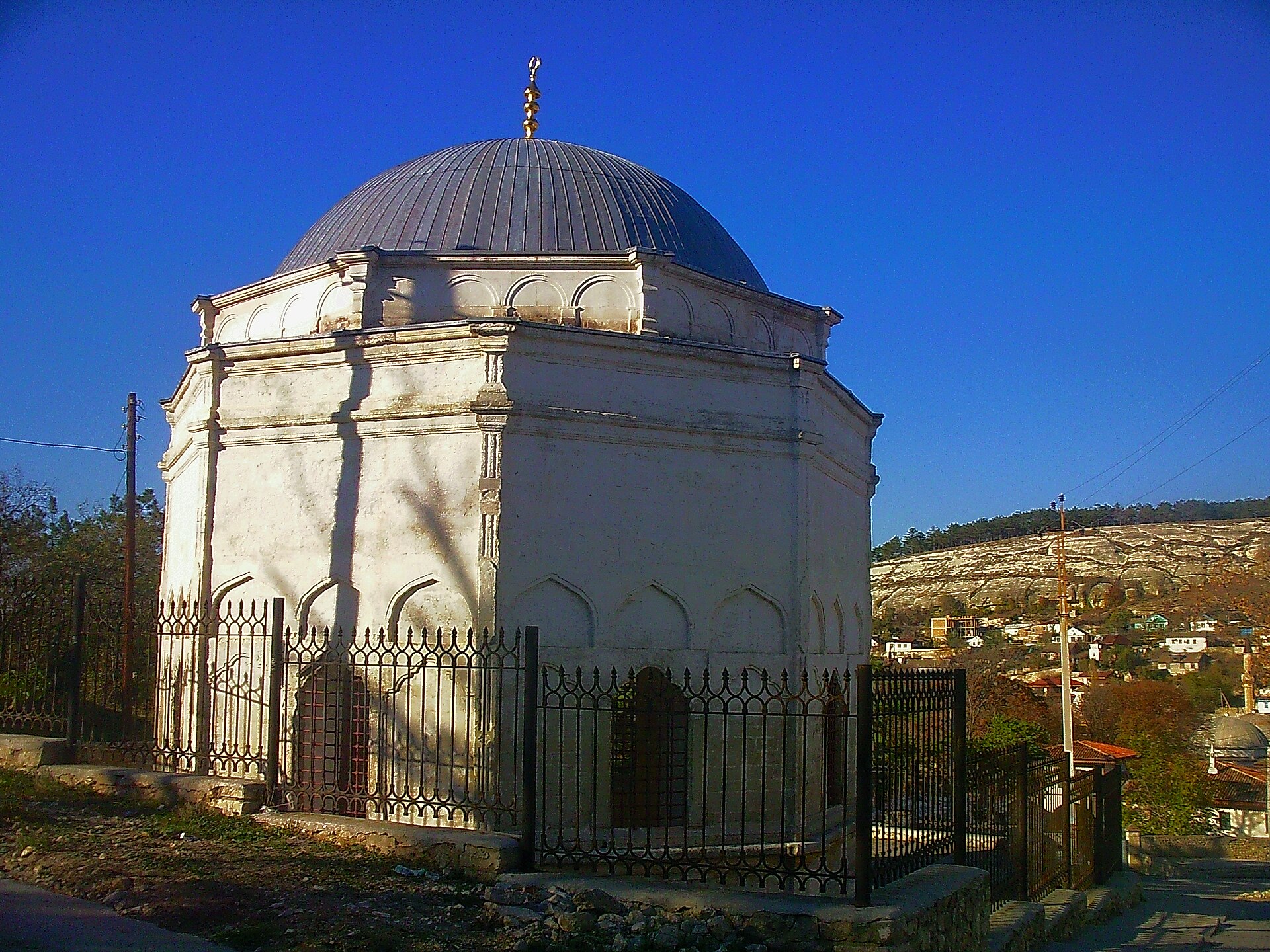
Perched on the quiet outskirts of Bakhchisaray, the Dilyara-bikech Dürbe feels like a place where time has gently paused, leaving behind only the whisper of the wind and the weight of centuries. This small 16th-century mausoleum stands apart from the city’s more frequented sights, its unassuming presence adding to its quiet allure. There are no crowds here, no hurried footsteps—just the soft patina of age on its stone walls, the moss creeping between the cracks, and the occasional rustle of leaves in the breeze.
Built as a final resting place for Dilyara-bikech, the beloved wife of Crimean Khan Qırım Geray, the mausoleum carries the weight of a love story that has outlasted its protagonists. According to legend, she was not only strikingly beautiful but also a woman of wisdom, respected at the khan’s court. Her death is said to have devastated Qırım Geray, who commissioned this türbe as a tribute to her memory. The architecture is simple yet elegant—a domed octagonal structure adorned with subtle carvings and stucco work, a hallmark of Crimean Tatar design of the era. The building’s restraint speaks volumes; it was never meant to be grand, only meaningful.
Stepping inside, the dim light filtering through narrow windows casts long, shifting shadows across the walls. Once, these surfaces were covered in intricate paintings, but time has worn them down to faint traces, barely discernible in the half-light. Yet even in its faded state, the mausoleum exudes a sense of peace. There are no ornate tombs or gilded decorations, just a plain stone sarcophagus, a quiet reminder of mortality and the enduring power of memory.
The türbe is steeped in stories, some more tangible than others. One tale claims that Qırım Geray was so grief-stricken after Dilyara-bikech’s death that he could no longer bear to live in Bakhchisaray and left the capital forever. Another suggests that her spirit still lingers here, watching over the place where she was laid to rest. Whether true or not, these legends lend the mausoleum an air of mystery, inviting visitors to listen for echoes of the past in the silence.
While Bakhchisaray’s more famous landmarks—the Khan’s Palace and the Uspensky Monastery—draw the majority of visitors, those who make the effort to find the Dilyara-bikech Dürbe often leave with a deeper impression. The site feels personal, almost intimate, as if it exists outside the usual rhythms of tourism. Locals treat it with reverence, and it’s not uncommon to see people leaving flowers or standing quietly by the entrance, lost in thought.
Architecturally, the türbe is a fine example of Crimean Tatar funerary design, blending Islamic traditions with local influences. The octagonal shape, domed roof, and decorative motifs are characteristic of the period, reflecting both religious significance and practical craftsmanship. Such structures were often more than just tombs—they served as places of prayer and reflection, and this one likely fulfilled that role as well, offering solace to those who came to honor the dead.
Though modest in scale, the mausoleum played a meaningful part in the cultural and spiritual life of the region. It stands as a testament to love and devotion, a private grief made public through stone and time. In its quiet way, the türbe also speaks to the layered history of Crimea, where different cultures and beliefs have intertwined over centuries. Here, the influence of Islam is evident, but so too is something older, almost primal—a connection to the land itself, to the cycles of life and death that transcend any single faith or era.
Visiting the Dilyara-bikech Dürbe is less about ticking off a sightseeing box and more about stepping into a slower, more contemplative rhythm. There are no guides rushing through explanations, no crowds jostling for the best photo. Just the stillness of the stones, the play of light and shadow, and the faint sense that time moves differently here. For those who seek more than just landmarks, this place offers something rare—a moment of connection with the past, with the people who once walked these paths, and with the emotions that still linger in the air.