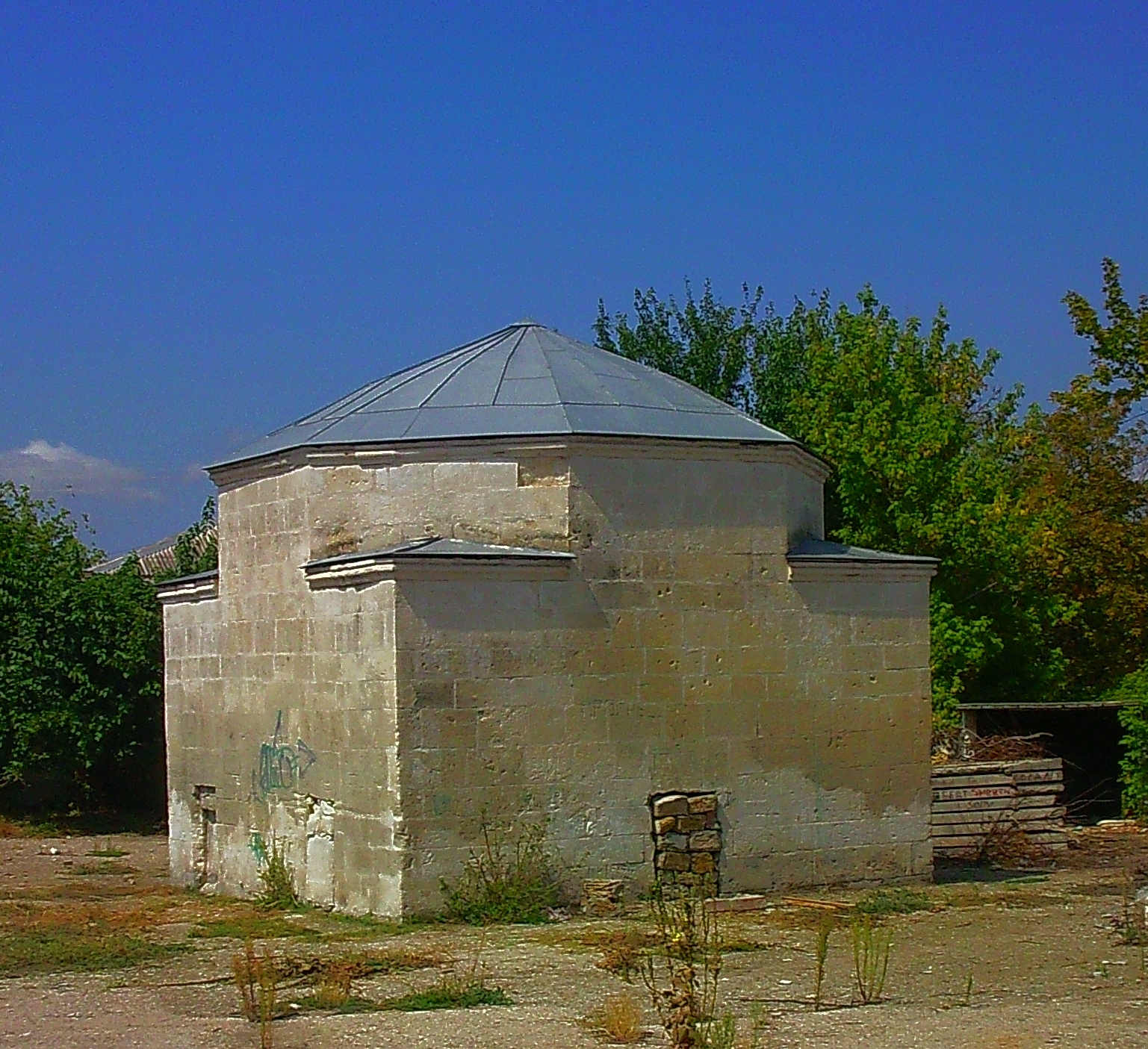
The Ahmed-Bey Dürbe in Bakhchisaray is one of those rare places that seem suspended in time, a quiet witness to centuries gone by. Built in the 16th century, this modest yet striking structure serves as the final resting place of one of the most influential rulers of the Crimean Khanate. Ahmed-Bey was more than just a khan—he was a figure who left a lasting mark on the history of the peninsula. His reign came at a time when the Crimean Khanate, though a vassal of the Ottoman Empire, remained a formidable power in the region, with Bakhchisaray as its political and cultural heart.
The architecture of the dürbe reflects the distinctive style of Crimean Tatar craftsmanship of the era, blending traditional elements with subtle uniqueness. Constructed from local limestone, the building takes on a warm, almost golden hue in the late afternoon sun. Its facades are adorned with restrained yet elegant ornamentation—geometric patterns and arabesques typical of Islamic art. The entrance is framed by a portal with a semicircular arch, though any inscription that may have once crowned it has long since faded. Inside, the space feels surprisingly airy despite its small size. A high dome creates an impression of openness, while narrow windows allow just enough light to filter in, casting a soft glow that enhances the solemnity of the place.
The story of Ahmed-Bey and his mausoleum is deeply intertwined with the fate of Bakhchisaray itself. He came to power in the early 16th century, a period when the Crimean Khanate was at its height but already facing growing pressures from neighboring powers, including the rising Moscow state. His rule was marked by military campaigns and efforts to strengthen the khanate’s internal structure. After his death, Ahmed-Bey was laid to rest here, in the family mausoleum, which became not only a burial site but also a symbol of dynastic continuity. Over time, the dürbe evolved into one of the city’s landmarks, a reminder of an era when Bakhchisaray was far more than a provincial town—it was the center of a state.
Today, the Ahmed-Bey Dürbe stands slightly apart from the usual tourist trails, which only adds to its charm. Surrounding the mausoleum is an old Muslim necropolis, where the graves of nobles and commoners alike lie beneath weathered headstones. The inscriptions in Arabic and intricate carvings evoke a sense of quiet reflection. It’s easy to imagine funeral processions winding through this space, the murmur of prayers, and the unhurried rhythm of life that once defined the city. Time seems to slow here, and even a casual visitor can’t help but ponder the fleeting nature of life and the enduring power of art.
Though unassuming in appearance, the dürbe holds a significant place in Bakhchisaray’s cultural landscape. It serves as a reminder that the city was not only the capital of the Crimean Khanate but also a crossroads of cultures and traditions. Here, Islamic customs, Turkic roots, and Ottoman architectural influences merged, making Bakhchisaray a unique phenomenon in medieval Europe. The mausoleum is more than just a historical monument—it’s a living piece of the past, still whispering its stories to those who take the time to listen.
Visiting the dürbe requires no special preparation. It’s open to anyone who wishes to step into history, though there are no exhibits or explanatory plaques inside. None are needed—the building itself, with its proportions, the texture of the stone, and the play of light, speaks volumes. Occasionally, you might encounter locals paying their respects or travelers deciphering the inscriptions on the ancient gravestones. In those moments, the mausoleum transcends its role as an architectural relic and becomes a meeting point between past and present.
Bakhchisaray, with its narrow streets, the grand Khan’s Palace, and centuries-old mosques, feels like an open-air museum. The Ahmed-Bey Dürbe is one of those places where that sense of history is most palpable. It doesn’t command attention like a grand cathedral or a royal palace, but that’s precisely what makes it special. Here, history feels intimate and human. There’s no pomp, just silence and memory, inviting reflection on how much changes—and how much remains the same. That, perhaps, is the true value of such monuments: they don’t just preserve the past but help us understand the present in a deeper way.