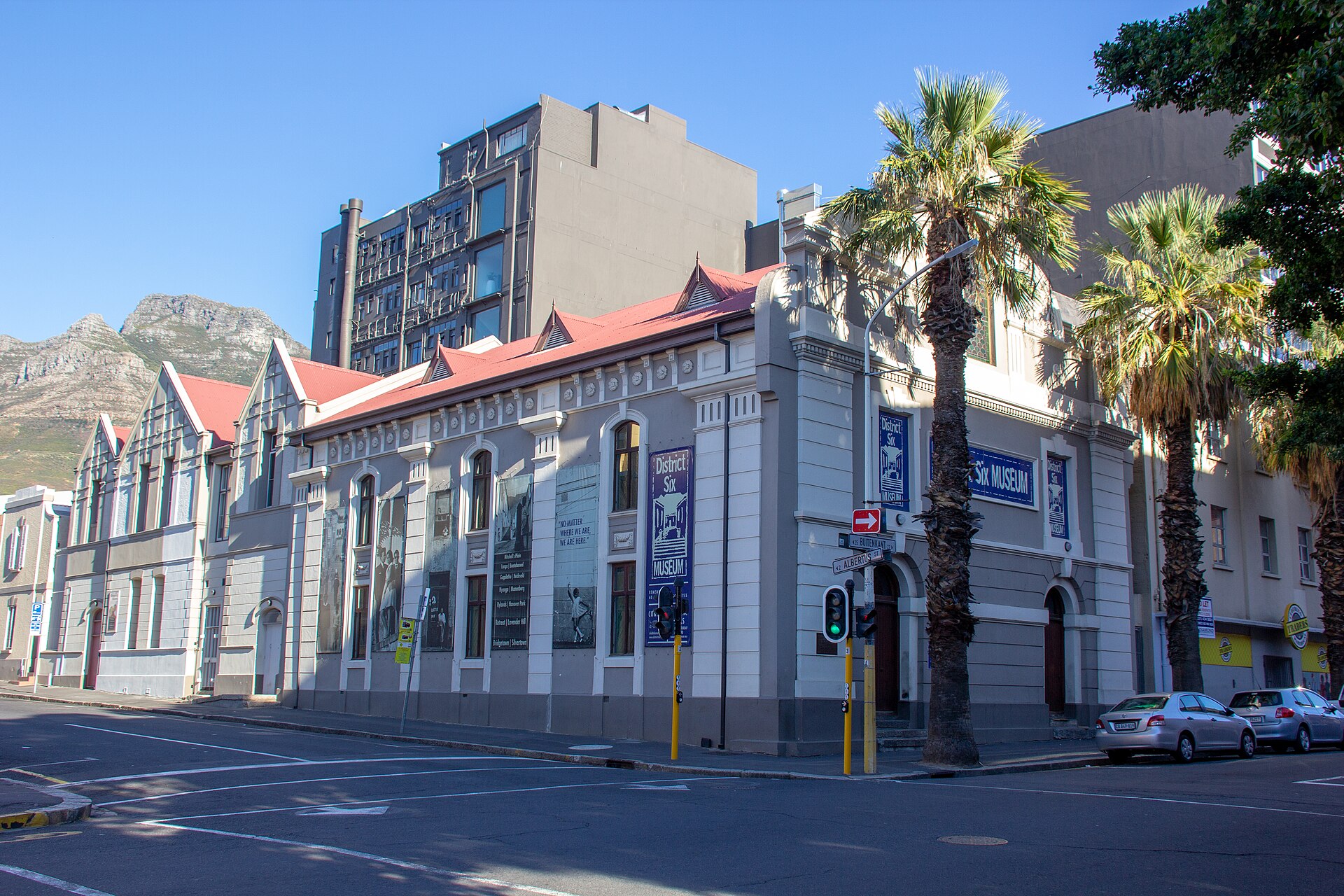
The District Six Museum isn’t just a place to learn about a neighborhood—it’s a place to remember one that was deliberately erased. Opened in 1994, as South Africa was beginning to emerge from the shadows of apartheid, the museum was one of the first public spaces to confront the forced removals that reshaped Cape Town. It wasn’t about politics or grand statements, but about the people who had lived there, the lives they built, and what was lost when those lives were uprooted.
District Six had been a place of ordinary magic. Tucked into the heart of Cape Town, it was a patchwork of cultures and stories—Malay immigrants, European settlers, Black South Africans, and working-class families all crammed into narrow streets. The air smelled of spices from corner shops, the sound of jazz drifted from basement clubs, and neighbors gathered on stoops to share news or a pot of tea. It wasn’t perfect, but it was alive in a way that defied the rigid divisions of apartheid. Then, in 1966, the government declared it a "whites-only" area. Bulldozers moved in, and within years, sixty thousand people were gone. The official reason was "urban renewal," but the truth was simpler and uglier: District Six was a place where people of different races lived side by side, and that was something the apartheid regime couldn’t tolerate.
The museum sits in a former Methodist church on Buitenkant Street, one of the few buildings left standing after the demolitions. Walking inside feels less like entering an exhibition and more like stepping into someone’s attic. The walls are covered in a hand-drawn map of the old neighborhood, pieced together from the memories of former residents. Each street, each house, each shop is labeled in careful script—here was the Adamses’ home, there was Mr. Patel’s grocery, over there was the jazz club where a local musician played on weekends. Visitors can run their fingers over the names, as if tracing the outlines of a ghost town.
The exhibits are quiet but powerful. A sewing machine that once stitched clothes for the whole block. A child’s bicycle dug out from under rubble. Faded photographs of families posing in front of houses that no longer exist. Snippets of wallpaper from demolished homes, still clinging to fragments of plaster. Each object is paired with a quote from someone who lived there—a woman remembering the smell of fresh bread from the bakery down the street, a man recalling the sound of brass bands on Saturday afternoons. The museum doesn’t just show these things; it lets them speak for themselves.
One of the most moving parts of the museum is the collection of oral histories. Visitors can sit and listen to recordings of former residents, their voices warm with nostalgia but edged with loss. They talk about childhood games in the alleyways, the taste of their grandmother’s samoosas, the first time they fell in love. But beneath the fond memories is the reality of displacement—of being dumped in barren townships on the outskirts of the city, where the streets had no names and the sense of community had been torn apart. Some of the stories are defiant, others resigned, but all of them carry the weight of what was taken away.
The museum isn’t just a memorial; it’s a living space. Former residents still come here, some traveling from across the country to reconnect with old friends or to see if anyone remembers their street. They bring new photographs, letters, or keepsakes to add to the collection. For many, it’s the first time they’ve been able to talk openly about District Six, a place that was erased not just from the map but from public conversation for decades. The museum gives them a place to say: *We were here. This mattered.*
The building itself is part of the story. The old church, with its high ceilings and arched windows, feels more like a workshop than a traditional museum. There are no glass cases or rigid displays—just tables covered in documents, walls lined with photographs, and a few reconstructed fragments of the old neighborhood, like a stretch of cobblestone street under a flickering streetlamp. In one corner, a pile of old suitcases suggests the hurried departures of families who were told they had to leave, but weren’t told where they were going.
Outside, modern Cape Town hums along. The area around the museum is now filled with office buildings, trendy cafes, and shopping centers. But if you take the cable car up Table Mountain and look down, you’ll see a stretch of empty land where District Six once stood. Decades later, nothing has been built there. The ground is still bare, as if the city itself can’t quite move on.
The District Six Museum doesn’t offer easy answers. It doesn’t try to wrap up the past in a neat narrative or turn tragedy into a tourist attraction. Instead, it asks visitors to sit with the discomfort of what happened—to listen, to look, and to understand that cities aren’t just made of bricks and mortar. They’re made of people, and when those people are forced out, something irreplaceable is lost. The museum doesn’t let Cape Town forget that. And in a country still grappling with its history, that might be the most important thing it does.