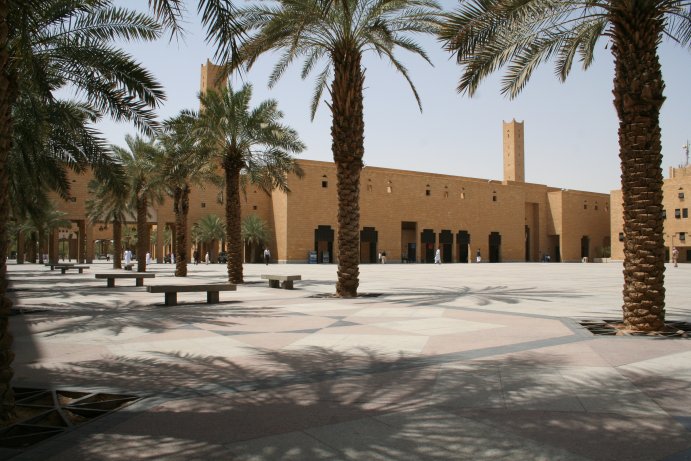
Deira Square, often called Chop Chop Square by locals and expats alike, sits in the heart of Riyadh’s old city, a place where the past and present collide in quiet, unassuming ways. Unlike the gleaming towers and polished malls that define much of modern Riyadh, this square feels like a relic of another era, one that has stubbornly refused to fade into history. The name itself—Deira—hints at its origins, derived from the Arabic word for "house" or "abode," though today it carries a weight far heavier than its modest size suggests. It’s not a place you’d stumble upon by accident; you have to seek it out, tucked away behind the bustle of al-Bathaa district, where the streets narrow and the air thickens with the scent of spices, old stone, and diesel fumes.
The square’s most infamous feature is the execution ground, a stark concrete platform that has become its defining characteristic. Public executions here are rare now, but they still happen, a grim reminder of Saudi Arabia’s strict interpretation of Islamic law. The last time the square saw such an event, the crowd was smaller than in decades past, though the ritual remains unchanged: the condemned kneels, the sword falls, and the body is left for a time as a warning. For outsiders, it’s a jarring sight, one that forces a confrontation with the country’s legal system in its most unfiltered form. Yet for many Saudis, it’s simply part of life, a tradition as old as the kingdom itself. The square doesn’t announce its purpose with fanfare; there are no signs, no barriers, just an open space where the weight of justice—or what passes for it—is meted out in full view.
But Deira Square is more than just a place of punishment. It’s also a living archive of Riyadh’s transformation from a dusty desert town to a sprawling metropolis. The buildings that surround it are a mix of old and new, their facades telling stories of the city’s growth. Some are crumbling, their mud-brick walls and wooden shutters a throwback to the pre-oil era, when Riyadh was little more than a cluster of low-slung houses around a fort. Others are newer, their concrete and glass reflecting the rapid modernization that has swept through Saudi Arabia in the last half-century. The square itself is unremarkable in design—just a patch of open ground, worn smooth by time and footsteps—but its location makes it a crossroads of sorts, where the old city’s rhythms still pulse beneath the surface.
The area around Deira Square is one of the few places in Riyadh where you can still catch glimpses of the city as it once was. The nearby souq al-Zal, for instance, is a labyrinth of narrow alleys lined with shops selling everything from gold and frankincense to cheap plastic toys and knockoff perfumes. The air is thick with the chatter of vendors and the occasional bleat of a goat being led through the crowd. It’s a far cry from the sterile, air-conditioned malls that dominate much of the city, and for those willing to wander, it offers a rare sense of authenticity. The square itself is often quiet during the day, save for the occasional group of men gathered in the shade, sipping tea and watching the world go by. But in the evenings, as the heat of the day fades, it comes alive with families strolling, children playing, and the hum of conversation rising into the warm night air.
The history of Deira Square is intertwined with that of the Saudi state itself. It was here, in the early 20th century, that Abdulaziz Ibn Saud, the founder of modern Saudi Arabia, consolidated his power, using the square as a stage for public displays of authority. Executions were common then, not just as a form of punishment but as a tool of control, a way to instill fear and obedience in a population still adjusting to the idea of a unified kingdom. Over time, the square became a symbol of the state’s unyielding grip on power, a place where dissent was not just discouraged but violently suppressed. Even today, its presence serves as a reminder of the kingdom’s origins, when survival depended on strength, loyalty, and an unshakable adherence to tradition.
For visitors, Deira Square is a place that defies easy categorization. It’s not a tourist attraction in the traditional sense—there are no guided tours, no gift shops, no carefully curated exhibits. Instead, it’s a raw, unfiltered slice of Saudi life, one that challenges preconceptions and forces a reckoning with the complexities of the country. The square doesn’t offer comfort or reassurance; it demands attention, even if that attention is uncomfortable. Those who come here expecting the polished veneer of Riyadh’s more famous landmarks will find something far more unsettling—and far more real. It’s a place where history isn’t just remembered but actively lived, where the past isn’t confined to museums but spills out into the streets, unapologetic and unyielding.
Yet for all its notoriety, Deira Square is also a place of quiet resilience. The families who live in the surrounding neighborhoods have seen the city change around them, watched as skyscrapers rose and highways carved through the old districts. But here, in this small patch of ground, life goes on much as it always has. The square is a testament to the enduring power of place, a reminder that even in a city as rapidly modernizing as Riyadh, some things refuse to be erased. It’s not a place for the faint of heart, but for those willing to look beyond the surface, it offers a glimpse into the soul of Saudi Arabia—flawed, complex, and utterly human. Whether you come out of curiosity, necessity, or sheer chance, Deira Square leaves an impression that lingers long after you’ve walked away.