Hallstatt is often celebrated for its mirror-like lake and charming pastel houses clinging to the mountainside, but beyond its postcard-perfect scenery lies something far more extraordinary. High in the Dachstein mountains, where the air grows thin and the landscape turns rugged, a hidden world of ice awaits. The Dachstein Ice Caves are a natural wonder unlike any other, where ancient glaciers have carved out a labyrinth of frozen halls that remain untouched by the warmth of summer. Here, time seems to stand still, and the usual rules of nature don’t apply.
The caves weren’t always known to the outside world. Locals may have stumbled upon their entrance in the late 1800s, but it wasn’t until 1910 that explorers began to uncover their true scale. What they found was astonishing—a vast network of chambers and tunnels, their walls and ceilings encrusted with ice that had accumulated over millennia. The formations weren’t just frozen puddles or seasonal frost; they were the result of centuries of slow, patient work by nature, shaping stalactites and stalagmites that glowed with an eerie, translucent light. Some of the ice here is tens of thousands of years old, its layers telling a story of Earth’s climate long before humans walked these mountains.
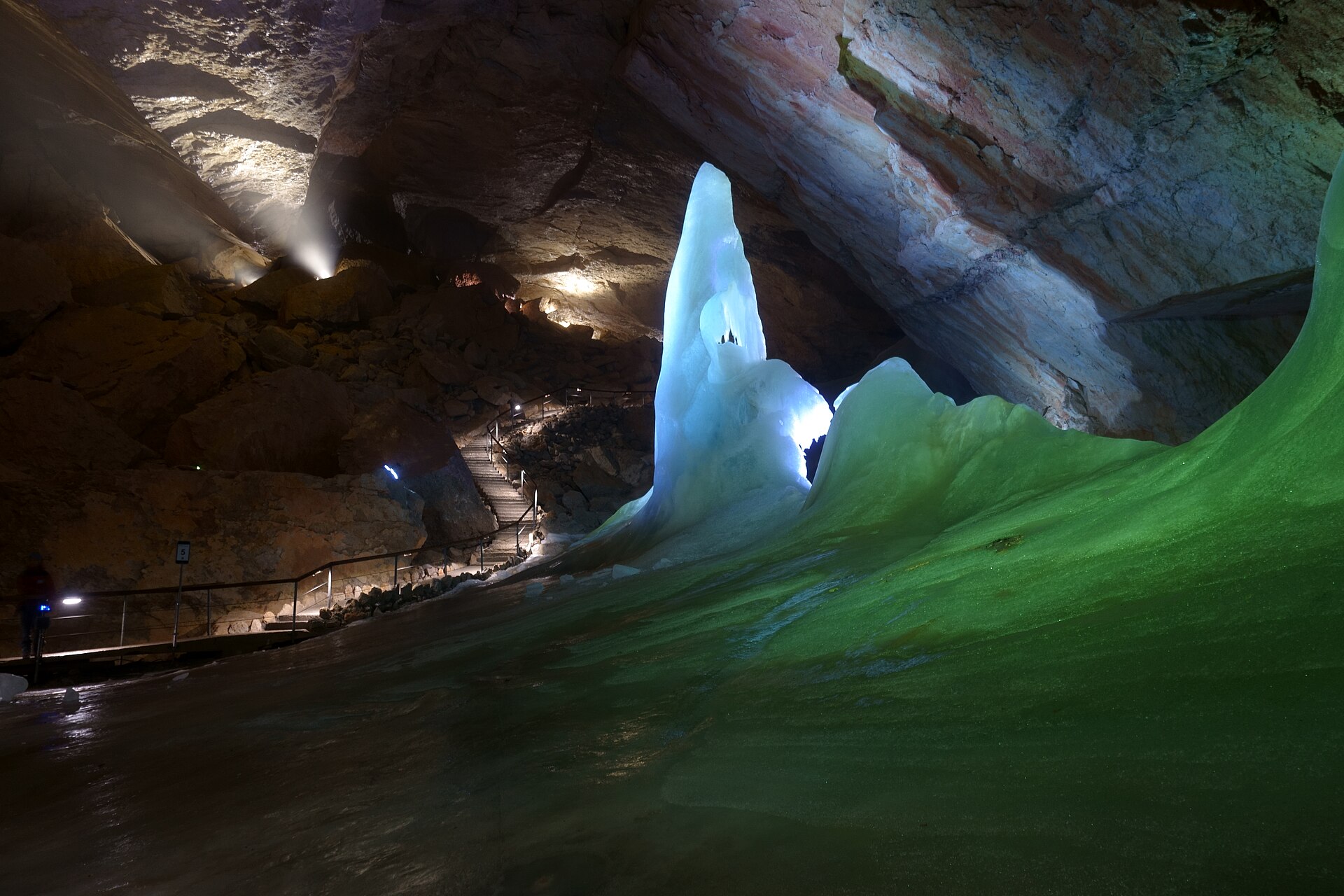
The most striking part of the caves is the Great Ice Palace, a cavern so vast it feels like stepping into a cathedral carved from ice. Towering columns and arches stretch upward, their surfaces smooth and polished by time. When the artificial lights flicker on, the ice takes on a ghostly blue hue, as if the entire space is bathed in underwater light. The effect is mesmerizing, almost otherworldly, and it’s easy to forget you’re still on Earth. The ice isn’t static, either—it shifts and changes with the seasons, growing thicker in winter and receding slightly in summer, though never enough to disappear entirely.
Reaching the caves is part of the experience. There’s no direct road or easy path; instead, visitors take a cable car from the valley up to a station perched at 1,400 meters. From there, it’s a half-hour hike along a narrow trail that winds through alpine meadows and rocky outcrops. The higher you climb, the more the landscape opens up, revealing sweeping views of the Dachstein massif and the valley below. The entrance to the caves is unassuming—a small gap in the rock face, barely noticeable if you didn’t know it was there. But once you step inside, the temperature drops, and the world above feels distant.
Exploring the caves requires a guide, and for good reason. The passages twist and turn, and without someone to lead the way, it would be all too easy to lose your bearings. The air inside is cold, hovering just above freezing even in summer, so visitors are given warm jackets to wear over their clothes. The paths are well-lit but dimly so, preserving the sense of mystery that makes the caves feel like a secret world. Guides point out the most remarkable formations—the way the ice refracts light, the delicate patterns etched into the walls, the sheer scale of the chambers. They also stress the importance of sticking to the marked routes; the ice is slippery, and some parts of the cave system remain unexplored.
What makes the Dachstein Ice Caves so special is their raw, unfiltered beauty. There are no man-made attractions here, no gift shops or interactive exhibits—just the quiet, slow work of nature over countless generations. In summer, the caves offer a cool respite from the heat, while in winter, they feel like a gateway to another world. For many, visiting the caves is the highlight of a trip to Hallstatt, a reminder that some of the most incredible places on Earth are the ones we least expect.
Of course, this beauty is fragile. The caves are a delicate ecosystem, and every visitor plays a role in preserving them. Touching the ice, straying from the paths, or leaving behind even the smallest piece of trash can disrupt the balance that has taken thousands of years to create. The rules aren’t just for show—they ensure that future generations will have the chance to experience the same sense of wonder. After all, the Dachstein Ice Caves aren’t just a tourist attraction; they’re a testament to the power of nature and a humbling reminder of how much of the world remains unseen.