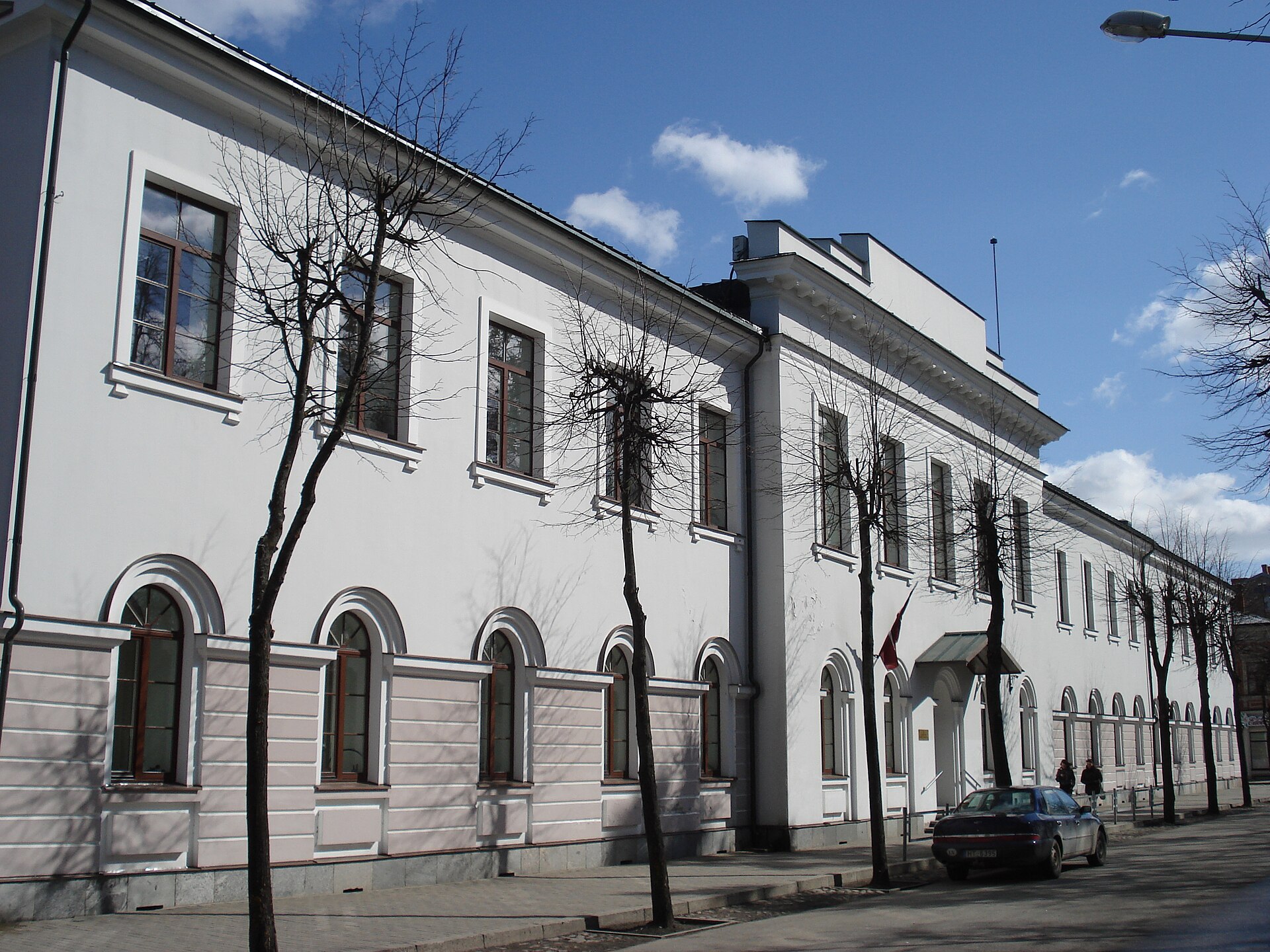
Daugavpils Theatre stands as one of the oldest and most enduring cultural institutions in Latvia’s second-largest city. Founded in the late 19th century, it has witnessed the shifting tides of history—from the Russian Empire to independent Latvia, through wars and occupations, and into the modern era. The building itself, a sturdy brick structure with a neoclassical façade, doesn’t immediately announce its significance, but its presence in the heart of Daugavpils has made it a quiet anchor for the city’s artistic life. Over the decades, it has hosted everything from classical dramas to experimental performances, adapting to the tastes and needs of each generation while maintaining its role as a gathering place for the community.
The theatre’s origins trace back to 1856, when the first permanent stage was established in Daugavpils, then known as Dvinsk under Russian rule. At the time, the city was a bustling multicultural hub, home to Latvians, Russians, Poles, Jews, and Germans, each contributing to its cultural fabric. The early performances were often in Russian, reflecting the dominant language of the era, but as Latvian national identity strengthened in the early 20th century, the theatre began to incorporate more works in the local language. The current building, constructed in the 1920s, replaced an earlier wooden structure and was designed to accommodate a growing audience. Its architecture is unassuming yet functional, with a modest portico and large windows that hint at the activity inside.
Inside, the theatre retains a sense of intimacy, with a relatively small auditorium that allows for a direct connection between performers and spectators. The stage has seen countless productions, from Shakespearean tragedies to contemporary Latvian plays, as well as ballets, operas, and concerts. The theatre’s repertoire has always been diverse, reflecting the city’s multicultural past and present. During the Soviet era, it operated under state oversight, as did all cultural institutions, but even then, it managed to carve out a space for creativity, sometimes subtly pushing boundaries within the constraints of the time. After Latvia regained independence in 1991, the theatre entered a new phase, free to explore a wider range of themes and styles.
One of the theatre’s most notable features is its resilience. Daugavpils has faced its share of challenges—economic downturns, shifting demographics, and the pressures of modernization—but the theatre has endured, in part because it serves as more than just a venue for performances. It is a place where people come together, whether for a night of entertainment, a community event, or a moment of shared reflection. The building itself has undergone renovations over the years, but its core character remains unchanged. The wooden seats, the slightly worn but elegant curtains, and the warm lighting all contribute to an atmosphere that feels both timeless and welcoming.
The theatre’s significance extends beyond its walls. Daugavpils, located in the southeastern part of Latvia near the Belarusian and Lithuanian borders, has often been overshadowed by Riga, the capital. Yet, the city has its own distinct identity, shaped by its industrial past, its diverse population, and its role as a regional center. The theatre plays a key part in this identity, offering a space where local stories can be told and local talent can shine. It has nurtured generations of actors, directors, and stagehands, many of whom have gone on to work in larger theatres across Latvia and beyond. For those who grew up in Daugavpils, attending a performance here is often a rite of passage, a way of connecting with the city’s cultural heritage.
In recent years, the theatre has continued to evolve, embracing new forms of expression while staying true to its roots. Modern productions often blend traditional and contemporary elements, reflecting the changing tastes of audiences. The theatre also hosts festivals, workshops, and educational programs, engaging with the community in ways that go beyond the stage. For visitors to Daugavpils, a performance here offers a glimpse into the city’s soul—a chance to see how art and history intersect in a place that has always been a crossroads of cultures.
The building itself is worth a closer look, even if you don’t catch a show. The exterior, with its simple lines and muted colors, blends into the surrounding streets, but the interior reveals a different side. The foyer, with its high ceilings and arched doorways, feels like a step back in time, while the auditorium, with its rows of seats and proscenium stage, is a reminder of the theatre’s enduring purpose. The details—ornate moldings, vintage light fixtures, and the occasional faded poster from past performances—add layers of history to the experience.
Daugavpils Theatre is not a grand monument, nor does it aspire to be. It is, instead, a living institution, shaped by the people who have passed through its doors over the past century and a half. Whether you’re a local or a visitor, stepping inside offers a chance to connect with the city’s past and present. The performances may change, the audiences may shift, but the theatre remains a constant—a place where stories are told, emotions are shared, and the arts continue to thrive in a city that has always found strength in its diversity.