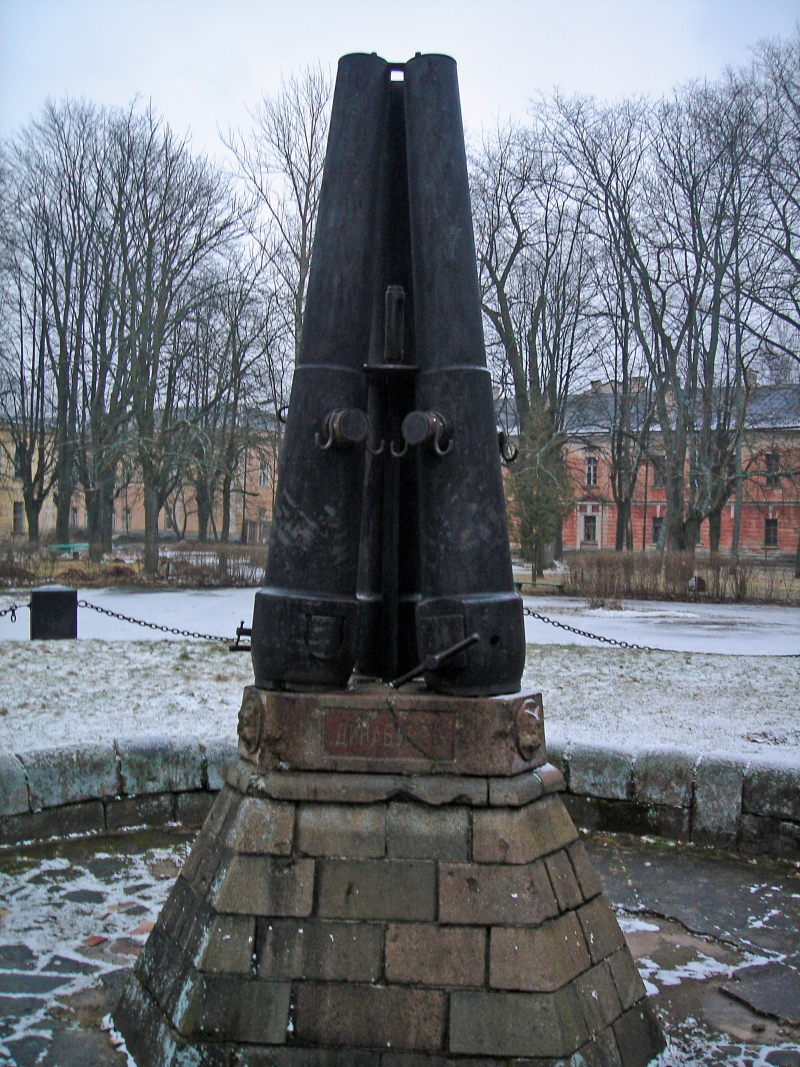
Daugavpils Fortress stands as one of the most striking landmarks in Latvia, a silent witness to centuries of history etched into its weathered walls. Built in the early 19th century, it was conceived as a strategic military stronghold under the Russian Empire, designed to guard the western borders of the empire against potential invasions. The fortress was constructed over several decades, with its layout following the principles of Vauban-style fortifications—massive earthen ramparts, bastions, and a complex system of moats and gates that once made it nearly impregnable. Today, its imposing structure dominates the landscape of Daugavpils, a city that has grown around it, yet the fortress retains an air of quiet grandeur, as if still holding onto the secrets of its past.
Walking through the fortress gates, you step into a world where time seems to move differently. The cobblestone paths, lined with low-rise buildings of uniform yellow brick, lead you past structures that once housed soldiers, officers, and prisoners. The architecture is a blend of functionality and austere beauty—thick walls, arched windows, and vaulted ceilings designed to withstand sieges and the harsh Baltic climate. Some of the buildings have been restored, while others bear the marks of neglect, their facades cracked and roofs sagging under the weight of years. Yet even in decay, there’s a certain dignity to them, a reminder that this place was built to last.
The fortress was never tested in battle, which is perhaps why it has survived in such remarkable condition. Its true trials came not from enemy cannons but from the shifting tides of history. After the Russian Empire, it fell under Soviet control, serving as a military base and later as a storage facility. During World War II, it became a transit point for prisoners and refugees, its walls echoing with stories that few records have preserved. In the decades that followed, the fortress was largely forgotten, left to the elements and the occasional curious visitor. Only in recent years has there been a concerted effort to restore parts of it, turning it into a cultural and historical hub for the city.
One of the most intriguing aspects of the fortress is its underground network. Beneath the visible structures lies a labyrinth of tunnels and casemates, some of which are open to the public. These subterranean passages were designed for defense, allowing soldiers to move unseen between bastions or take shelter during bombardments. Today, they offer a cool respite from the summer heat and a glimpse into the engineering prowess of the 19th century. The air inside is damp, the walls lined with moss in places, and the faint sound of dripping water adds to the atmosphere. It’s easy to imagine the fortress as it once was—a self-contained world where every stone had a purpose.
The heart of the fortress is its central square, a vast open space that was once used for drills and parades. Now, it serves as a gathering place for events, from concerts to historical reenactments. The square is flanked by the most important buildings of the complex, including the former arsenal, which now houses a museum. Inside, exhibits trace the history of the fortress and the city, from its military origins to its role in the lives of ordinary people. There are uniforms, weapons, and personal belongings of those who lived and worked here, each item telling a small part of a larger story. The museum doesn’t shy away from the darker chapters of the fortress’s past, including its use as a detention center during the Soviet era.
Beyond its historical significance, the fortress has become a symbol of Daugavpils itself—a city that has often been overlooked in favor of Riga or the coastal resorts. For locals, it’s a point of pride, a tangible connection to the past that sets their city apart. In recent years, efforts have been made to breathe new life into the fortress, turning it into a space for art, culture, and education. Some of the old barracks now host galleries, workshops, and even a small hotel, offering visitors a chance to stay within the walls and experience the fortress after dark, when the crowds have gone and the only sounds are the wind rustling through the trees and the distant hum of the city.
The surrounding area has its own charm. The fortress is situated on the banks of the Daugava River, which has shaped the region’s history as much as any army. The riverbanks are lined with parks and walking paths, offering a peaceful contrast to the fortress’s military past. In the summer, locals come here to picnic, fish, or simply watch the water flow by. The river also played a crucial role in the fortress’s construction, providing both a natural defense and a means of transporting materials. Even today, it’s easy to see why this spot was chosen—its strategic location made it a crossroads for trade and travel long before the first stone was laid.
Visiting the fortress is not just about seeing a historical site; it’s about feeling the weight of history in a place that has seen empires rise and fall. There’s a sense of continuity here, a reminder that the past is never truly gone. The fortress has outlasted the empires that built it, the wars that threatened it, and the neglect that followed. Now, as it enters a new phase of its existence, it invites visitors to explore its stories, to walk its ramparts, and to imagine the lives that unfolded within its walls. Whether you’re drawn by history, architecture, or simply the quiet beauty of a place that has stood the test of time, Daugavpils Fortress offers something rare—a chance to step into the past while standing firmly in the present.