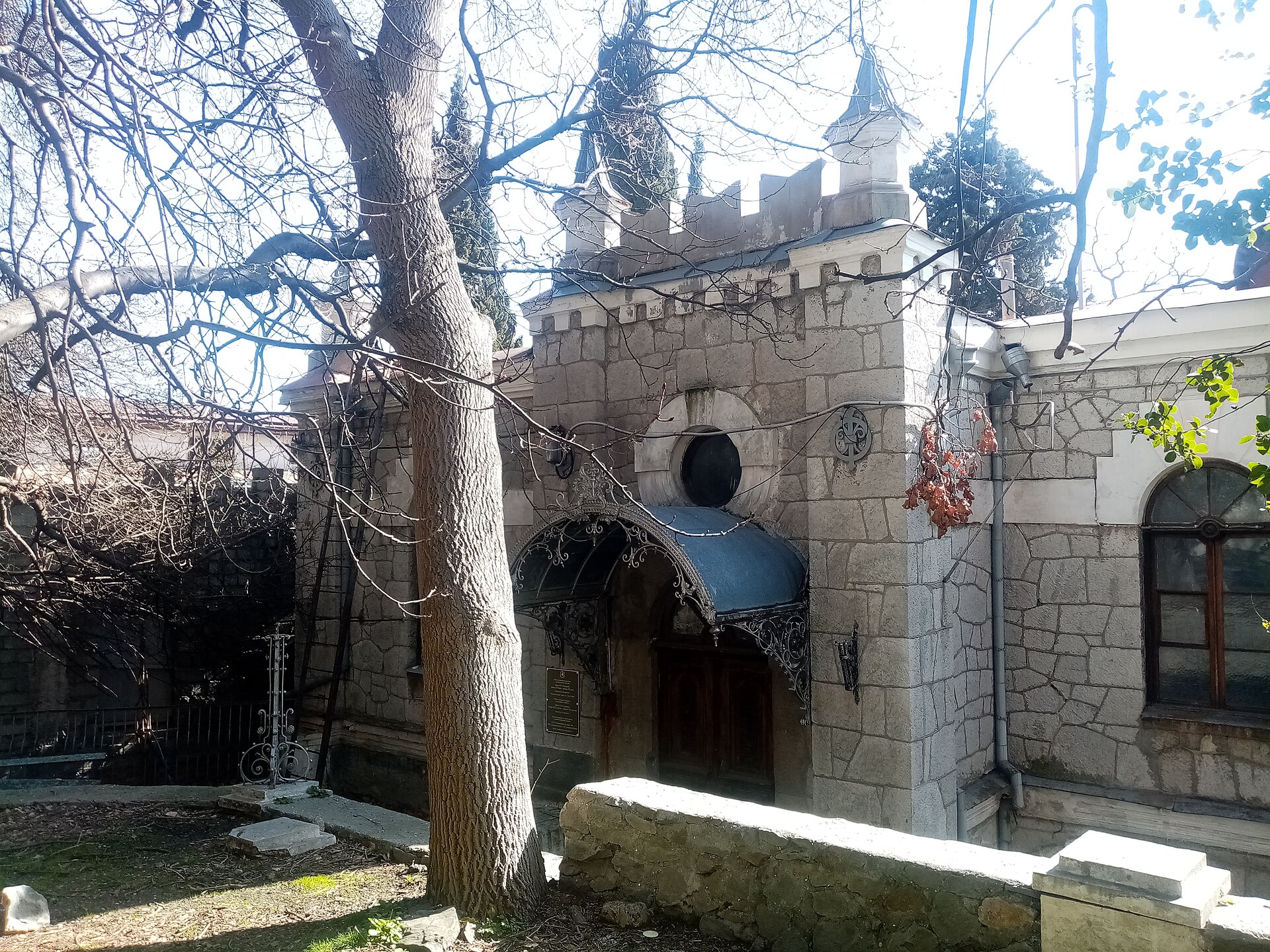
Alupka has a way of holding onto the past, and the Smurov Dacha is one of those quiet places where time seems to linger. Built in the early 1900s, this house belonged to the Smurov family, merchants who left their mark on Crimea’s business landscape. The architecture reflects the era’s tastes—modernist touches blend with the traditional Crimean style, creating something unassuming yet elegant. High ceilings, large windows framing sea views, and wide verandas were designed for comfort, a retreat from the bustle of the world.
The house itself is modest but thoughtfully crafted. The facade features delicate stucco work, slender columns supporting the balconies, and a tiled roof that settles naturally into the surrounding greenery. A garden, now overgrown in places, still holds trees that have stood here for over a century. There’s no grandeur here, just a sense of quiet permanence, as if the walls themselves remember the people who once gathered on the veranda for evening tea.
This was more than just a summer home. In the early 20th century, Alupka was a retreat for Russia’s intellectual and artistic circles—writers, musicians, and entrepreneurs who sought inspiration in the mild climate and dramatic landscapes. The Smurov Dacha would have been part of that world, a place where conversations flowed as freely as the wine, where ideas were exchanged under the shade of the garden’s old trees. The names of those guests are mostly forgotten now, but the house still carries the echoes of their presence.
After the revolution, the dacha was nationalized, passing through different hands until it became a regular residential building. Today, people still live here, which gives the place an unusual charm. It’s not a museum, not a preserved relic, but a living space where history and everyday life overlap. The faded paint, the worn steps, the slightly crooked shutters—all of it tells a story of resilience, of a building that has adapted to changing times without losing its character.
The dacha was built to last, designed for year-round living rather than just seasonal visits. The layout is practical: high ceilings and large windows keep the interior cool in summer, while fireplaces and stoves provided warmth in winter. There’s even a small cellar, a nod to the self-sufficiency of the era. These details reveal how Crimean dachas of the time were more than just vacation homes—they were places where families put down roots, even if only for part of the year.
Now, the house shows its age. The garden is less tended, the facade weathered, but that only adds to its appeal. In a world where everything is polished and new, the Smurov Dacha feels refreshingly real. It doesn’t demand attention; it simply exists, a quiet witness to the passage of time. You won’t find it in guidebooks or on tourist maps, and that’s part of its magic. It’s the kind of place you stumble upon while wandering through Alupka’s backstreets, a hidden piece of history tucked away behind an unassuming gate.
If you visit Alupka, it’s easy to get caught up in the grandeur of the Vorontsov Palace or the crowds at the beach. But take a detour. Walk along the quieter streets, where the old dachas stand shoulder to shoulder, their gardens spilling over low fences. The Smurov Dacha might not be the most impressive building in town, but that’s precisely what makes it worth noticing. It’s a reminder that history isn’t just found in palaces and monuments—it’s also in the ordinary places, the ones that have quietly endured.