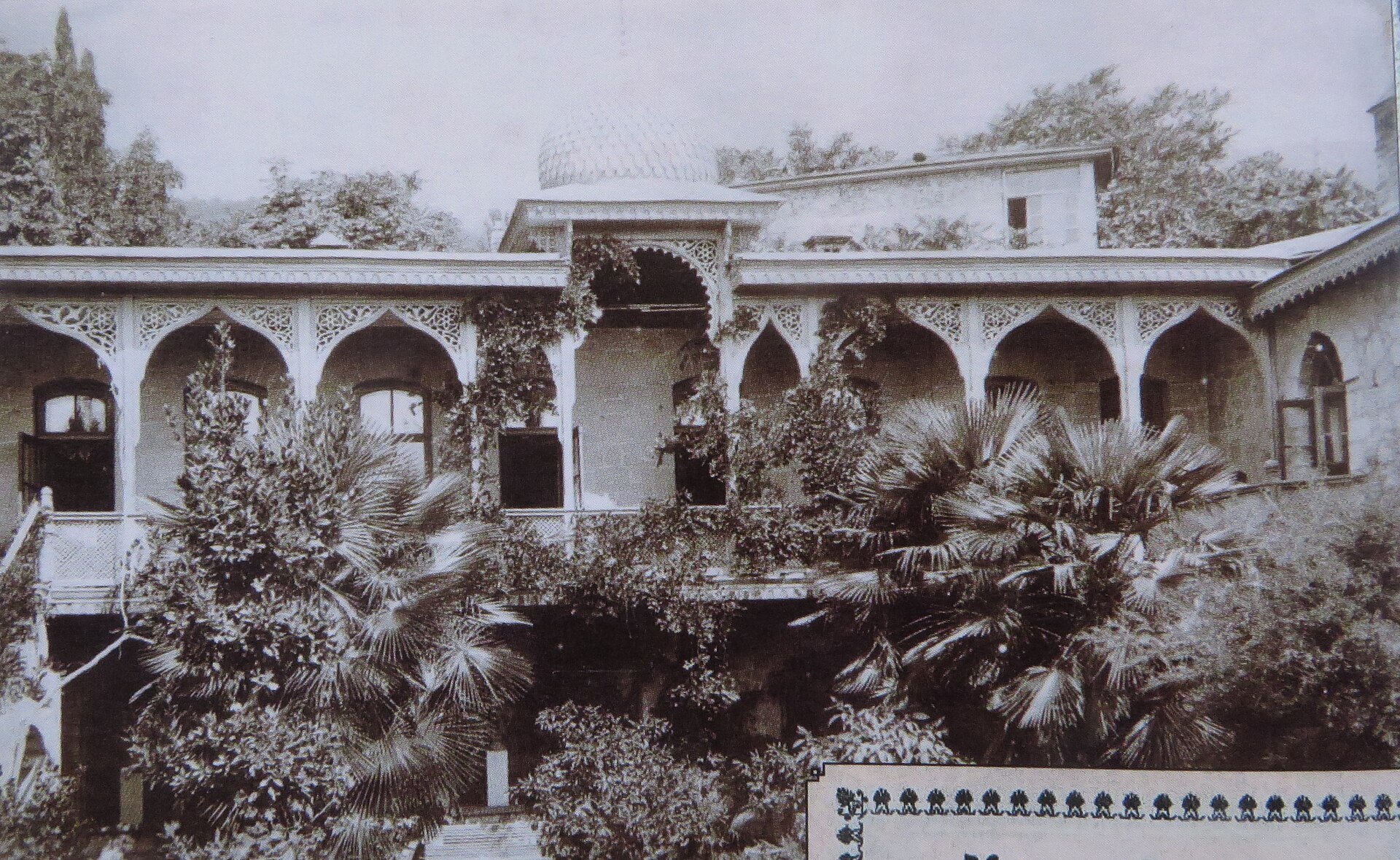
The Shidlovsky Dacha in Alupka is one of those rare places that seem suspended in time, quietly preserving the spirit of a bygone era. Built in the late 19th century, it belonged to the Shidlovsky family, members of St. Petersburg’s intellectual elite with ties to the arts and sciences. The house doesn’t impress with grandeur or opulence; instead, its charm lies in its understated elegance. Modest in design, with cozy balconies and large windows that invite in sunlight and the salty breeze from the sea, it feels like a home meant for slow living. There’s something about it that makes you want to linger on the veranda, imagining the conversations and quiet moments that unfolded here over a century ago.
Alupka in those days was a favored retreat for Russia’s aristocracy and creative circles. The Shidlovsky Dacha stood on the outskirts, surrounded by gardens and vineyards, with views stretching toward the sea and the mountains beyond. Unlike the lavish palaces that defined Crimea’s southern coast, this house was never about ostentatious display. It was a place for unhurried days, where literature and music were likely discussed over tea on the terrace, the only soundtrack the distant murmur of waves.
The architecture reflects the eclectic tastes of the late 19th century, blending subtle decorative elements without overwhelming the structure. The facade is adorned with delicate stucco moldings, intricate balcony railings, and tall doorways that hint at the spacious interiors within. Inside, the layout remains true to its origins—high ceilings, wooden staircases, and fireplaces that once warmed the rooms. Walking past, you can almost feel the rhythm of life here, measured not by clocks but by the changing light and the seasons.
Today, the Shidlovsky Dacha is part of Alupka’s historical fabric, though it doesn’t draw the same crowds as the Vorontsov Palace or the Massandra Park. It hasn’t been turned into a museum, and access is limited, but even from the outside, the house tells its own story. Tucked away behind trees, it’s easy to stumble upon it while wandering through Alupka’s streets, a quiet reminder of the people who once gathered here—perhaps playing the piano, debating ideas, or simply enjoying the view.
The surrounding area carries its own echoes of the past. Alupka’s mild climate made it a haven not just for leisure but for those seeking rest and recovery. Nearby, old parks and tree-lined paths lead down to the sea, while remnants of vineyards and winemaking estates hint at a time when this land was alive with agriculture and trade. The dacha is just one piece of this larger mosaic, but it’s places like this that give the town its unique character.
Unlike meticulously restored landmarks, the Shidlovsky Dacha wears its age with a kind of honesty. The faded paint, the cracks in the walls, the slight sag of the wooden beams—all of it speaks to the passage of time. There’s a chance it may be renovated someday, but for now, it remains a quiet witness to history, a place where the past isn’t polished for tourists but left to tell its own story.
For those who see Crimea as more than just a tourist destination—who are curious about the lives and stories woven into its landscape—the Shidlovsky Dacha offers a small but meaningful discovery. It doesn’t demand attention, and that’s precisely what makes it special. There are no crowds, no souvenir stalls, no guided tours—just the stillness of the house, the sea in the distance, and the mountains that have watched over it all for generations. Sometimes, the most memorable encounters with history happen not in grand halls but in the quiet corners where time seems to stand still.