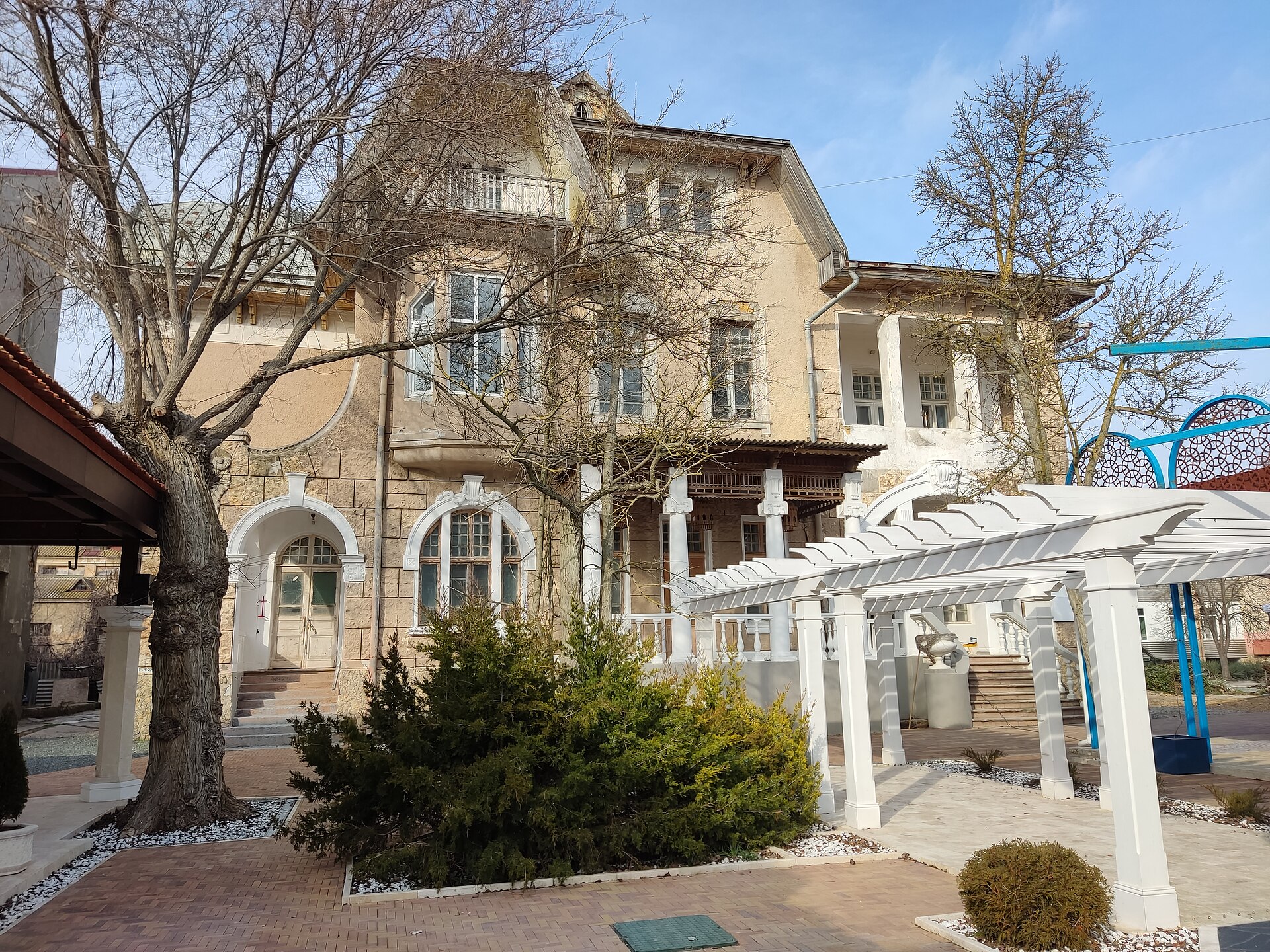
This building in Yevpatoria feels frozen in time. Constructed in the early 20th century, it once hosted Russia’s creative and scientific elite during their summer stays. The structure shows wear, but that wear tells a story—of an era when Yevpatoria was a fashionable seaside retreat, and summer homes were designed with care.
The architecture is Crimean Art Nouveau, a style that thrived here a century ago. The facade features stucco details, wrought-iron balconies, and tall windows that once let in streams of light. Old descriptions suggest the interiors were spacious, with high ceilings and conservatories. The building needs restoration, but even now, it catches the eye of those who notice history in architecture.
Who originally owned it? Records are scarce, but it likely belonged to a wealthy family—entrepreneurs or intellectuals drawn to Yevpatoria’s therapeutic mud baths and mild climate. Back then, the town attracted visitors from across Russia, and Riviera Dacha was probably a gathering spot for conversations, music, or leisure.
The walls don’t share their stories, but you can imagine them.
Over the decades, the dacha served different purposes. It may have been a sanatorium, a government office, or divided into apartments. During the Soviet era, many such buildings were repurposed, and Riviera Dacha was no exception. Yet it still holds traces of its original character, standing in Yevpatoria’s streets, though the interior isn’t open to visitors.
For those exploring Crimea’s history, Riviera Dacha isn’t just an old building. It’s part of a larger story—how Yevpatoria evolved from an imperial resort to the city it is today. Around it, life moves fast: cars pass, people rush, cafes hum. The dacha stays still, watching.
Yevpatoria is regaining its reputation as a resort, and places like this are becoming symbols of its heritage. Restoration might happen someday. For now, it’s a quiet reminder that history doesn’t always shout—sometimes, it lingers in the details of a crumbling wall.