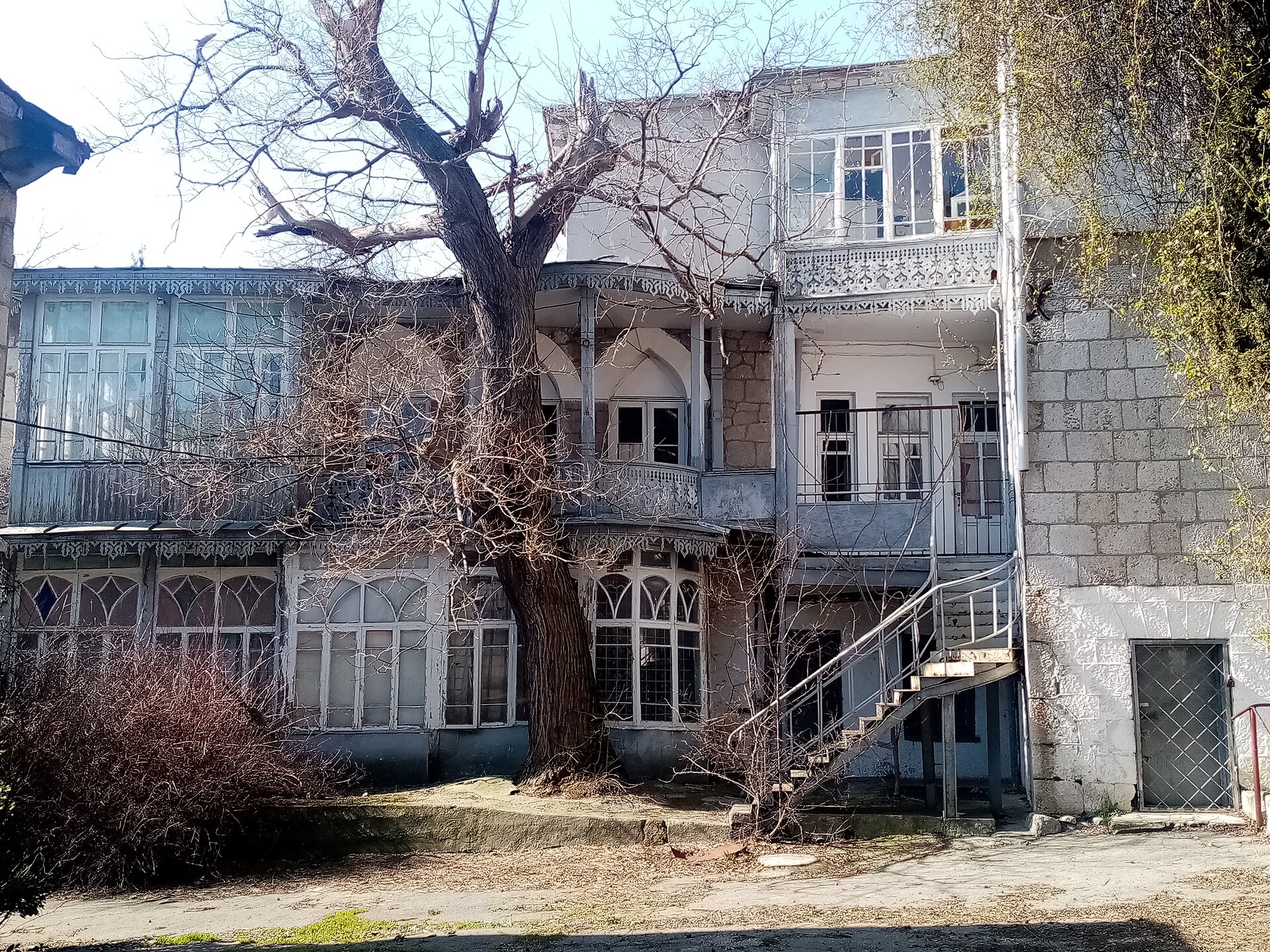
The Lutovinov family dacha in Alupka is where history lingers in the walls. Built in the late 19th century, the house was commissioned by the Lutovinovs, a family of landowners in Crimea. Unlike the grand palaces along the coast, this estate was designed for quiet elegance, with classical proportions and local traditions. The whitewashed facade, tall windows, and wide verandas were made to welcome sea breezes, mountain views, and the light of Crimean summers.
Alupka was a retreat for Russia’s cultural elite—writers, artists, and musicians who gathered here to escape cities. The dacha became a meeting point, its gardens arranged to match the house. Paths wound through fruit trees and flowerbeds, leading to secluded spots for tea or a book. The air carried the scent of pine and saltwater, and evenings passed with quiet conversations and the sound of waves.
The architecture shows restraint. While other Crimean estates used marble and gold, this one focused on comfort and harmony with the landscape. The facade has subtle stucco details, and the interior is practical: sitting rooms, studies, and bedrooms with large windows framing the sea. Some original features remain, like wooden paneling and fireplaces, though much has changed over time. What stays is the sense of a home built for intimacy and hospitality.
The 20th century altered the dacha, as it did many private estates in Russia. After the revolution, the house was nationalized—first a sanatorium, then a children’s camp, later an administrative building. Interiors were divided, gardens overgrown, and the original character faded. Now, restoration work has begun, uncovering its earlier identity. Today, it stands as a quiet monument to Crimea’s past.
Alupka is a town of contrasts, where the Crimean Mountains meet the Black Sea. The Lutovinov dacha sits in a quieter part of town, near the Vorontsov Palace and its park. From here, the coastline stretches below, and Mount Ai-Petri looms overhead. On clear days, the mountain feels close, its peaks a constant presence. This proximity to nature gives Alupka its unhurried charm.
Visiting the dacha is like stepping into another era. The house was once a haven for creativity and reflection. The walls still hold echoes of past guests, the garden traces of its former beauty, the air the scent of sea and pine. Though no longer a social hub, it retains a quiet allure, history lingering in every corner.
The dacha is open to visitors, with guided tours about the Lutovinov family and Alupka’s history. Sometimes, it hosts small exhibitions or concerts. For those curious about Crimea’s past beyond beaches, it offers a glimpse into a more personal side of its history.
A walk through the grounds reveals another side of Alupka. Beyond the promenades and stalls, the town moves at a slower pace. History isn’t just in plaques—it’s in the landscape, the architecture, the air. The Lutovinov dacha is where the past isn’t just remembered; it’s still there, waiting for those who look.