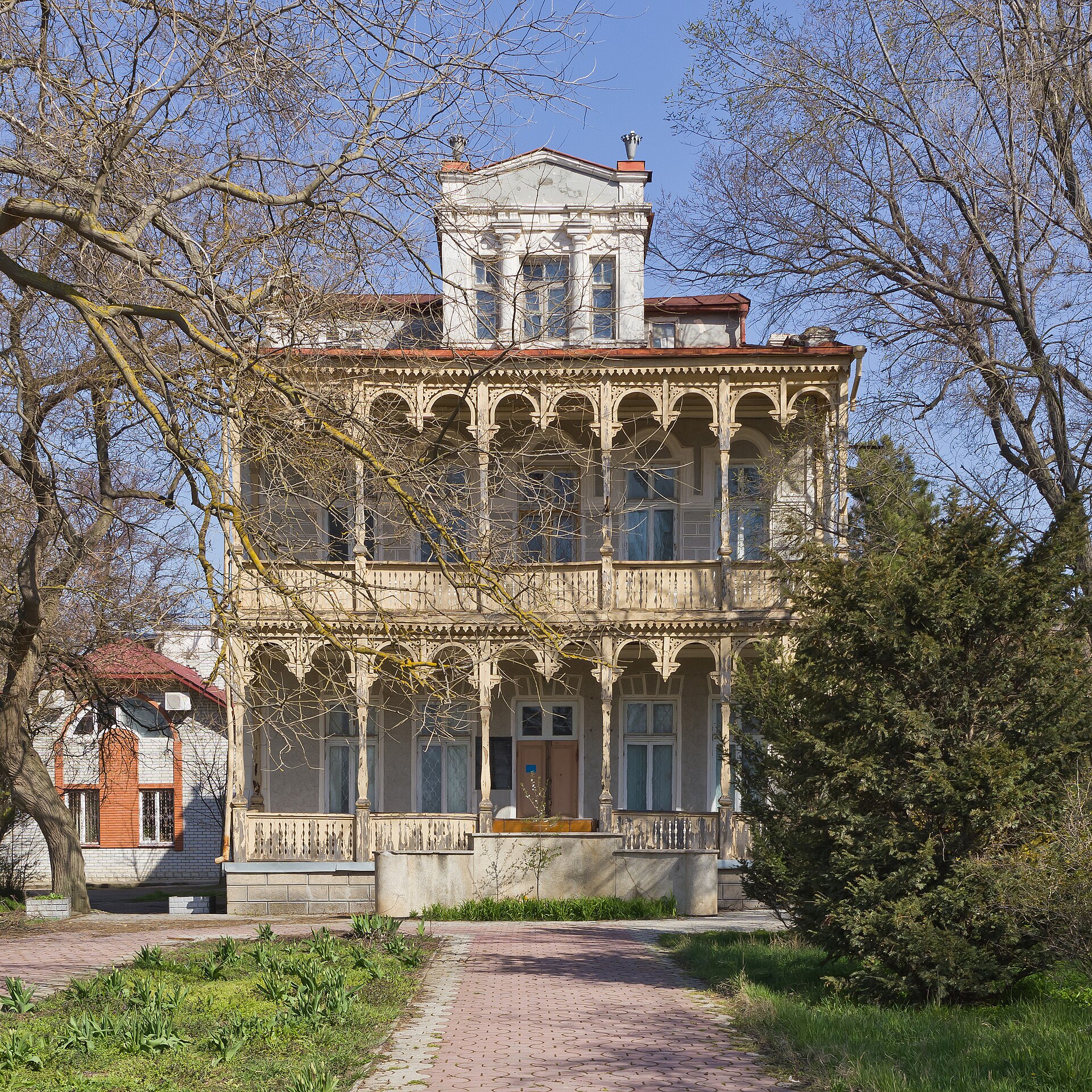
The Alpine Rose Villa in Yevpatoria is one of those rare places that seem frozen in time, preserving the spirit of the early 20th century. Built in the 1910s, it emerged during a transformative period when Crimea’s coastal towns were evolving into fashionable retreats for aristocrats, artists, and intellectuals. Yevpatoria, with its mild climate and therapeutic mud baths, drew not only those seeking rest but also those in search of inspiration away from the bustle of imperial capitals. The villa, like many others from that era, embodied a desire for beauty and comfort, blending European architectural trends with local traditions.
The architecture of the Alpine Rose is a story told in stone. The building reflects an eclectic style with strong Art Nouveau influences, its facade adorned with delicate stucco details reminiscent of floral motifs—likely the inspiration for its name. Large windows, balconies with intricate wrought-iron railings, and high ceilings create an airy, spacious feel. Inside, the layout followed the conventions of the time: grand reception halls, cozy sitting rooms, and bedrooms with sea views. Wooden paneling, fireplaces, and stained glass added to the interiors’ charm, making the villa a perfect example of the era’s refined taste.
Today, the Alpine Rose is more than just an architectural landmark; it’s a silent witness to history, having endured decades of change. During the Soviet period, the villa housed various institutions, and while it lost some of its original character, it still retains a distinct atmosphere. Walking past, it’s hard not to imagine the stories it could tell—of lavish balls, distinguished guests from St. Petersburg and Moscow, and quiet evenings on the veranda overlooking the Black Sea.
Yevpatoria has always been a city where different cultures and eras intersect. Ancient ruins, medieval mosques, and 19th-century mansions coexist here, and the Alpine Rose is one of those buildings that bridges the past and present. It stands on a quiet street, away from the bustling promenades, and this seclusion only adds to its allure. Old trees surround it, and though its facade shows signs of wear, traces of its former elegance remain. Locals know of the villa, but tourists rarely linger—perhaps because it lies off the usual tourist paths.
For those with an interest in history and architecture, the Alpine Rose is a hidden gem. It serves as a reminder of how Crimea has changed over the centuries, how resort culture evolved, and how buildings like this one stood as witnesses to those shifts. There are no museum exhibits inside, but the villa itself is an exhibit worth studying. Every detail—the pattern of a balcony railing, the shape of a window—holds a piece of its story.
Currently, the villa is privately owned, and its future remains uncertain. Time takes its toll on such structures, and without proper care, they gradually deteriorate. Yet, interest in preserving these historical places is growing, and perhaps one day, the Alpine Rose will be restored to its former glory. For now, it remains a quiet testament to an era when Yevpatoria was more than just a resort—it was a place where life unfolded with grace and leisure.
Strolling through the old streets of Yevpatoria, it’s easy to imagine what the town looked like a century ago. Villas like the Alpine Rose weren’t just homes; they were part of a world where beauty, comfort, and solitude were cherished. That world is gone, but its echoes linger for those who take the time to look. The Alpine Rose is one of those places that helps bring the past to life, if only for a moment.