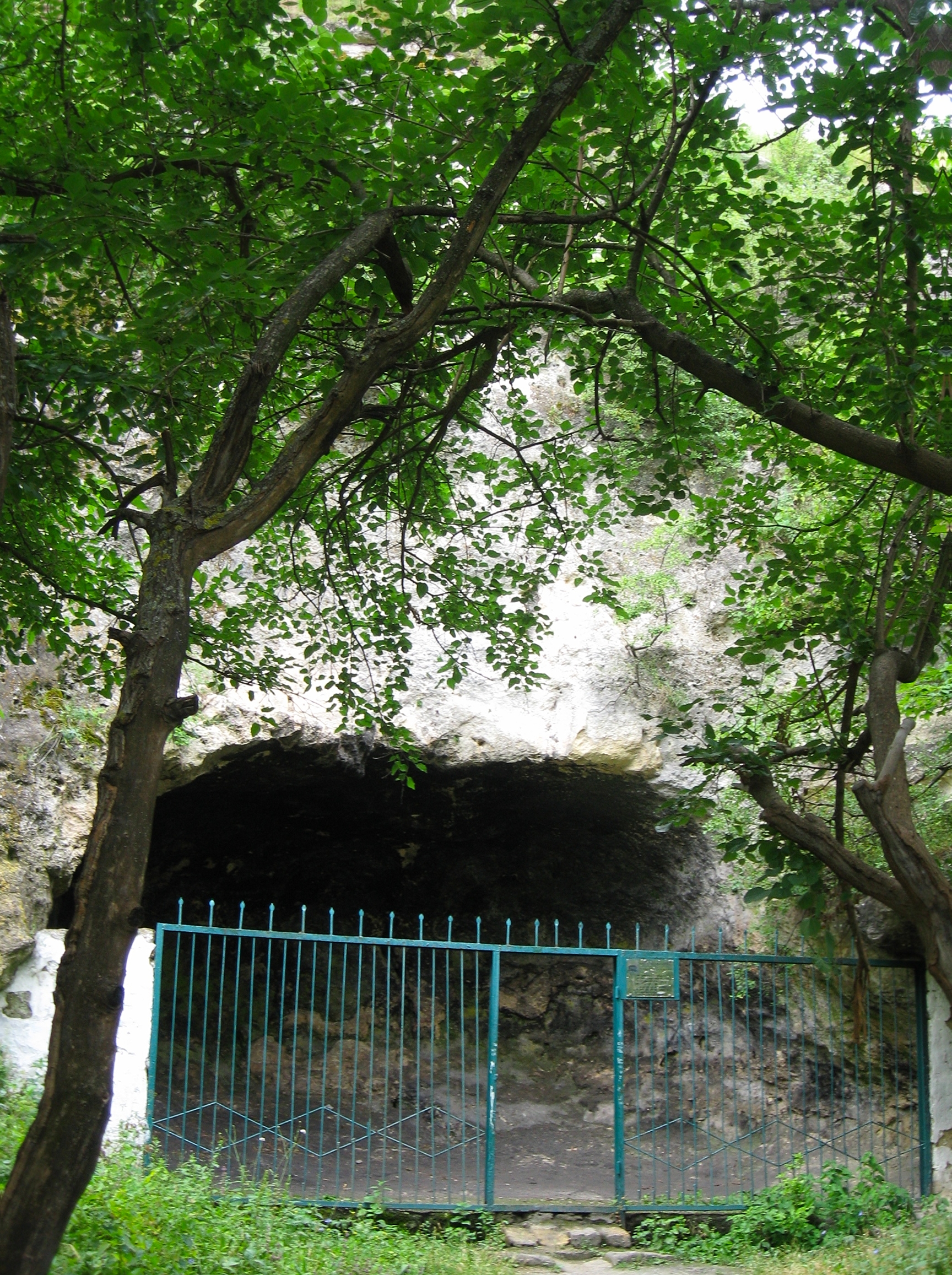
Nestled on the outskirts of Simferopol, where the city gradually gives way to rolling hills, lies Chokurcha Cave—a place that doesn’t announce itself with grand entrances or dramatic landscapes. The approach is unassuming: a narrow fissure in the limestone, half-hidden by wild shrubs and tall grasses, as if nature itself tried to keep it a secret. Yet behind this modest opening lies a space that has witnessed tens of thousands of years of history, a quiet archive of the past carved into the earth.
Chokurcha is best known as an archaeological site, a place where the remnants of Ice Age creatures still linger in the rock. In the mid-20th century, excavations here uncovered bones of woolly mammoths, cave lions, and rhinoceroses—animals that once roamed the Crimean steppes when the climate was harsher and glaciers loomed closer. Some of these finds now reside in local museums, but the cave itself remains a tangible connection to that distant era. The air inside is cool and damp, carrying the faint scent of stone and earth, while the uneven walls bear the marks of time, including soot stains that might have come from ancient torches or later visitors seeking shelter.
The cave’s interior is modest in size, expanding from the narrow entrance into a series of low-ceilinged chambers. There are no grand formations or polished walkways here—just raw limestone, worn smooth in places by water and wind. The space feels intimate, almost secretive, especially when explored without artificial light. The dim glow filtering in from the outside casts long shadows, making the walls seem to shift and breathe. It’s easy to imagine how this place might have felt to those who sought refuge here millennia ago: a natural fortress against the elements and predators.
Chokurcha’s history isn’t confined to the distant past. Over the centuries, it has served as a shelter for many—Stone Age hunters, medieval herders, and perhaps even Soviet partisans during World War II, though the latter remains more legend than documented fact. In the 19th century, scientists began studying the cave, and by the Soviet era, it had become a focal point for archaeological research. Local stories often weave it into the fabric of the region’s more recent history, blurring the line between myth and reality. What’s certain is that for generations, people have lived in its shadow, and the cave has been a silent witness to their lives.
Today, Chokurcha is far from a tourist hotspot. There are no guided tours, no souvenir stalls, and no crowds. Most visitors are locals—schoolchildren on field trips, amateur historians, or those simply looking for a quiet escape from the city. The surrounding landscape is peaceful: open fields, scattered trees, and the distant hum of Simferopol, which feels both near and worlds away. The cave’s unassuming nature is part of its charm. It doesn’t demand attention; it invites curiosity, offering a space where the past feels almost within reach.
Getting here is straightforward. From the city center, a marshrutka or a leisurely walk will take you to the outskirts in about half an hour. The route isn’t well-marked, so it’s worth asking for directions or checking a map beforehand. Entry is free, but the cave is entirely undeveloped—no lighting, no paved paths, just the natural terrain. Those who venture inside should bring a flashlight and watch their step; the floor is uneven, and the ceiling dips low in places. It’s not a place for those seeking spectacle, but for those who appreciate authenticity, it’s a rare find.
Chokurcha stands in contrast to Crimea’s more famous caves, like the glittering Marble Cave or the vast Emine-Bair-Khosar. There are no illuminated stalactites here, no gift shops, no crowds. Instead, it offers something quieter: a chance to step into history without fanfare. The cave’s appeal lies in its simplicity. It doesn’t tell its story through exhibits or signs; it lets the visitor piece it together from the silence, the cool air, and the faint echoes of footsteps long gone. For those willing to listen, it’s a place where the past feels alive—not as a relic behind glass, but as something still breathing in the dark.