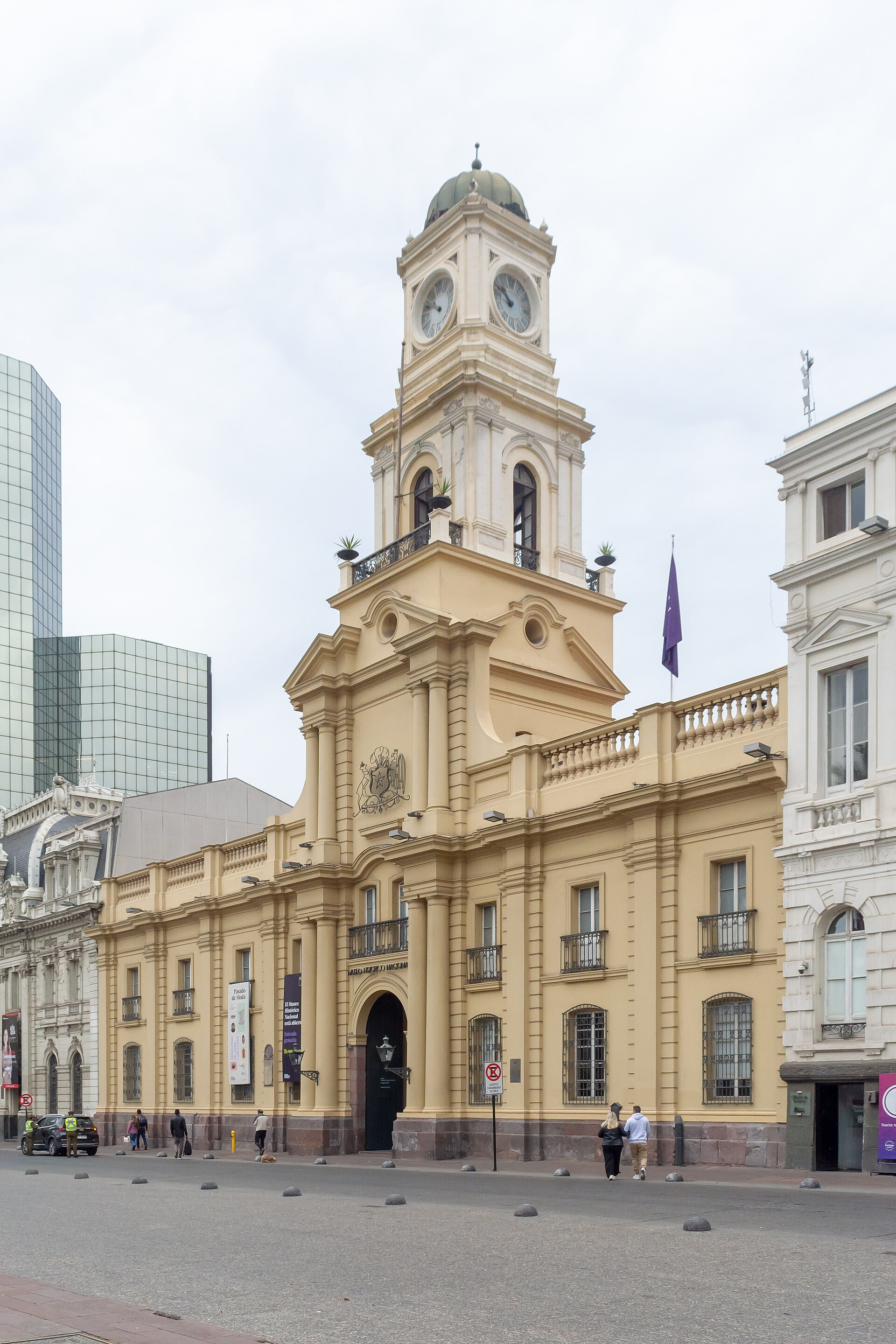
The Chilean National History Museum sits quietly in the heart of Santiago, a place where the past feels close enough to touch. Housed in a grand neoclassical building on Plaza de Armas, it was once the presidential palace, a role that adds weight to its already impressive presence. The structure itself is a relic of the late 19th century, its high ceilings and stately columns reflecting the architectural ambitions of a young nation finding its footing. There’s no fanfare here, no crowds jostling for space—just the slow, deliberate rhythm of visitors moving through rooms that hold the story of Chile, from its earliest days to the modern era.
The building’s facade is a study in restrained elegance, adorned with coats of arms and reliefs that hint at the country’s pivotal moments. Inside, the atmosphere is one of quiet reverence, the kind that makes you lower your voice without thinking. The light filters through tall windows, casting soft shadows over the exhibits, as if the space itself is urging you to take your time. It’s not the kind of museum that overwhelms with spectacle; instead, it invites you to linger, to let the weight of history settle in.
The museum’s collection spans millennia, beginning with the indigenous cultures that thrived in what is now Chile long before European contact. One of the most striking sections is dedicated to the Chinchorro people, whose mummification practices predate those of ancient Egypt by thousands of years. The artifacts here—delicate pottery, woven textiles, and tools—offer a glimpse into a world that was both sophisticated and deeply connected to the land. It’s a reminder of how much was lost with the arrival of the Spanish, but also of how resilient these cultures were, their influence still woven into the fabric of modern Chile.
The colonial period is given its due, with exhibits that trace the complex and often brutal process of conquest and settlement. Weapons, religious artifacts, and documents from the era paint a picture of a society in upheaval, where indigenous traditions clashed with European ambitions. The museum doesn’t shy away from the darker aspects of this history, but it also highlights the ways in which these cultures eventually blended, creating something new. The transition from colony to independent nation is particularly well-documented, with original manuscripts from figures like Bernardo O’Higgins and José de San Martín, the architects of Chile’s liberation.
One of the most compelling sections focuses on the 19th century, a time when Chile was carving out its identity as a modern state. The exhibits here include everything from the personal effects of presidents to the tools and machinery that drove the country’s economic growth. There’s a sense of ambition in these displays, a reflection of a nation eager to prove itself on the world stage. The War of the Pacific, which secured Chile’s dominance in the region, is covered in detail, with uniforms, weapons, and maps that bring the conflict to life. It’s a sobering reminder of how quickly borders can shift and how deeply war shapes a country’s trajectory.
The museum also does something rare: it makes history feel personal. Alongside the grand narratives of battles and political movements, there are everyday objects that tell the stories of ordinary people. A child’s toy, a farmer’s tools, a seamstress’s sewing kit—these items might seem insignificant at first glance, but they’re the threads that hold the larger tapestry together. They remind you that history isn’t just about the figures in textbooks; it’s about the lives of countless individuals who, in their own small ways, shaped the nation.
What makes the Chilean National History Museum special is its refusal to simplify the past. It doesn’t present history as a neat, linear progression but as a messy, layered process, full of contradictions and unresolved questions. The exhibits on the 20th century, for example, don’t just celebrate progress; they grapple with the complexities of modernization, the tensions between tradition and change, and the lingering effects of earlier conflicts. It’s a museum that trusts its visitors to think critically, to sit with discomfort, and to draw their own conclusions.
Walking through its halls, you get the sense that this place isn’t just about preserving the past—it’s about understanding how that past continues to shape the present. The building itself, with its echoes of presidential power and national pride, is a testament to that idea. There’s no need for flashy displays or interactive gimmicks; the weight of history is enough. By the time you leave, you might not remember every detail, but you’ll carry with you a deeper sense of what it means to be Chilean, of the forces that have shaped this country, and of the quiet resilience that runs through its story.