- Home
- Serbia
- Novi Pazar
- St. Peter and St. Paul Church
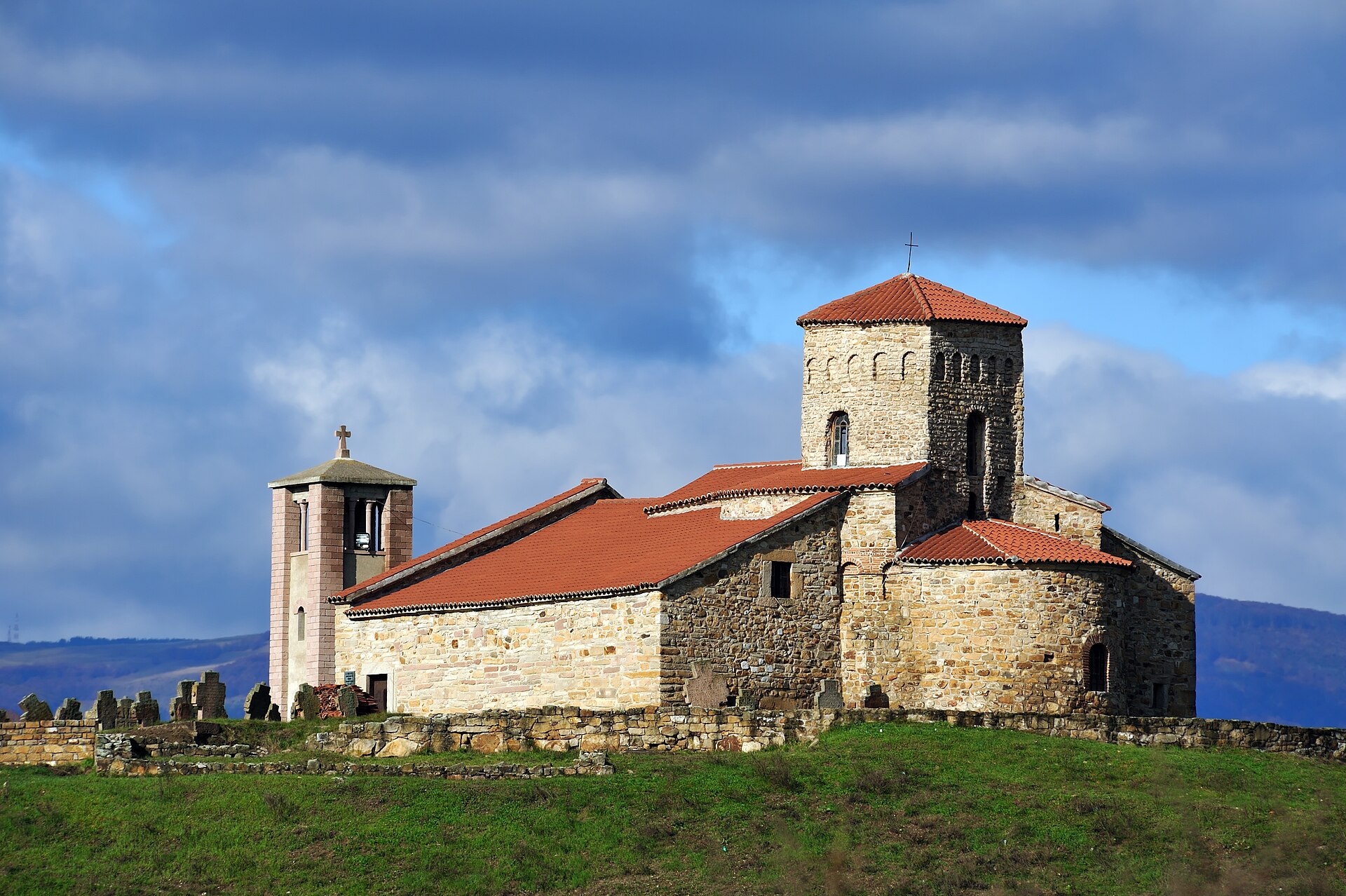
Photo: Pavle Marjanovic, CC BY-SA 3.0
St. Peter and St. Paul Church
out of 5 0 ratingsPerched on a hill overlooking Novi Pazar, the Church of Saints Peter and Paul feels like a place where time moves differently. Its silhouette stands out against the skyline, surrounded by old stone houses and green slopes that soften the edges of the city below. This isn’t just an ancient building—it’s one of the oldest churches in the Balkans, a quiet witness to centuries of change, conflict, and coexistence in this part of Serbia.
The church’s origins are shrouded in the mists of early medieval history. The first written records date back to the 9th century, though historians still debate its exact founding. Some believe it was built on the site of an even older sanctuary, possibly Roman or early Christian, a common practice in regions where sacred spaces were reused across eras. By the Middle Ages, Novi Pazar had become a vital trading hub on the route between East and West, and the church played a dual role—as both a spiritual center and a cultural landmark. For a time, it served as the cathedral of the Raška Diocese, one of the most important in the medieval Serbian kingdom, a place where bishops shaped not just religious life but the political and artistic identity of the region.
What makes the church’s architecture so compelling is how it layers different styles and periods. Originally a Byzantine basilica, it was later rebuilt in the 13th and 14th centuries with Romanesque influences, blending elements of Western European design with the distinct traditions of Serbian medieval architecture. Inside, the space is simple but striking. The frescoes on the walls span several centuries, from the 13th to the 16th, each layer telling its own story. The most celebrated paintings belong to the Raška school, known for its emotional depth and spiritual intensity—figures of saints and biblical scenes rendered with a quiet, almost intimate humanity.
The church has survived wars, occupations, and neglect, each era leaving its mark. During the Ottoman period, when Novi Pazar fell under Turkish rule, the building fell into disrepair, though it was never completely destroyed. Local Christians kept it alive in secret, preserving its structure even when public worship was forbidden. It wasn’t until the 19th century, as Serbia began to reclaim its independence, that the church was restored to its congregation. Today, its walls carry the echoes of medieval prayers, the silence of Ottoman rule, and the cautious hope of revival.
The location adds to the church’s magic. From the hill, the view stretches over Novi Pazar—a patchwork of narrow streets, minarets, and red-tiled roofs, where the call to prayer mingles with the tolling of church bells. The hill itself was once part of an ancient fortress, and if you look closely, you can still spot fragments of its walls among the overgrown grass. In summer, the air is thick with the scent of wild herbs and dry earth; in winter, snow dusts the old stones, turning the scene into something out of a folktale. Locals often come here not just to pray but to sit quietly, watching the city from above, as if the height offers a different perspective on their own lives.
This isn’t just a historical monument—it’s a living thread connecting past and present. Novi Pazar has always been a crossroads, a place where Orthodox Christianity, Islam, and even traces of older faiths have coexisted, sometimes uneasily. The church stands as a reminder of that complexity, a place where you can almost feel the weight of history in the cool, dim interior. It’s not grand like the cathedrals of Belgrade or the monasteries of Kosovo, but that’s part of its charm. Here, history isn’t polished for tourists; it’s worn into the stone, visible in the cracks and faded paint.
Inside, the air is always cool, even on the hottest days. Light filters through narrow windows, casting long, soft shadows across the walls. Sometimes, if you’re lucky, you might hear the faint sound of a choir or the distant toll of a bell drifting over the rooftops. If the priest is around and you speak a little Serbian, he might share stories about the church—how it was built, who prayed here, and what it meant to the people who kept it standing through centuries of upheaval.
Novi Pazar is a city of contrasts, where Ottoman-era mosques stand near medieval churches, and the past feels closer than in many other places. But the Church of Saints Peter and Paul is its quiet heart. It doesn’t demand attention like the more famous landmarks of Serbia, and that’s what makes it special. This is a place where history isn’t just remembered—it’s still alive, humming in the silence between prayers, in the way the wind moves through the old stones. If you ever find yourself here, take a moment to sit on the bench outside. Listen to the city below, feel the weight of the centuries around you, and think about all the people who have stood in this same spot, looking out over Novi Pazar with the same quiet wonder.
Day around this place
Where else to go on the same day
Building the day…
Where it is
43.15764, 20.52947