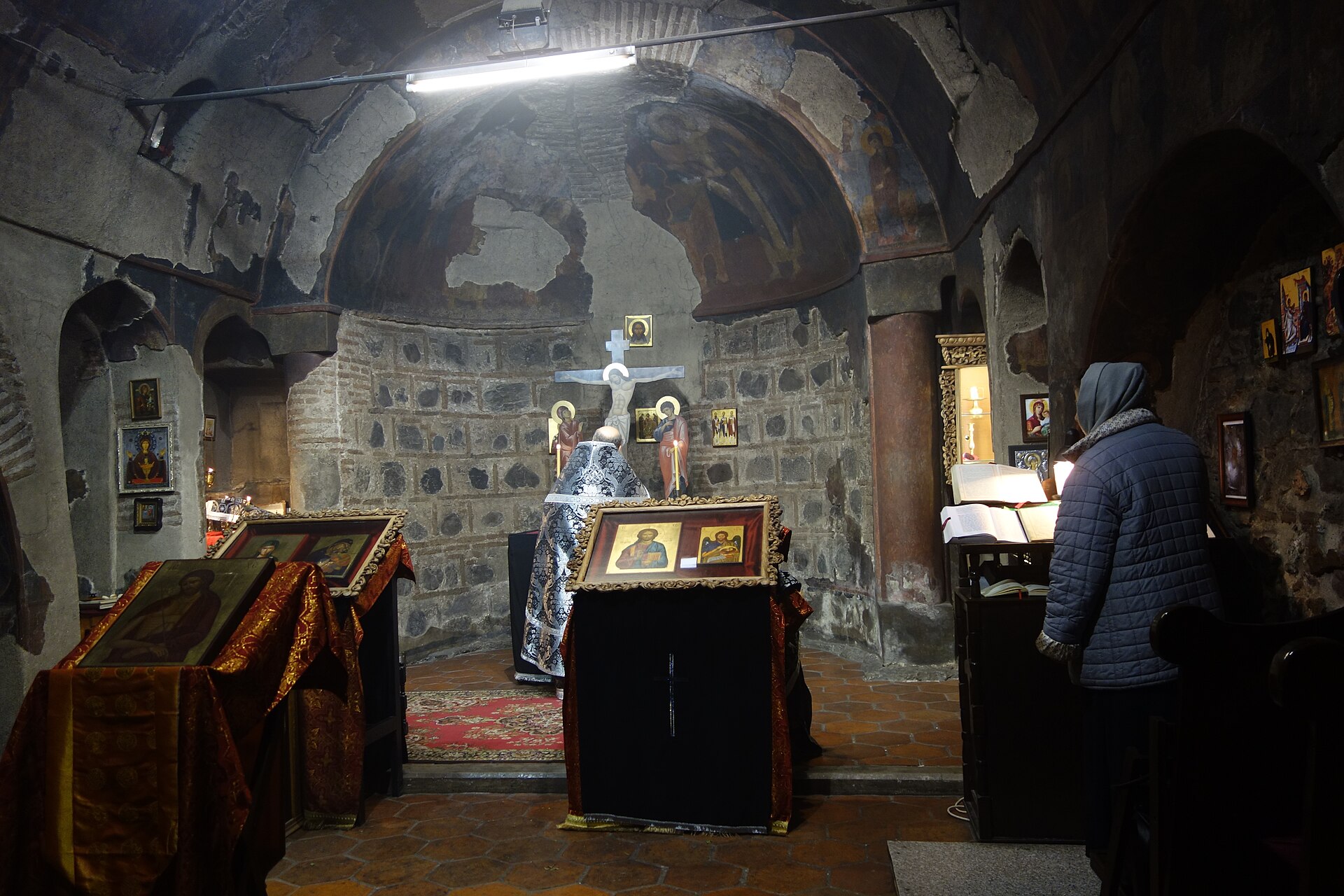
Nestled in the heart of Sofia, just steps away from the bustling streets and the ancient ruins of Serdica, the Church of Saint Petka of the Saddlers is one of those quiet places that feels like a secret. It’s easy to miss if you’re not looking for it—tucked beneath street level, its modest stone facade blending into the urban landscape. Yet for those who pause, it offers a moment of stillness in a city that has seen centuries of change.
The church dates back to the 11th century, though its exact origins are shrouded in the kind of history that gets passed down more in whispers than in records. Some say it was built during the Second Bulgarian Empire, a time when Sofia was a thriving medieval city. Others suggest it might be even older, its foundations laid during the early Christian period when the region was part of the Byzantine world. What’s certain is that it has stood here, in one form or another, for nearly a thousand years, surviving fires, earthquakes, and the relentless march of empires.
The name itself tells a story. Saint Petka, or Paraskeva of the Balkans, is a revered figure in Orthodox Christianity, known for her piety and miracles. The "Saddlers" part comes from the guild of leatherworkers who once occupied this part of the city. In medieval Sofia, craftsmen often gathered around churches dedicated to their patron saints, and this one became a spiritual home for those who stitched and shaped leather into saddles, belts, and shoes. Over time, the church became a symbol of their trade, a place where faith and daily life intertwined.
Architecturally, the church is unassuming, especially when compared to the grand cathedrals that dominate Sofia’s skyline. It’s small—just a single nave with a semi-circular apse—and built from rough-hewn stone that gives it an almost fortress-like appearance. The exterior is plain, save for a few faded frescoes near the entrance, their colors muted by time. Inside, the space is intimate, the air thick with the scent of candle wax and old wood. The walls are covered in frescoes, some dating back to the 14th century, their figures elongated and solemn, their expressions almost alive in the flickering light.
What makes the church particularly fascinating is its location. It sits in a shallow depression, several meters below the modern street level, a reminder of how Sofia has grown and shifted over the centuries. When it was built, the ground around it was likely at the same height as the church floor. Over time, as the city was rebuilt and repaved, the street rose, leaving the church partially submerged. Today, you descend a few steps to enter, as if stepping back in time.
The church has witnessed some of Sofia’s most turbulent moments. During the Ottoman period, when many Christian sites were destroyed or repurposed, Saint Petka remained a place of worship, though its use was restricted. It survived the Great Fire of 1858, which devastated much of the city, and later, the bombings of World War II. In the 20th century, as Sofia expanded into a modern capital, the church was nearly lost to urban development. For a time, it was even used as a storage space, its significance forgotten by all but a few. It wasn’t until the 1950s that restoration efforts began, peeling back layers of neglect to reveal the medieval art beneath.
Visiting the church today is a quiet experience. There are no crowds, no grand ceremonies—just the occasional visitor lighting a candle or sitting in the wooden pews. The frescoes, though faded, still tell their stories: saints with halos, biblical scenes rendered in earthy tones, and the occasional glimpse of a donor’s face, preserved for centuries. The oldest of these date to the 14th century, a time when Bulgaria was caught between the fading power of Byzantium and the rising tide of Ottoman rule. They’re not just decorations; they’re a record of faith, artistry, and the people who once knelt here.
Outside, the city moves on. Trams rattle past, tourists snap photos of the nearby ruins, and life in Sofia continues at its usual pace. But inside the church, time feels suspended. It’s a place where the past isn’t just remembered—it’s still present, in the cool stone underfoot, in the scent of incense, in the way the light filters through the narrow windows. For those who take the time to step inside, Saint Petka of the Saddlers offers something rare: a connection to the layers of history that make Sofia what it is. Not a grand monument, but a quiet witness to the lives that have unfolded here, century after century.