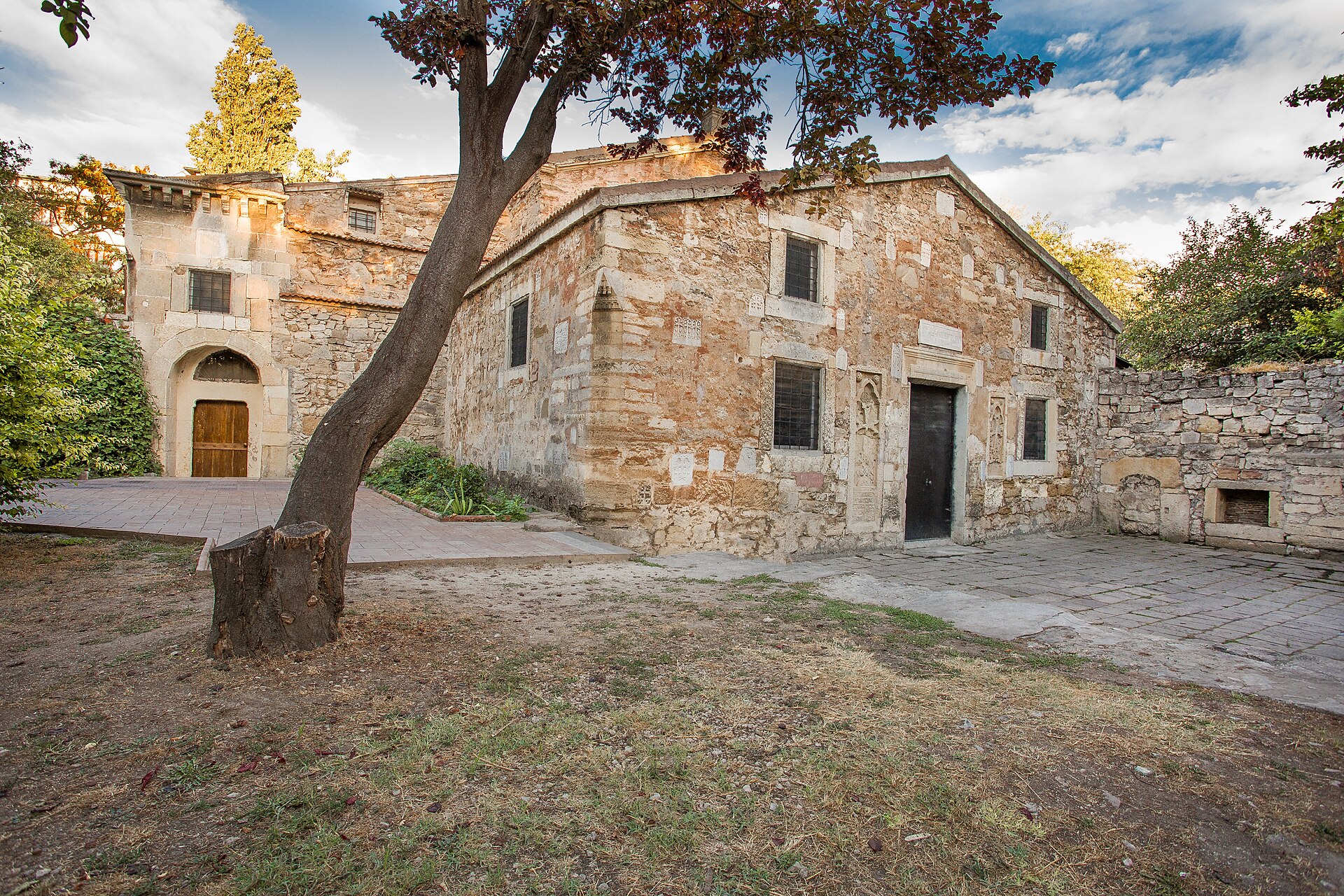
Perched on a gentle hill overlooking the sea, the Church of St. Sergius in Feodosia feels like a quiet witness to the passage of time. Built in the late 19th century, it stands as a modest yet striking example of how Russian Orthodox architecture adapted to the Crimean landscape. The white stone walls, simple domes, and restrained decorative elements blend seamlessly with the surroundings, creating a structure that is both familiar and distinctly local. Inside, the space is airy and luminous, with an iconostasis that carries the weight of tradition without overwhelming the senses.
The church’s history is woven into the fabric of Feodosia itself. By the late 1800s, the city was experiencing a period of growth, and its Orthodox community sought to reaffirm its presence in a region shaped by diverse cultures and faiths. The Church of St. Sergius became more than a place of worship—it was a symbol of revival after centuries of Ottoman rule. Though not as ancient as some of Crimea’s other religious sites, it settled naturally into the city’s rhythm, becoming a fixture in its daily life.
During the Soviet era, when many churches were shuttered or destroyed, St. Sergius endured, though not without neglect. In the 1990s, it was returned to the faithful, and today it functions as an active parish. Services, baptisms, and weddings are held here, and on feast days, the church fills with worshippers and visitors alike. The atmosphere inside is one of quiet reverence—the soft light filtering through narrow windows, the scent of incense, the aged icons all contribute to a sense of timelessness.
From the outside, the church appears unassuming, but its architecture holds a quiet elegance. The white stone contrasts with the blue sky and the greenery of the surrounding trees, while the domes, though not as towering as those in Russia’s grander cathedrals, suit the Crimean setting perfectly. The bell tower, standing beside the main building, adds balance to the structure. A small garden encircles the church, offering a place to sit and escape the bustle of the city below.
Unlike many tourist attractions, the Church of St. Sergius doesn’t demand attention. There are no guided tours, no souvenir stalls, no crowds. It’s a place for those who seek stillness, a connection to history, or simply an appreciation of architecture. On weekdays, the church is nearly empty, which only deepens the sense of solitude. Even for those who aren’t religious, the space carries an unmistakable aura—one that lingers long after leaving.
Feodosia is a city where layers of history overlap, where Greek, Genoese, Ottoman, and Russian influences have left their mark. The Church of St. Sergius is just one thread in this tapestry, but it remains alive in a way that ruins and museums cannot. The icons, the walls, the people who come here—all are part of an unbroken continuity. The church doesn’t aim to impress with grandeur; its charm lies in its simplicity, in the way it quietly endures.
If you find yourself in Feodosia, the short climb to the church is worth the effort. From its hilltop perch, the view stretches over the old town, the port, and the sea, which shifts in color with the seasons—from bright turquoise to stormy gray. In the evening, when the streetlights glow, the church takes on a particularly serene beauty. You might step inside to light a candle, or you might linger by the entrance, breathing in the scent of blooming shrubs and listening to the distant chime of bells. The place asks nothing of its visitors except respect for its quiet and its past.