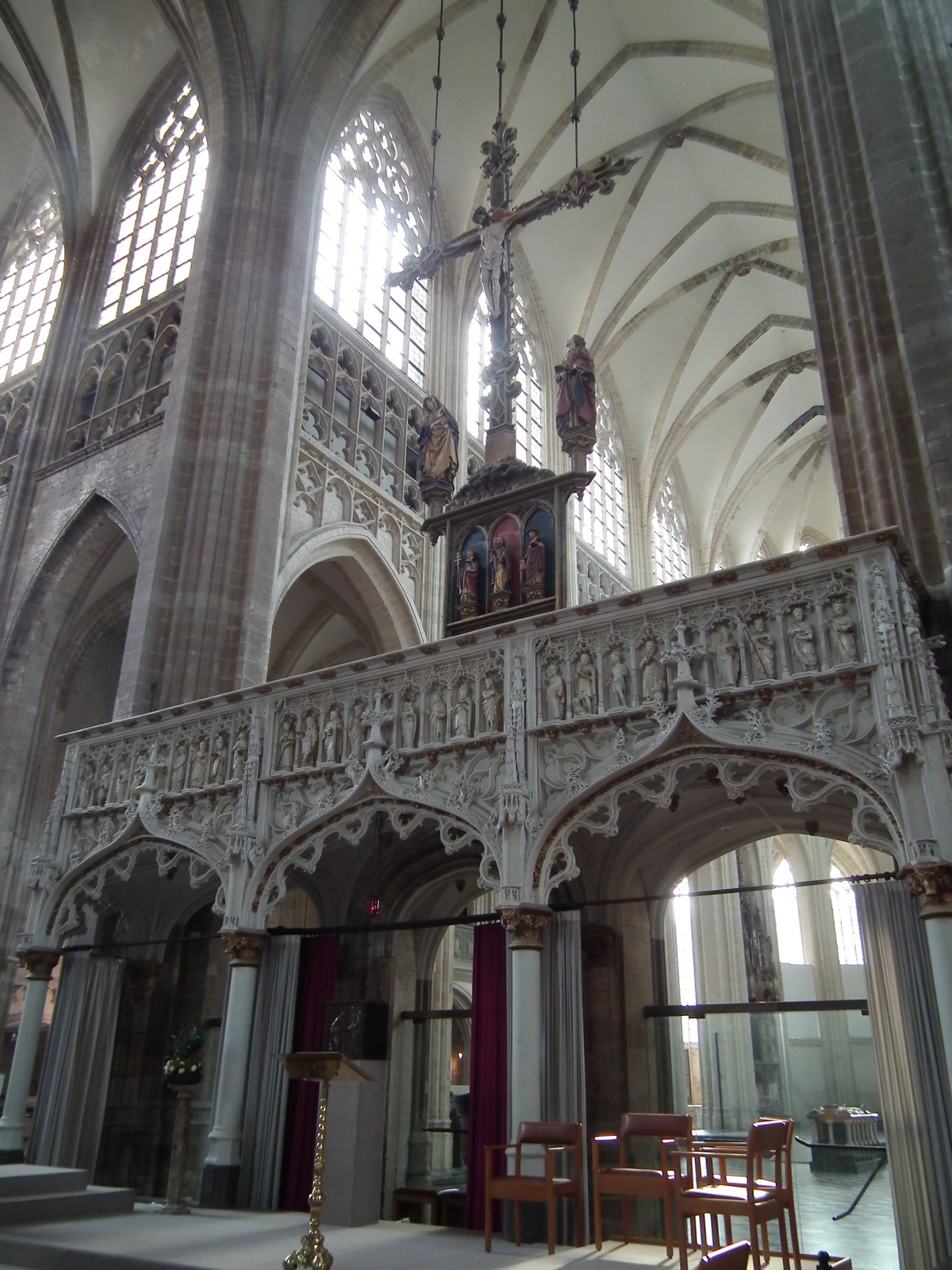
Wiltz is one of those quiet Luxembourgish towns where time seems to move at its own unhurried pace, tucked away in the rolling hills of the Ardennes. At its heart stands the Church of Saint Peter, a building that has watched over the town for centuries, its presence as much a part of Wiltz as the narrow streets or the slow-flowing river below. Unlike the grand cathedrals of Luxembourg City or the fortified churches of the north, this one feels more like a place where history was lived rather than staged—a parish church that grew with the town, adapting to its needs while keeping its roots firmly in the past.
The church’s origins trace back to the Middle Ages, though little remains of its earliest form. The current structure dates largely to the 18th century, when Wiltz was expanding as a market town and needed a place of worship to match its growing importance. The architecture is a blend of styles, with the sturdy, unadorned stone of the nave giving way to a more elaborate Baroque facade. The bell tower, added later, rises above the rooftops with a quiet authority, its clock still marking the hours as it has for generations. Inside, the space is surprisingly bright, thanks to large windows that let in the soft northern light, illuminating the simple wooden pews and the worn stone floor.
What makes Saint Peter’s interesting isn’t just its age, but how it reflects the layers of Luxembourg’s history. The country has always been a crossroads—ruled by Burgundians, Spaniards, Austrians, and French before finally becoming independent—and Wiltz, though small, was never far from the currents of change. The church bears traces of these shifts, from the Latin inscriptions on the walls to the faint remnants of frescoes that hint at older, forgotten devotions. During the Second World War, Wiltz suffered heavily, and the church wasn’t spared. It was damaged in the Battle of the Bulge, a reminder of how even the most peaceful places were caught in the violence of the 20th century. The repairs afterward were done with care, preserving as much of the original fabric as possible.
The interior is modest but thoughtfully arranged. The altar, with its carved wooden retable, is the focal point, though it’s not overly ornate. The side chapels hold smaller altars, each with its own character—one dedicated to the Virgin Mary, another to Saint Joseph, their statues worn smooth by time and devotion. The organ, installed in the 19th century, still fills the church with music during services, its sound echoing under the vaulted ceiling. On quiet afternoons, when the town is empty and the only sounds are the occasional footsteps or the rustle of leaves outside, the church feels like a place where the past lingers just beneath the surface.
For visitors, Saint Peter’s isn’t the kind of church that demands attention with dramatic architecture or priceless art. Instead, it offers something quieter—a sense of continuity. The people of Wiltz have gathered here for weddings, baptisms, and funerals for hundreds of years, and the building has absorbed those moments like the patina on its stones. The churchyard outside is just as telling, with gravestones dating back centuries, their inscriptions faded but still legible. Some belong to local families whose names you’ll see on shops and houses around town, a reminder of how deeply rooted this place is in its own history.
Wiltz itself is worth exploring beyond the church. The town is small enough to wander on foot, with a handful of cafés where you can sit with a coffee and watch life pass by. The river Wiltz cuts through the valley, its banks lined with paths that lead into the surrounding forests. In summer, the town hosts a music festival that draws visitors from across the region, filling the streets with sound and energy. But even then, the church remains a constant, its presence grounding the town in something older and more enduring.
If you visit, it’s worth taking a moment to sit inside when the church is empty. The light shifts with the time of day, casting long shadows in the morning and a golden glow in the late afternoon. The air smells of old wood and candle wax, and if you’re lucky, you might hear the distant chime of the clock or the murmur of voices from the square outside. It’s not a place that shouts for attention, but that’s part of its charm. In a world where so much is designed to impress, Saint Peter’s offers something rarer: a sense of stillness, and the quiet assurance that some things endure.