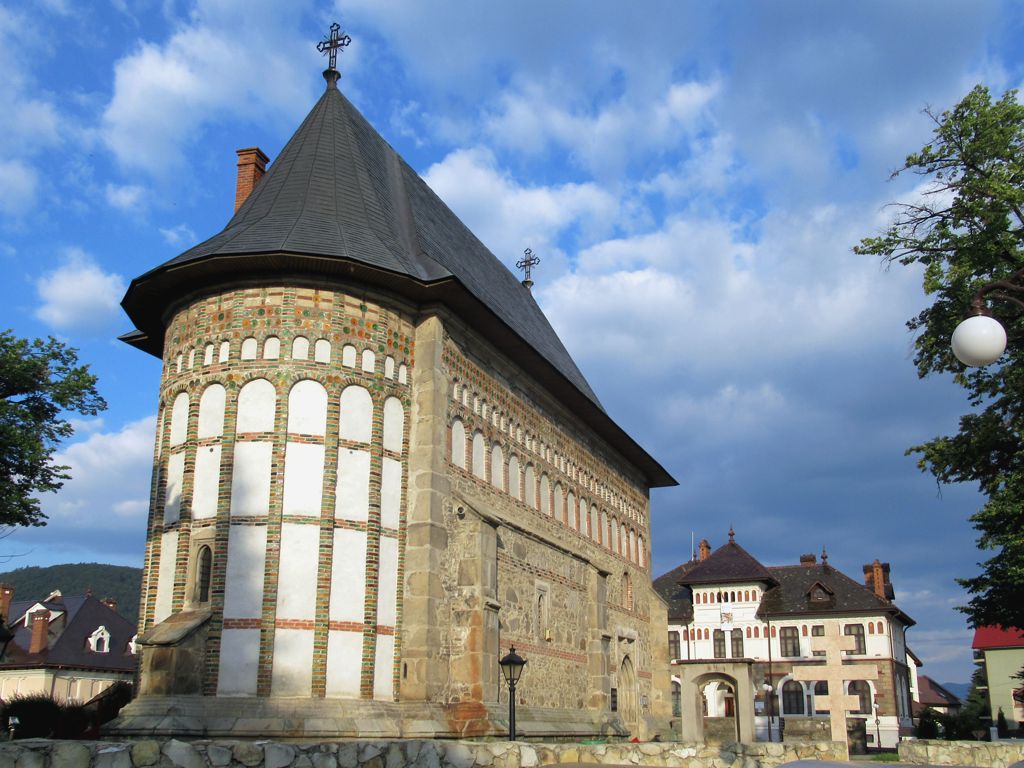
Nestled in the quiet heart of Târgu Neamț, the Church of Saint John the Baptist is one of those places that doesn’t demand attention but quietly lingers in memory long after you’ve left. Unlike the more famous landmarks of Romania, it doesn’t draw crowds or flashy signs—just the steady rhythm of a small town where life moves at its own unhurried pace. The church has stood here for centuries, not as a relic of the past, but as a living part of the community, its walls holding stories that most visitors will never hear.
Built in the late 18th century, the church reflects a time when Moldavia enjoyed a rare period of stability after years of conflict. Its architecture is unassuming yet elegant, a classic example of Orthodox design in the region. The walls, made of stone and brick, have weathered the years, their surfaces softened by time. The roof, covered in traditional clay tiles, has taken on a muted hue, blending seamlessly with the surrounding houses. The façade is simple but striking, with narrow arched windows, a modest entrance, and a small bell tower that rises above the doorway. Inside, the space feels surprisingly open, thanks to the high vaulted ceiling that lets in soft, diffused light.
The iconostasis is the true centerpiece of the church—a wooden altar intricately carved and gilded, its surfaces adorned with paintings in the traditional Moldavian style. The faces of saints gaze out with solemn dignity, their features rendered in bold colors that have faded only slightly with age. The frescoes on the walls, though darkened by time, still tell their stories: scenes from the life of Christ, depictions of local saints, and moments of devotion that have been preserved for generations. There’s a sense of quiet reverence here, a feeling that time has slowed just enough to let you take it all in.
Târgu Neamț itself has always been a place of modest importance, a town that thrived not on grand battles or royal decrees, but on trade and craftsmanship. Founded in the 14th century, it was once a hub for merchants and artisans, where fairs drew crowds and local workshops produced everything from wooden tools to finely worked leather. The church was more than just a place of worship—it was a gathering point, a repository of knowledge, and a refuge in times of trouble. When invaders threatened or disease swept through the town, its doors remained open, offering shelter and solace to those in need.
Today, the church continues its quiet existence. On Sundays and feast days, the sound of hymns fills the air, and the scent of incense lingers in the nave. On weekdays, it’s a place of stillness, where the occasional visitor might pause to light a candle or simply sit in silence. Outside, a small park surrounds the building, its benches shaded by old trees. Locals come here to relax, to chat, or to let their children play on the paths. It’s an ordinary scene, but one that feels timeless, as if the town has always moved to this gentle rhythm.
Târgu Neamț isn’t a place that tries to impress. There are no towering castles or bustling festivals here, just the quiet authenticity of a town that has remained largely unchanged. The Church of Saint John the Baptist is very much a part of that authenticity. It doesn’t ask for admiration or grand gestures—just a moment of your time. If you linger long enough, you might begin to sense the layers of history embedded in its walls, the countless lives that have passed through its doors, and the prayers that have risen beneath its ceiling.
For travelers who prefer to explore Romania at a slower pace, stepping away from the well-trodden paths, this church offers a different kind of experience. It’s not the kind of place you’ll find in guidebooks or on postcards, but that’s precisely why it stays with you. You might sit on a bench outside, listening to the birds or the distant murmur of conversation, and find yourself wondering about the people who have stood in this same spot over the centuries. There’s a quiet magic in places like this—not the kind that dazzles, but the kind that quietly settles into your thoughts and stays there.