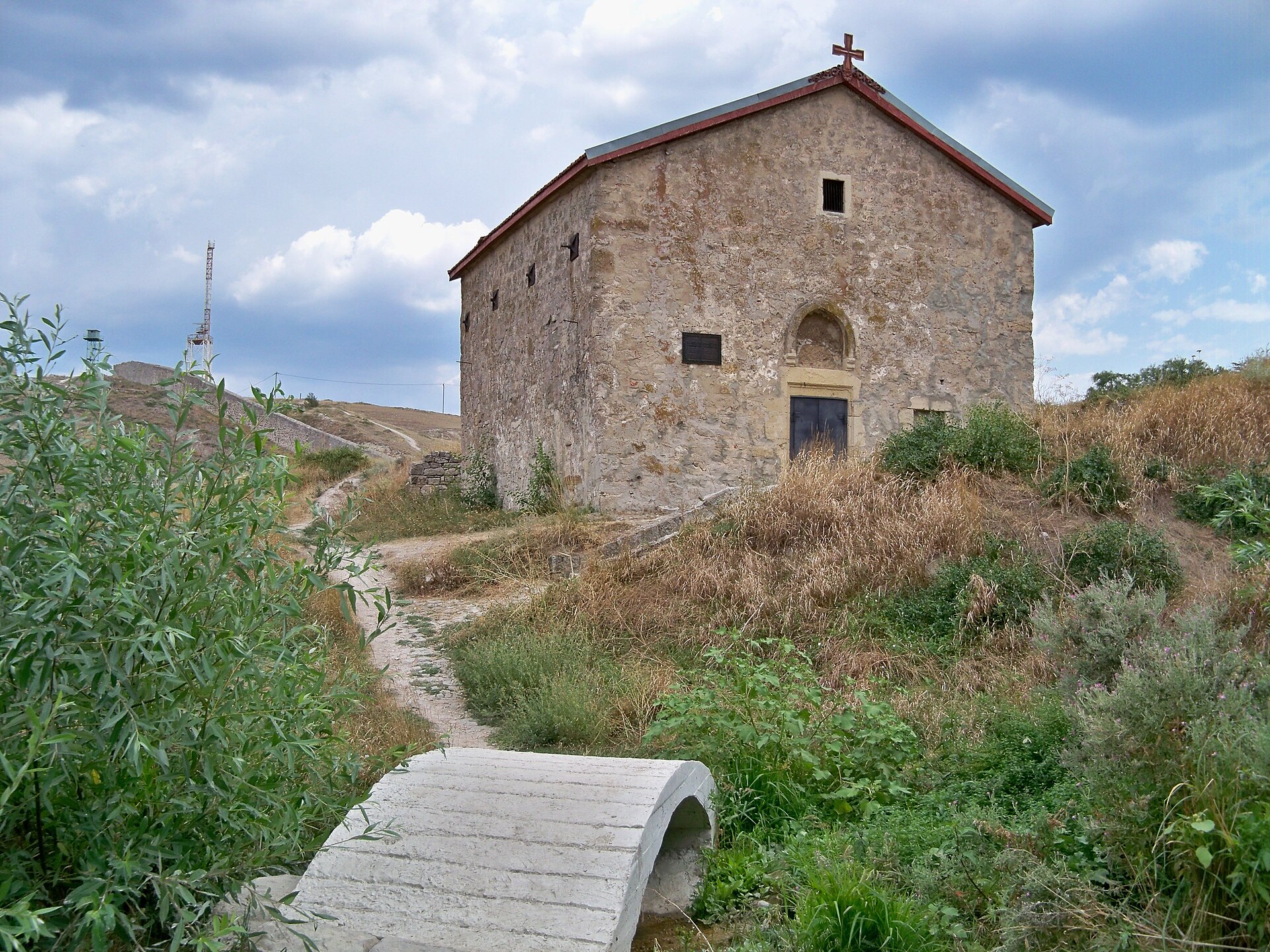
St. Demetrius of Thessaloniki Church in Feodosia is one of those quiet places where time seems to pause, holding within its walls the echoes of different eras. Perched on a gentle hill, it overlooks the city and the sea, as if silently reminding visitors that faith and history here are inseparable. The church is modest in size, its white walls and traditional dome standing out without overwhelming the surroundings. Instead of grandeur, it offers something far more subtle—an invitation to slow down and reflect.
The architecture reflects the late 19th-century Orthodox traditions of Crimea, blending simplicity with a sense of harmony. Built in the Neo-Byzantine style, which was popular in the Russian Empire during that period, the church features clean lines, arched windows, and vaulted ceilings that create an atmosphere of warmth and shelter. Inside, the decor is unassuming, free from excessive ornamentation. There are no gilded iconostases or elaborate frescoes, just the quiet dignity of a provincial church, where the absence of opulence makes it feel more intimate and approachable.
The church’s history is deeply intertwined with the life of Feodosia and its people. It was funded by local merchants and parishioners who wanted a place of worship in this part of the city. Like many religious sites in the Soviet era, it faced hardships—closed, repurposed, and nearly forgotten—before eventually being returned to the faithful. Today, it functions as an active parish, where services are held regularly, drawing those who seek solace or a connection to the past.
Feodosia has long been a city where cultures and traditions intersect, and St. Demetrius Church holds a special place in that narrative. Unlike the more famous Armenian Surb Sarkis Church or the Mufti-Jami Mosque, it doesn’t attract crowds of tourists. Instead, it offers a quiet retreat where one can sit on a bench in the courtyard, listen to the distant chime of bells, and watch the sea. The surrounding streets still bear traces of the old town, with century-old houses that seem to whisper stories of those who once prayed beneath this church’s vaults.
The atmosphere here is especially moving during religious holidays. On Christmas or Easter, the church glows with candlelight, and the sound of the choir fills the air. Locals and visitors alike gather to experience the sense of tradition, even if only as observers. On ordinary days, the church is a place of stillness, where the outside world fades away. Even those who aren’t religious can find a moment of peace in its quiet corners. A small garden with old trees surrounds the church, offering shade and a place to rest after wandering through Feodosia’s streets.
St. Demetrius of Thessaloniki Church is more than just a place of worship—it’s a living piece of the city’s cultural heritage. Feodosia has always been a crossroads of different peoples—Greeks, Armenians, Tatars, Russians—and their influences are woven into its architecture, customs, and even its religious practices. The church, dedicated to St. Demetrius, the patron saint of Thessaloniki, symbolizes this connection between times and cultures. His veneration extends beyond Orthodoxy, reflecting the shared traditions of the region’s diverse communities.
What makes this church special is that it hasn’t been turned into a museum exhibit. It remains a part of everyday life, where the elderly light candles for their loved ones, young couples come for weddings, and children curiously examine the icons. The rhythm of life here feels unhurried, as if time moves differently within these walls. If you find yourself in Feodosia, it’s worth stopping by—not to check another landmark off a list, but to simply be present in a place where history and the present coexist so naturally.