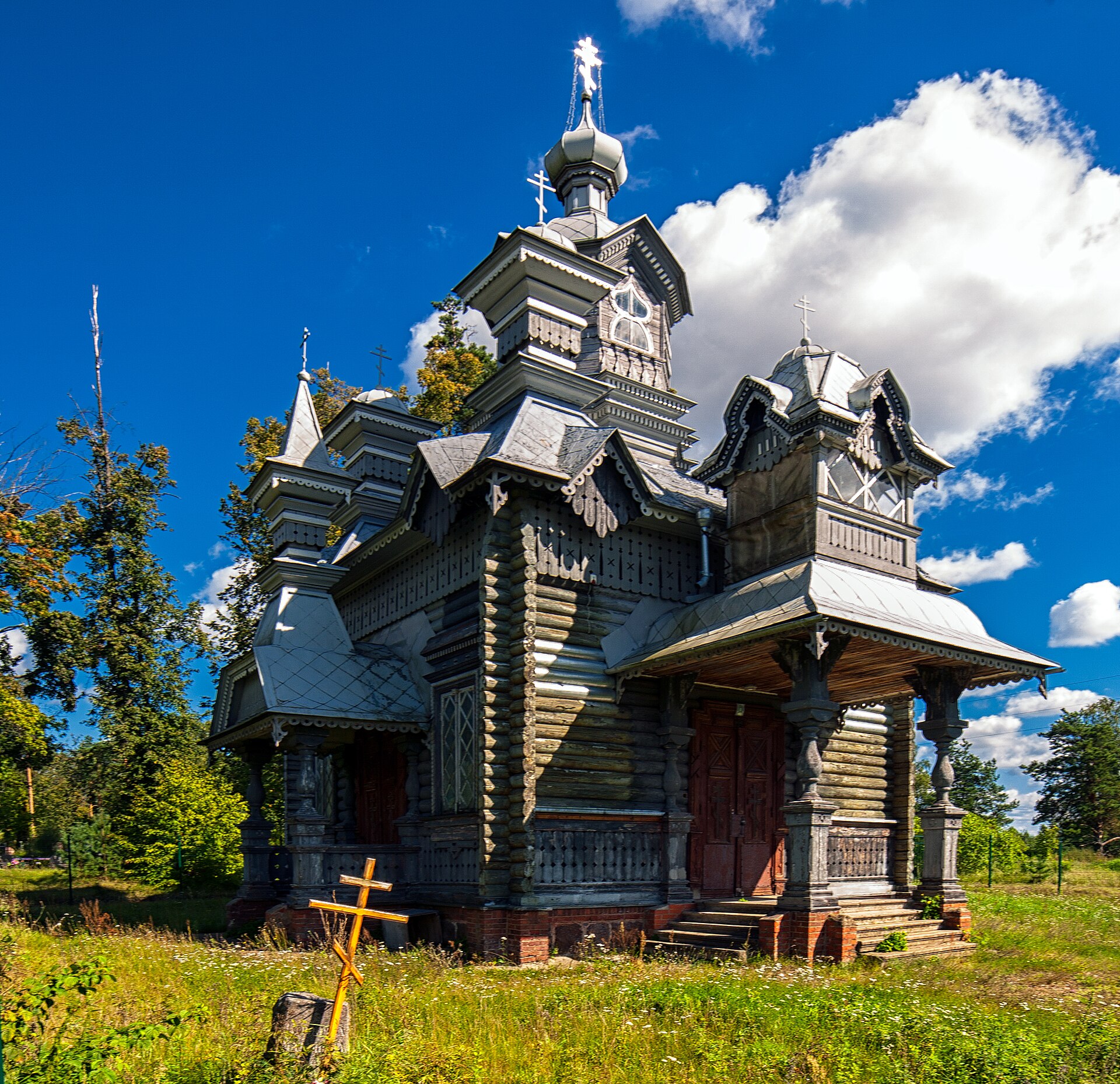
Daugavpils is a city where history lingers in the quiet corners of its streets, and few places capture that sense of time as vividly as the Church of St. Alexander Nevsky. Built in the late 19th century, this Orthodox church stands as a testament to the cultural and religious layers that have shaped Latvia’s second-largest city. Its golden domes rise above the surrounding buildings, a striking contrast to the more subdued architecture of the area, and its presence is a reminder of the diverse communities that have called this region home.
The church was constructed between 1889 and 1891, a period when Daugavpils—then known as Dvinsk—was part of the Russian Empire. The design reflects the traditional Russian Orthodox style, with its onion-shaped domes and intricate brickwork, yet it also carries a certain local character, as if the builders adapted the form to the materials and climate of the region. The interior is equally rich, with iconostasis and frescoes that follow the conventions of Orthodox art, though the details have softened over time, bearing the marks of both devotion and the passage of years.
St. Alexander Nevsky was named in honor of the medieval Russian prince and military leader, a figure revered in Orthodox tradition for his defense of the faith and his role in shaping early Russian statehood. The choice of patron saint was not accidental; it reflected the imperial ambitions of the time, as well as the spiritual needs of the growing Orthodox community in Daugavpils. The church served not only as a place of worship but also as a symbol of the empire’s presence in the Baltic region, a quiet assertion of identity in a city where multiple cultures intersected.
Over the decades, the church has witnessed the ebb and flow of history. It survived the upheavals of the 20th century, including two world wars and the shifting borders that came with them. During Soviet times, religious life was suppressed, and many churches across Latvia fell into disrepair or were repurposed. St. Alexander Nevsky, however, remained standing, though its role in the community diminished. After Latvia regained independence in 1991, the church gradually reopened its doors, and today it functions once again as an active place of worship, though its congregation is smaller than it once was.
What makes this church particularly interesting is not just its architecture or its history, but the way it fits into the fabric of Daugavpils. The city has long been a crossroads, home to Latvians, Russians, Poles, Jews, and others, each leaving their mark on its streets and buildings. St. Alexander Nevsky is part of that mosaic, a place where the past is not just remembered but still felt. The quiet courtyard in front of the church, with its old trees and benches, invites visitors to sit and reflect, whether they come for prayer, curiosity, or simply a moment of stillness.
The church is not a grand tourist attraction in the way that some of Europe’s more famous cathedrals are, but that is part of its charm. There are no crowds here, no guided tours rushing through its aisles. Instead, it offers a more intimate experience, a chance to step into a space that has been shaped by generations of worshippers. The icons, though faded, still carry a sense of reverence, and the air inside is thick with the scent of wax and old wood, a sensory reminder of the rituals that have taken place here for over a century.
For those who take the time to visit, St. Alexander Nevsky provides a glimpse into a side of Daugavpils that is often overlooked. The city is known for its fortress, its industrial past, and its role as a transport hub, but its spiritual and cultural heritage runs deeper. This church, with its unassuming grandeur, is one of the places where that heritage is preserved. It may not be the most famous landmark in Latvia, but it is one of those quiet, enduring places that give a city its soul.
If you find yourself in Daugavpils, it’s worth making the short walk to this church, not just to admire its architecture, but to feel the weight of history in its walls. Whether you’re drawn by faith, curiosity, or a love of old buildings, St. Alexander Nevsky offers something rare: a connection to the past that feels immediate and real. In a world where so much is fleeting, places like this remind us of the stories that endure.