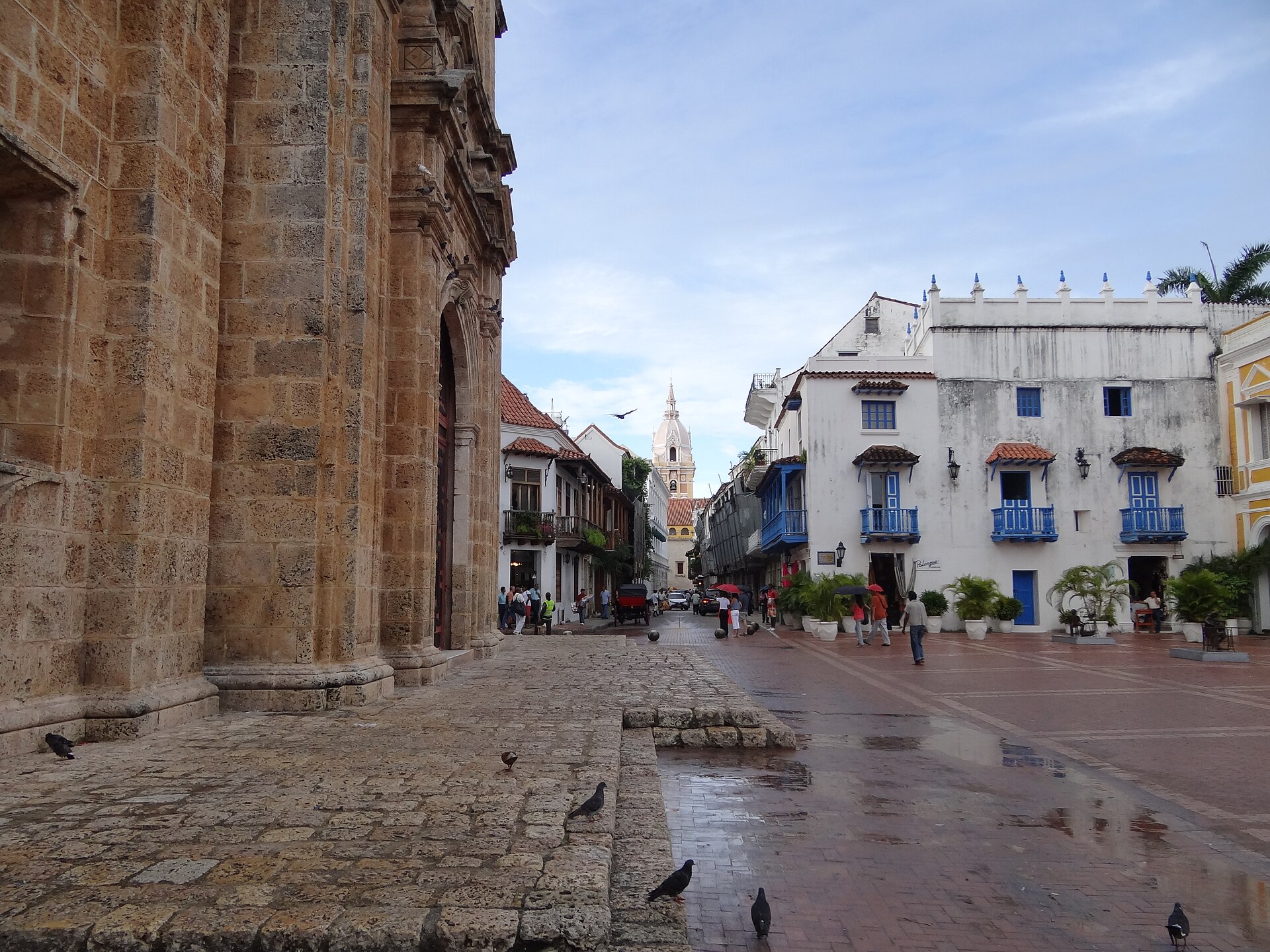
In the heart of Cartagena’s historic center, where narrow cobblestone streets wind between colonial-era plazas and weathered facades, stands the Church of San Pedro Claver. This is more than just a building—it’s a place where history, faith, and the struggle for justice intersect. Named after the Spanish Jesuit priest who became a symbol of resistance against the brutality of the slave trade, the church preserves both the memory of its namesake and the weight of the era he defied.
Built in the 17th century, when Cartagena was one of the most vital ports of the Spanish Empire in the Americas, the church reflects the architectural style of its time. The structure combines Baroque elements with local influences, its thick coral-stone walls and soaring vaults giving it a sense of solidity and grace. The facade is understated, almost austere, but inside, light filters through stained-glass windows, illuminating the spacious nave. The altar gleams with gilded carvings, while frescoes along the walls depict scenes from the life of Pedro Claver, whose canonization in 1888 cemented his legacy.
The story of this place is inseparable from the horrors of the transatlantic slave trade. In the 1600s, Cartagena was a major hub for the forced migration of Africans, who were brought in chains to the New World. Pedro Claver, a young priest who arrived in the city, was one of the few who openly condemned the practice. He didn’t just baptize enslaved people—he provided medical care, defended their rights before colonial authorities, and challenged the system that dehumanized them. His actions angered the elite, but over time, his name became synonymous with compassion. Today, the museum attached to the church holds documents from that era, personal belongings of Claver, and artifacts that offer a glimpse into the lives of those he sought to protect.
The church remains an active place of worship, drawing both pilgrims and visitors who come to honor Claver’s memory. The adjoining monastery’s courtyard, shaded by greenery, offers a quiet retreat from the city’s bustle. Here, the play of light on the old stone walls creates a sense of timelessness, and the museum’s exhibits—displayed in the monastery’s galleries—invite reflection on the past. Among the most striking displays are the chains and shackles once worn by enslaved people, a stark reminder of the cruelty that defined the colonial economy.
Beneath the church lies a crypt, once used as a burial site for Jesuit priests. Now open to visitors, its dimly lit chambers evoke a sense of solemnity, as if the weight of history lingers in the cool air. The museum’s collection includes everyday objects from the colonial period, each telling a story of survival and resilience. These artifacts don’t just document the past—they force a confrontation with it, revealing the cost of empire and the rare individuals who dared to challenge its injustices.
Cartagena is a city of contrasts, where opulent mansions stand alongside impoverished neighborhoods, and the past bleeds into the present. The Church of San Pedro Claver occupies a unique place in this landscape. It doesn’t just commemorate history—it demands engagement with it. The church serves as a reminder that even in the darkest times, there were those who refused to look away. Today, it stands not only as an architectural landmark but as a symbol of hope, a testament to the power of conviction.
Visiting the church is an opportunity to encounter a history that often goes untold. There are no flashy exhibits or tourist traps here—just the quiet weight of memory. In the hush of the nave or the museum’s galleries, it’s impossible not to reflect on how difficult change can be, and how essential it is to remember those who fought for it. For many Colombians, Pedro Claver is more than a saint; he’s an example of courage and empathy, a man who saw humanity where others saw only property.
If you find yourself in Cartagena, take the time to step inside. The church doesn’t announce itself with neon signs or crowds, but that’s part of its power. Here, you can feel the pulse of the city’s past—the stories of those who built it, those who suffered within its walls, and those who dared to defy the status quo. The Church of San Pedro Claver isn’t just a monument; it’s a living piece of history, one that continues to challenge and inspire. It reminds us that compassion, even in the face of overwhelming injustice, can leave a mark that lasts centuries.