Guanare is one of those quiet Venezuelan towns where time moves at its own unhurried pace, tucked away in the heart of the country. The streets here are lined with low-slung houses topped with terracotta roofs, their walls bearing the faint marks of centuries past. Among them, the Church of San Francisco stands as a quiet but striking presence, its modest facade belying the weight of history it carries. Perched on a corner of the main square, it has watched over the town through generations of change, its thick adobe walls holding stories that few visitors ever hear.
Built in the 18th century, when Guanare was a key outpost for Spanish colonizers, the church was more than just a place of worship. It was a symbol of the order and authority imposed by the empire, a tangible reminder of the power that radiated from distant Madrid. The architecture is classic colonial—simple yet sturdy, with arched windows, heavy wooden doors, and walls made of sun-baked clay bricks. Inside, the wooden ceiling beams sag slightly with age, and the air carries the scent of old timber and candle wax. A few religious paintings, likely crafted by local artisans, hang on the walls, their colors faded but their details still sharp enough to tell their stories.
The altar is the most elaborate part of the church, a burst of baroque flourishes in an otherwise restrained space. Gilded carvings of saints and angels twist around its edges, their intricate details catching the light in a way that makes them seem almost alive. Unlike the grand cathedrals of Caracas or Mérida, there’s no marble here, no crystal chandeliers—just wood, plaster, and paint, all softened by time. The effect is intimate rather than imposing, as if the church is less interested in dazzling visitors than in offering them a moment of quiet reflection.
Guanare is often called the spiritual heart of Venezuela, and for good reason. According to local legend, it was here in the 16th century that an indigenous girl had a vision of the Virgin of Coromoto, now the country’s patron saint. Though the Church of San Francisco isn’t directly tied to that event, it exists within the same sacred landscape, a place where faith has been woven into the fabric of daily life for centuries. The townspeople treat it with quiet reverence, not as a museum piece but as a living part of their community—a place to light a candle, say a prayer, or simply sit in silence.
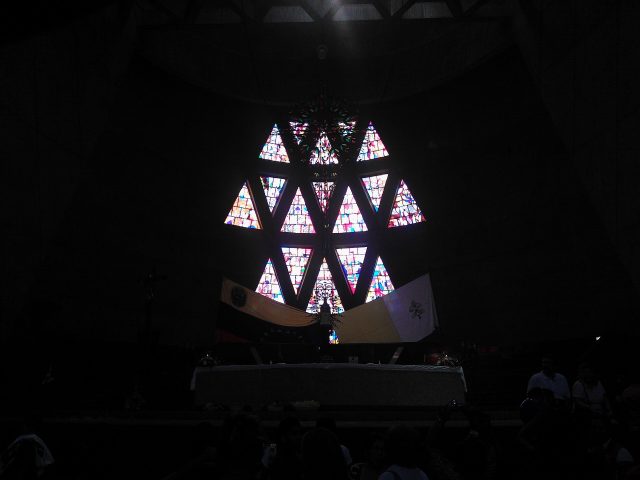
Life around the church moves at its own gentle rhythm. In the mornings, the square fills with vendors selling ripe mangoes, fresh cheese, and thick corn cakes. Children dart between the trees, their laughter mixing with the clatter of wooden stools as older men gather to talk about the day’s news. From the outside, the church blends seamlessly into this scene, just another fixture of the town. But step inside, and the atmosphere shifts. The cool stone floors, the faint echo of footsteps, the way the light filters through the stained glass—it all feels like a step back in time.
The church has seen its share of upheaval. During the 19th-century War of Independence, it sheltered locals fleeing conflict, its thick walls offering protection. Later, it briefly served as a makeshift hospital. In the 20th century, restorers worked to preserve its original character, patching cracks and reinforcing beams without erasing the marks of age. Today, it looks much as it did two hundred years ago, though the elements have left their mark—peeling plaster, weathered wood, the occasional stubborn crack in the walls. These imperfections don’t detract from the building; if anything, they make it feel more real, as if the church itself is breathing.
For travelers, the Church of San Francisco isn’t a must-see attraction in the traditional sense. There are no crowds, no guided tours, no souvenir stands hawking trinkets. Instead, there’s the quiet hum of a place that has endured, where the scent of old wood mingles with the faint tang of incense. If you visit during a service, you might hear the organ’s deep notes or the soft murmur of a choir, a reminder that this isn’t just a relic of the past but a living space. The church doesn’t demand attention; it simply exists, as it has for centuries, a silent witness to the ebb and flow of life in Guanare.
This town isn’t the kind of place that caters to tourists. There are no luxury hotels or trendy cafes, just the slow, steady pulse of a community that has remained largely unchanged. The Church of San Francisco is one thread in a larger tapestry, a piece of the town’s identity that refuses to be forgotten. It doesn’t try to impress or overwhelm; it simply endures, much like the mountains on the horizon or the ancient ceiba trees that dot the landscape. And perhaps that’s what makes it special—not its grandeur, but its quiet persistence, a place where the past and present coexist without fanfare.